
Planning Your Electrical Wiring Project: Beyond the Basics
Embarking on a DIY electrical wiring project requires more than just a screwdriver and a roll of tape. Whether you are finishing a basement, adding a dedicated 20-amp circuit for a workshop, or rewiring a kitchen, the margin for error is zero. In 2026, with copper prices stabilizing but advanced smart-home integrations becoming standard, selecting the right materials and professional-grade tools is critical for both safety and National Electrical Code (NEC) compliance. This guide breaks down the exact inventory you need, moving past generic advice into specific model numbers, real-world pricing, and code-mandated installation parameters.
Phase 1: Selecting the Right Cable and Wire
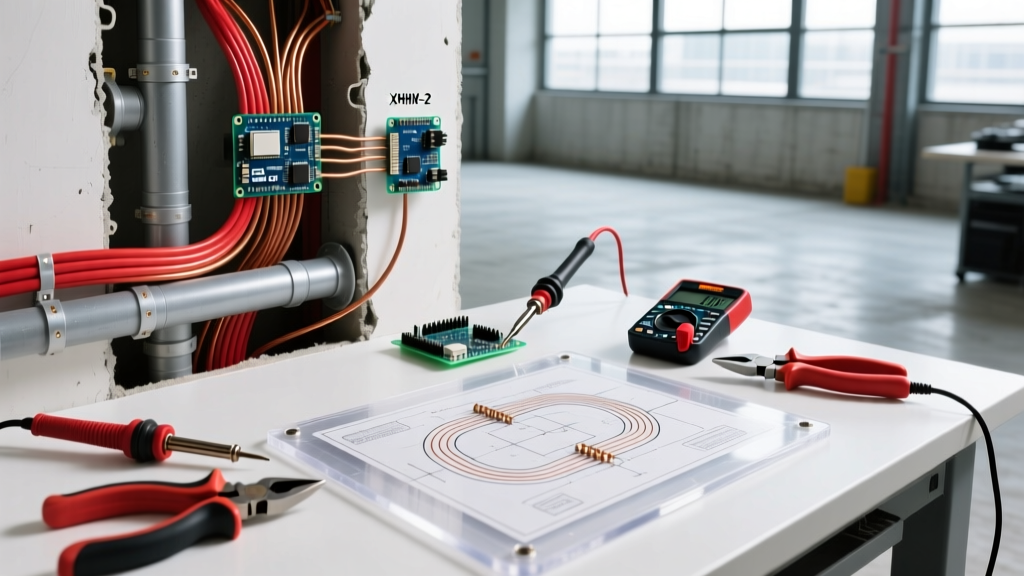
The backbone of any electrical wiring project is the conductor. For standard residential dry-wall applications, Non-Metallic Sheathed Cable (NM-B), commonly referred to by the brand name Romex, is the undisputed standard. Southwire remains the industry benchmark for quality and consistent jacket thickness. For exposed runs in basements or commercial applications, individual THHN/THWN conductors pulled through EMT (Electrical Metallic Tubing) conduit are required.
| Wire Type | Gauge | Max Amps | Typical Application | Est. 2026 Cost (250ft) |
|---|---|---|---|---|
| NM-B (Romex) | 14 AWG | 15A | Lighting, Bedroom Receptacles | $105 - $120 |
| NM-B (Romex) | 12 AWG | 20A | Kitchen/Bath Receptacles, DIY | $130 - $155 |
| NM-B (Romex) | 10 AWG | 30A | Dryers, Water Heaters | $190 - $220 |
| THHN (Solid) | 12 AWG | 20A | Conduit Runs, Commercial | $45 - $60 (per spool) |
Pro Tip: Never mix 14 AWG wire on a 20-amp breaker. While 14 AWG is cheaper and easier to bend, using it on a 20A circuit is a severe fire hazard and an immediate NEC violation. Always default to 12 AWG NM-B for general receptacle circuits to allow for future load upgrades.
Phase 2: Boxes, Connectors, and Terminations
Deep Boxes vs. Shallow Boxes
A common failure point in amateur electrical wiring projects is box overcrowding. Standard 14-cubic-inch shallow boxes fill up rapidly when you factor in ground wires, clamps, and the devices themselves. Upgrade to the Carlon B618R (18 cu. in.) or the Carlon B225R (25 cu. in.) deep boxes. According to NEC Article 314.16, each 12 AWG conductor requires 2.25 cubic inches of box volume. Using deep boxes prevents cramped wire bending, which can loosen terminal screws over time due to mechanical stress.
Wago 221 Lever-Nuts vs. Traditional Wire-Nuts
While Ideal Industries 73B Wire-Nuts remain a staple, the Wago 221 Series Lever-Nuts have revolutionized terminations. The Wago 221-413 (3-conductor) and 221-415 (5-conductor) models offer a verified pull-out force exceeding 150 Newtons and accommodate 24-12 AWG solid or stranded wire. They cost roughly $0.45 to $0.60 each in bulk—more expensive than twist-on caps, but they eliminate the risk of under-tightening and allow for instant visual verification of the wire seat through the transparent polycarbonate housing.
Phase 3: The Professional Tool Arsenal
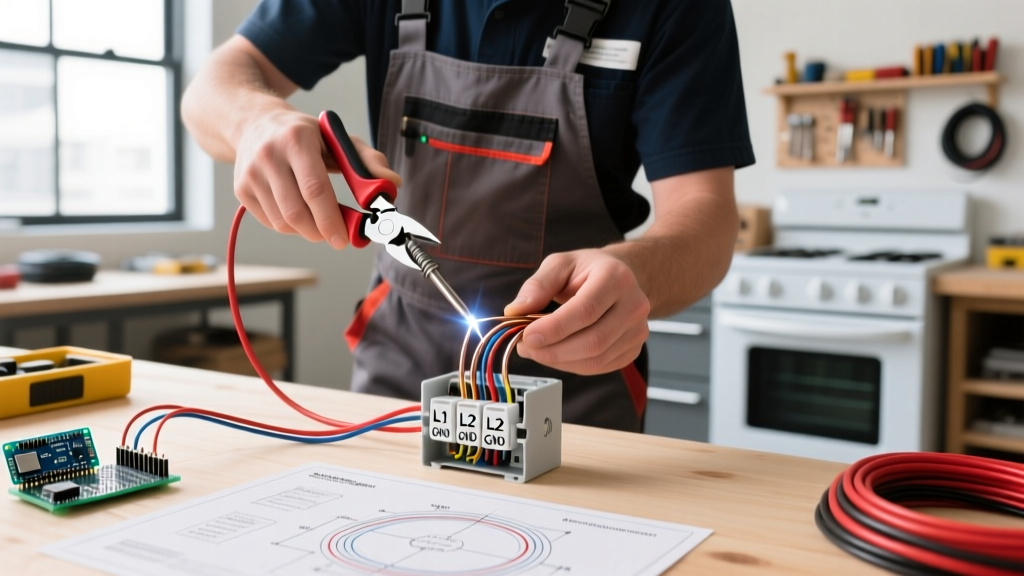
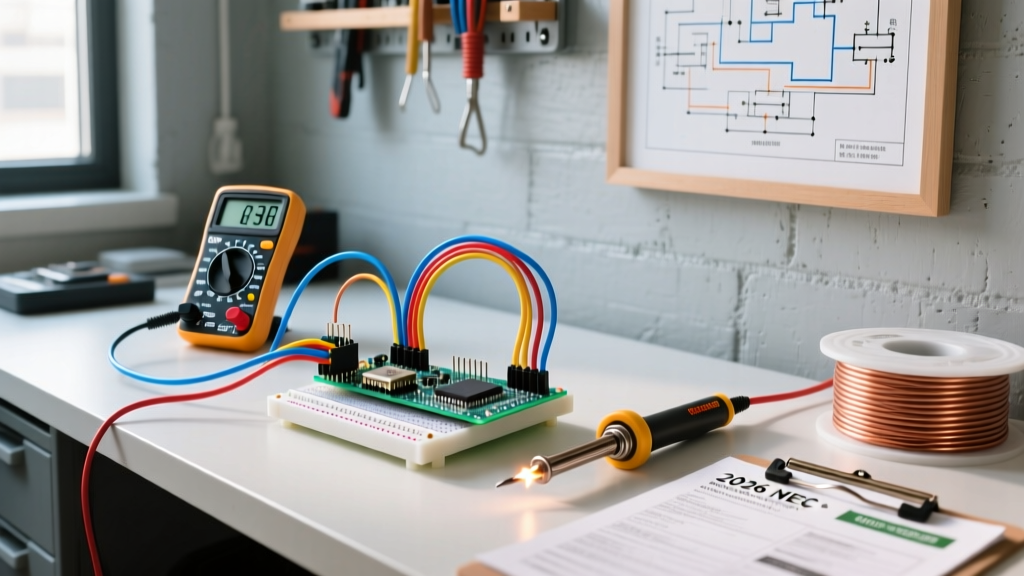
You cannot execute a clean electrical wiring project with hardware-store combo tools. Invest in purpose-built instruments that ensure precision and safety.
1. Wire Strippers: Klein 11063W Katapult
Nicking the copper conductor during stripping creates a localized hot spot that can melt insulation under heavy load. The Klein Tools 11063W Katapult ($35-$40) features an auto-adjusting shear blade that cleanly strips 10-24 AWG wire without scoring the copper. Its compound-action mechanism reduces hand fatigue during high-volume rough-ins.
2. Voltage Testing: Fluke T6-1000
Standard non-contact voltage testers (NCVTs) are prone to phantom voltage false positives. The Fluke T6-1000 ($220-$250) utilizes FieldSense technology, allowing you to measure AC voltage and current simultaneously by simply sliding a single conductor into the open jaw—no metal-to-metal contact required. This is a massive time-saver and safety upgrade for troubleshooting live circuits.
3. Cable Routing: Greenlee 50125 vs. Fiberglass Push Rods
For pulling NM-B through bored studs, the Greenlee 50125 25-foot steel fish tape ($45) is essential. However, for dropping wires down finished walls or navigating insulated cavities, steel tapes bind and snag. Supplement your kit with a Klein Tools 56415 15-foot fiberglass glow rod set ($60). The rigid fiberglass pushes through insulation without coiling, and the glowing tips are visible in dark wall cavities.
4. Torque Screwdrivers: Wiha 2850-10
Loose neutral connections cause arcing and panel fires. Recent NEC updates heavily emphasize manufacturer-specified torque values. The Wiha 2850-10 insulated torque screwdriver ($90) allows you to set exact inch-pound values for breaker terminals and receptacle screws, ensuring a flawless, code-compliant mechanical bond every time.
Phase 4: Code-Compliant Consumables
The final 5% of your material budget dictates the professional finish and code compliance of your electrical wiring project.
- 3M Super 33+ Vinyl Electrical Tape: Do not buy generic tape. Super 33+ is rated for 221°F (105°C) and stretches to conform to irregular shapes without unraveling in hot attics. ($5/roll).
- Gardner Bender GS-19 1/2" Plastic Cable Staples: NEC 300.11 and 334.30 require NM-B cable to be secured within 8 inches of every box and at intervals not exceeding 4.5 feet. Use insulated plastic staples; bare metal staples can easily pierce the cable jacket if over-driven with a hammer.
Crucial Safety and Code Considerations
Safety Warning: Always verify the main breaker is OFF and test with a calibrated meter before touching any conductors. Arc flash and electrocution risks are fatal. Never work on a live panel.
Modern electrical codes have evolved significantly to address arc faults and ground faults. As outlined by the National Fire Protection Association (NFPA) 70: National Electrical Code, Combination-Type Arc-Fault Circuit Interrupters (AFCIs) are now mandated for almost all 120V, 15A and 20A branch circuits supplying living areas. Furthermore, the Occupational Safety and Health Administration (OSHA) strictly mandates lockout/tagout (LOTO) procedures for commercial environments, a practice highly recommended for residential DIYers working on shared panels to prevent accidental re-energization.
Before closing up any drywall, schedule a rough-in inspection. According to NFPA Home Electrical Safety Guidelines, electrical failures or malfunctions are a leading cause of home structure fires. An inspection ensures your box fill calculations, grounding continuity, and staple placements meet local amendments to the national code.
A successful electrical wiring project is a synthesis of meticulous planning, premium materials, and uncompromising safety standards. By outfitting your toolkit with the specific instruments and code-compliant components detailed above, you ensure a system that is not only functional but built to last for decades.