
The Physics and Code Behind Electrical Wiring Gauges
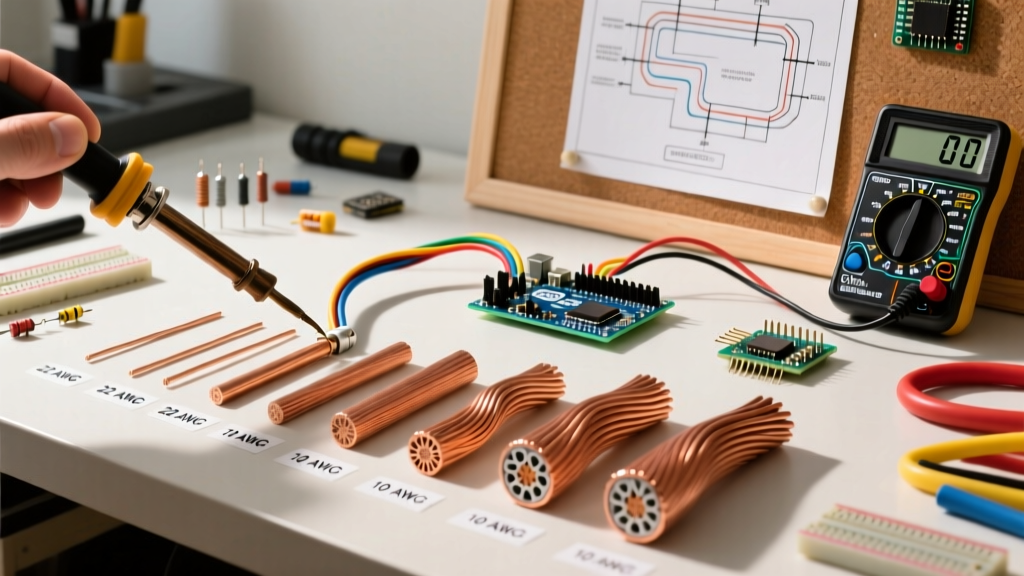
Selecting the correct electrical wiring gauges is the foundational pillar of any safe electrical installation. At its core, wire gauge dictates the ampacity—the maximum amount of electric current a conductor can carry before its insulation degrades or it becomes a fire hazard. In North America, the American Wire Gauge (AWG) system is used, where a lower numerical value indicates a thicker wire with higher current-carrying capacity. For instance, a 6 AWG wire is significantly thicker than a 14 AWG wire.
However, the National Electrical Code (NEC) does not base wire sizing solely on physical thickness. According to the National Fire Protection Association (NFPA), ampacity is determined by the conductor material (copper vs. aluminum), insulation type (THHN, XHHW, NM-B), ambient temperature, and the number of current-carrying conductors bundled in a raceway. Understanding how these variables interact separates a safe, code-compliant installation from a latent fire hazard.
The DIY Mindset: Sizing by Rule of Thumb
When homeowners tackle DIY electrical projects, they typically rely on simplified rules of thumb found on big-box store packaging or basic online charts. The standard DIY heuristic for copper non-metallic sheathed cable (NM-B or Romex) is straightforward:
- 14 AWG: 15-Amp circuits (lighting, standard receptacles)
- 12 AWG: 20-Amp circuits (kitchen countertops, bathroom outlets)
- 10 AWG: 30-Amp circuits (dryers, RV hookups, heavy window AC units)
The Voltage Drop Blindspot
The most critical failure in the DIY approach is ignoring voltage drop over distance. The NEC recommends a maximum 3% voltage drop for branch circuits and 5% overall from the service drop to the furthest outlet. If a DIYer runs 150 feet of 12 AWG NM-B to a detached shed to power a 15-amp table saw, the wire will not trip the breaker, but the voltage at the receptacle will drop below 110V. This causes the saw's induction motor to draw excess current, overheat, and eventually fail. A licensed electrician would upsized to 10 AWG or even 8 AWG for that specific run to mitigate resistance.
The Professional Standard: Load Calculations and Derating
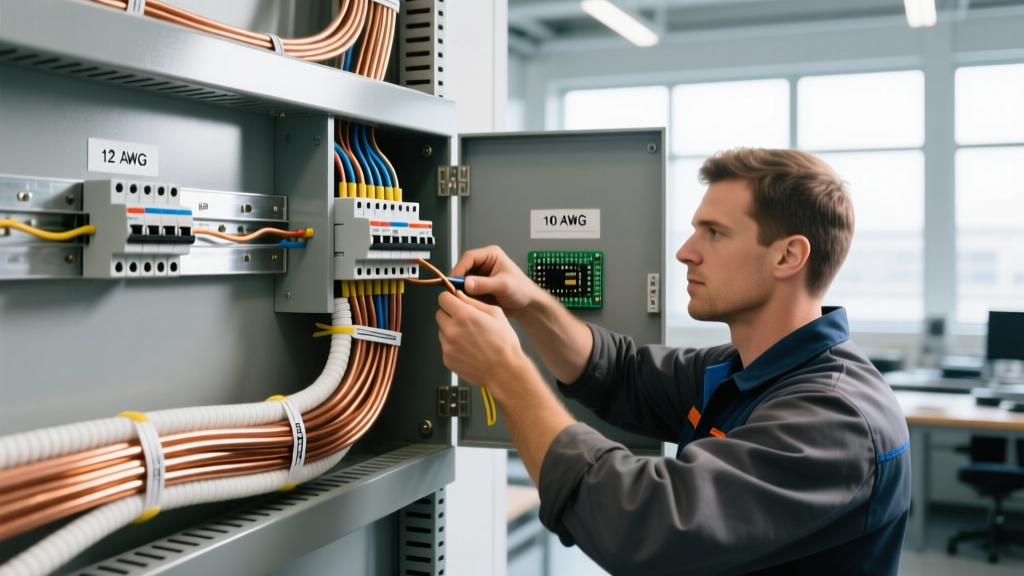
Licensed electricians do not use rules of thumb; they use NEC Article 220 for precise load calculations and Article 310 for conductor sizing. Professionals account for edge cases that DIYers routinely miss, specifically continuous loads and temperature derating.
Continuous Load Rules (NEC 210.20)
If a load is expected to run for three hours or more (e.g., commercial lighting, EV chargers, server racks), it is classified as a continuous load. The NEC requires the circuit to be sized at 125% of the continuous load. Therefore, a 40-Amp continuous load requires a 50-Amp breaker and wire gauges rated for at least 50 Amps. DIYers frequently undersize these circuits, leading to nuisance tripping and degraded breaker contacts over time.
Terminal Temperature Limitations (NEC 110.14(C))
Modern THHN wire insulation is rated for 90°C, which allows a 12 AWG copper wire to theoretically carry 30 Amps. However, professionals know that the terminations (breakers and receptacles) are typically only rated for 60°C or 75°C. NEC 110.14(C) mandates that the final allowable ampacity must be based on the lowest temperature rating of any connected component. Thus, a professional will still cap 12 AWG wire at 20 Amps for standard residential terminations, using the 90°C rating only as a buffer for derating calculations.
Expert Insight: "Derating is where DIYers get burned. If you pull four current-carrying conductors through a single 3/4-inch EMT conduit to a subpanel, NEC Chapter 9, Table 310.15(C)(1) requires you to derate the ampacity to 80%. A professional knows to upsize the wire gauge before pulling to compensate for the mutual heating effect inside the conduit."
2026 Material and Tool Cost Matrix: DIY vs Pro
Sourcing materials and utilizing the correct tools heavily influences the cost and quality of the installation. In 2026, copper prices remain volatile, making efficient material planning essential.
| Category | DIY Approach (Big Box Retail) | Professional Approach (Electrical Supply House) |
|---|---|---|
| Wire Type | NM-B (Romex) pre-cut coils | THHN/THWN-2 spools, pulled into EMT/PVC |
| 12 AWG Cost (2026) | ~$125 per 250 ft roll | ~$95 per 500 ft spool ($0.19/ft) |
| 6 AWG Cost (2026) | ~$180 per 50 ft roll | ~$1.65 per foot (sold by the foot/spool) |
| Stripping Tools | Klein 11063W ($35) - Manual | Millwaukee M18 Automatic Stripper ($199) |
| Conduit/Raceway | Rarely used; relies on staple-runs | 3/4" EMT or Schedule 80 PVC for physical protection |
While the DIY route seems cheaper upfront due to the lack of conduit and labor, the professional approach using THHN in conduit offers superior heat dissipation, physical protection, and the ability to pull new wires in the future without tearing open drywall.
Case Study: Wiring a 48-Amp Level 2 EV Charger
The surge in electric vehicle adoption has made home EV charger installations a prime battleground for DIY mistakes versus professional execution. According to the U.S. Department of Energy, proper circuit sizing is critical for Level 2 charging safety.
The Scenario
A homeowner purchases a 48-Amp continuous Level 2 EV charger. The run from the main panel to the garage is 65 feet.
The DIY Execution (Code Violation)
The DIYer calculates that a 50-Amp breaker is close enough to 48 Amps. They purchase 6 AWG NM-B cable. The Failure: 6 AWG NM-B is limited to the 60°C column in the NEC, giving it an ampacity of exactly 55 Amps. Because 48 Amps is a continuous load, the circuit must be rated for 60 Amps (48 x 1.25). Furthermore, the 50-Amp breaker will trip under a continuous 48-Amp load due to thermal fatigue. This setup is a severe fire and code violation risk.
The Professional Execution (NEC Compliant)
The licensed electrician performs the math correctly: 48A x 1.25 = 60A minimum circuit rating. They install a 60-Amp breaker. Because the run is in an exposed garage, they use 3/4-inch EMT conduit for physical protection. They pull three strands of 4 AWG THHN copper wire (rated 85 Amps at 75°C). This easily handles the 60-Amp requirement, accommodates the continuous load rule, and ensures zero voltage drop over the 65-foot distance.
When DIY Becomes Dangerous: The Hard Boundaries
While replacing a 15-amp receptacle or extending a 12 AWG lighting circuit is well within the capabilities of an informed DIYer, certain electrical wiring gauge scenarios demand professional intervention. OSHA Electrical Safety Standards and local building codes strictly regulate high-amperage work.
- Service Entrance Conductors: Sizing aluminum or copper feeder wires from the utility drop to the main panel (typically 2/0 to 4/0 AWG) involves complex fault-current calculations and utility coordination.
- Subpanel Feeders: Calculating the feeder gauge for a detached subpanel requires balancing the 83% rule for residential dwellings (NEC 310.12) with voltage drop and grounding electrode system requirements.
- Aluminum Branch Wiring: While modern AA-8000 series aluminum wire is safe and cost-effective for large feeders, using it for branch circuits requires specialized CO/ALR terminations and anti-oxidant paste (Noalox). Improper torque on aluminum lugs leads to thermal expansion, arcing, and fires.
Frequently Asked Questions (FAQ)
Can I mix 12 AWG and 14 AWG wire on the same circuit?
No. If a circuit is protected by a 20-Amp breaker, every conductor on that circuit must be rated for at least 20 Amps (minimum 12 AWG). Introducing 14 AWG wire anywhere downstream creates a bottleneck where the wire can melt before the 20-Amp breaker trips.
Why do professionals use THHN wire instead of Romex in commercial buildings?
NM-B (Romex) is generally restricted to residential and light-commercial framing that is protected by drywall. Commercial environments require the superior physical protection, higher temperature rating (90°C), and wet-location capability of THHN/THWN-2 wires pulled through metallic or PVC raceways.
Does the ground wire need to be the same gauge as the hot wires?
Not always. NEC Table 250.122 dictates equipment grounding conductor sizes based on the rating of the overcurrent device (breaker), not the current-carrying conductors. For example, on a 60-Amp circuit using 4 AWG hot wires, a 10 AWG copper ground wire is perfectly code-compliant.