
The Economics of Cutting: Beyond the Sticker Price
When sourcing an electrical cable cutter tool for commercial wiring, industrial panel building, or high-volume residential rough-ins, the initial purchase price is only a fraction of the total cost of ownership. In 2026, with copper prices fluctuating and labor rates for licensed electricians averaging between $65 and $110 per hour, the efficiency, edge retention, and ergonomic profile of your cutter directly impact your bottom line. A tool that mangles fine-stranded welding cable or requires excessive grip force on 500 MCM THHN doesn't just slow down your crew; it increases the risk of repetitive strain injuries and wastes expensive conductive material.
This cost estimation guide breaks down the real-world pricing, hidden operational costs, and ROI metrics for manual, ratcheting, and electro-hydraulic cable cutters. Whether you are an independent contractor upgrading your daily carry or a fleet manager outfitting a commercial electrical team, understanding the metallurgy and mechanics behind these tools is essential for making a financially sound investment.
The 2026 Cost Spectrum: Manual vs. Ratcheting vs. Hydraulic
The market for cable shears and cutters is segmented by actuation mechanism and jaw capacity. Below is a comparative matrix of current market pricing and specifications for professional-grade tools.
| Tool Category | Example Model | Max Capacity | Mechanism | Avg. 2026 Price |
|---|---|---|---|---|
| High-Leverage Manual | Klein Tools 63050 | 2/0 AWG Cu | Pivot/Compound | $45 - $55 |
| Ratcheting Shear | Knipex 95 62 160 | 1.18 in (30mm) | Ratchet/Pawl | $110 - $135 |
| Manual Hydraulic | Greenlee 881 | 1000 MCM | Hydraulic Ram | $450 - $520 |
| Cordless Electro-Hydraulic | Milwaukee 2471-21 | 750 MCM | Battery/Hydraulic | $350 - $550 |
High-Leverage Manual Cutters: The Budget Baseline
Standard high-leverage cutters, such as the Klein Tools 63050, remain a staple in the tool pouch due to their low entry cost (typically under $50). These tools utilize a compound pivot action to multiply hand force. However, their cost-effectiveness degrades rapidly when cutting anything larger than 2/0 AWG copper. Forcing a manual cutter through 4/0 AWG wire requires over 80 lbs of grip pressure. Over a 10-hour shift pulling and terminating service entrance conductors, this leads to severe hand fatigue, reducing overall terminations per hour by up to 15%.
Ratcheting Cable Shears: The Ergonomic Sweet Spot
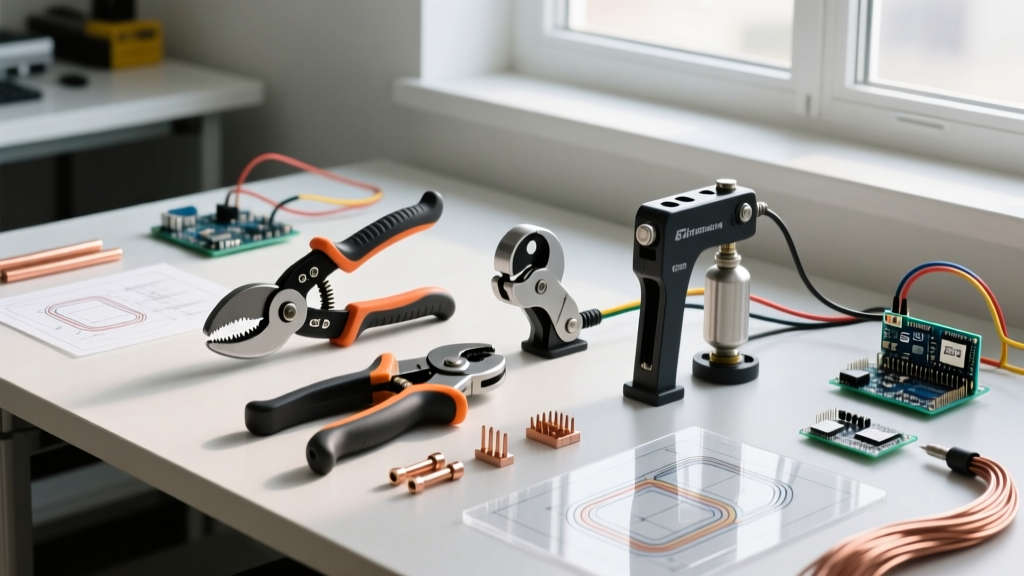
Ratcheting models like the Knipex 95 62 160 represent the highest ROI for electricians working with cables up to 1000 MCM. Priced between $110 and $135, these tools use a multi-stage ratchet and pawl system. Each squeeze of the handle advances the blade incrementally, multiplying the input force by a factor of 10 or more. The true financial benefit here is the elimination of hand fatigue and the guarantee of a perfectly flush, square cut. A flush cut is mandatory for proper seating in compression lugs; a mangled cut requires stripping back an extra two inches of wire, wasting roughly $1.50 to $3.00 of copper per termination on large gauge feeds.
Hidden Costs and Failure Modes That Destroy ROI
When budgeting for an electrical cable cutter tool, fleet managers and independent contractors often overlook the operational expenses that occur after the tool leaves the supply house. Understanding these failure modes is critical for accurate cost estimation.
Blade Metallurgy and Replacement Economics
Premium cable cutters utilize induction-hardened steel edges, typically rated between HRC 62 and HRC 64 on the Rockwell hardness scale. This extreme hardness allows the blade to shear through hard-drawn copper without deforming, but it makes the edge brittle. You cannot file or sharpen an induction-hardened shear blade. Attempting to do so with a standard mill file will ruin the file and achieve nothing. When the edge dulls or chips, the blade must be replaced.
- Replacement Blade Cost: A replacement blade set for a premium $130 ratcheting cutter costs between $40 and $65.
- Tool Retirement: For budget manual cutters under $50, replacement blades are rarely sold separately; the entire tool is discarded.
The ACSR Edge Case: A Costly Mistake
Critical Warning: Never use a standard copper/aluminum cable shear on Aluminum Conductor Steel Reinforced (ACSR) wire or any steel-core aircraft cable. The steel core will instantly micro-chip the hardened shear edge, resulting in immediate tool failure and a mandatory $50+ blade replacement. Always use dedicated ACSR cutters with specialized wedge-cut jaws for overhead utility work.
Wasted Lugs and Rejected Terminations
Using an improper tool, such as standard diagonal cutting pliers or a dull hacksaw, crushes the circular geometry of stranded wire. When inserting a crushed conductor into a $12 aluminum compression lug, the wire will splay, failing to seat properly. This leads to rejected terminations by electrical inspectors, requiring the electrician to cut off the lug, strip the wire again, and crimp a new one. Factoring in the cost of the wasted lug, the wasted wire, and 10 minutes of labor at $85/hour, a single bad cut costs the contractor upwards of $25 in lost time and materials.
Cordless Electro-Hydraulic Cutters: The High-End Investment
For utility workers, solar farm installers, and commercial electricians pulling massive 600V feeders, cordless electro-hydraulic cutters like the Milwaukee M18 or Makita 18V LXT platforms are mandatory. The bare tool cost ranges from $350 to $450, with kits including batteries and chargers pushing the price to $550 or more.
Despite the high upfront cost, the ROI is easily justified in high-volume environments. An electro-hydraulic tool will cleanly sever a 750 MCM copper cable in under 4 seconds with zero physical exertion from the user. According to OSHA guidelines on hand and power tools, minimizing repetitive motion and high-grip force is a primary method for preventing musculoskeletal disorders (MSDs) in the construction trades. By eliminating the physical toll of cutting heavy gauge wire, contractors reduce worker compensation risks and maintain consistent crew velocity throughout the entire shift.
Battery Ecosystem Integration
When estimating the cost of cordless cutters, factor in the battery platform. If your crew is already invested in the Milwaukee M18 or DeWalt 20V MAX ecosystem, the marginal cost of adding the bare cutter is highly efficient. However, if you are adopting a new brand specifically for hydraulic cutting tools, you must add $150 to $200 to your budget for a rapid charger and two high-output lithium-ion batteries to ensure uninterrupted operation on sites without temporary power.
Safety, Compliance, and VDE Insulation Premiums
Working inside live panels or near exposed busbars requires strict adherence to NFPA 70E arc flash safety standards. Standard cable cutters feature bare steel jaws that can cause catastrophic short circuits if dropped across phases or if the tip inadvertently contacts a live terminal.
To mitigate this, many professionals opt for VDE-certified insulated tools, rated for 1000V AC. Brands like Wiha and Knipex offer insulated ratcheting cable shears featuring multi-layer injection-molded insulation with visual wear indicators. Expect to pay a 25% to 40% price premium for VDE-rated electrical cable cutter tools compared to their uninsulated counterparts. While this increases the initial capital expenditure, it is a non-negotiable cost for industrial maintenance teams and commercial panel builders operating in energized environments.
Frequently Asked Questions
How often should I replace the blades on a ratcheting cable cutter?
Blade life depends entirely on the material being cut and the frequency of use. For a full-time commercial electrician cutting predominantly THHN copper and aluminum, a high-quality induction-hardened blade will typically last 18 to 24 months before requiring replacement. Cutting abrasive materials or oxidized aluminum will reduce this lifespan significantly.
Is it cheaper to rent a hydraulic cable cutter for a one-off job?
Yes, if you only need to cut a dozen runs of 600 MCM wire for a single service upgrade, renting a manual hydraulic cutter from a local equipment rental house will cost between $40 and $75 per day. Purchasing a professional-grade hydraulic tool for $500+ is only financially viable if your annual workflow justifies the capital expenditure and maintenance.
Can I use a cable shear to cut steel wire rope or piano wire?
No. Cable shears are engineered with a specific shear-cut geometry designed exclusively for non-ferrous, relatively soft metals like copper and aluminum. Using them on high-tensile steel wire will chip the blades, void the manufacturer's warranty, and potentially cause dangerous metal shrapnel to eject toward the user's eyes.