
The Hidden Costs of Cable Management in 2026
When budgeting for a residential remodel or a commercial fit-out, electrical wiring costs usually focus on the big-ticket items: copper prices, breaker panels, and heavy-gauge conductors. However, the hardware used to secure these cables—specifically electric clips for wiring—represents a surprisingly complex line item. In 2026, supply chain stabilization has normalized bulk plastic prices, but specialized metallic and UV-rated clips have seen a 12% year-over-year cost increase due to raw material indexing.
Whether you are routing NM-B Romex through wooden studs or securing heavy EMT conduit to concrete masonry units (CMU), understanding the exact cost per unit, labor time, and code-mandated spacing is critical for accurate project estimation. This guide breaks down the real-world costs of electric clips for wiring, moving beyond generic hardware store averages to provide contractor-level pricing and failure-mode analysis.
Cost Breakdown: Electric Clips for Wiring by Type
Not all clips are created equal. The selection depends heavily on the cable type, environmental conditions, and structural substrate. Below is a 2026 pricing matrix comparing retail (small-quantity hardware store) versus bulk (contractor-supplier) pricing.
| Clip / Fastener Type | Material Specification | Retail Cost (per 100) | Bulk Cost (per 100) | Primary Application |
|---|---|---|---|---|
| Standard Cable Staples | Zinc-Plated Steel / PVC Insulator | $4.50 - $6.00 | $2.80 - $3.50 | Residential NM-B (Romex) on wood studs |
| Push-In Cable Mounts | Nylon 6/6 with Stainless Steel Nail | $18.00 - $22.00 | $11.50 - $14.00 | Low-voltage, data, and retrofit tight spaces |
| Conduit Pipe Cleats | Galvanized Steel with Cushion | $85.00 - $110.00 | $55.00 - $70.00 | Commercial EMT / Rigid conduit on masonry |
| Heavy-Duty P-Clips | 304 Stainless Steel | $45.00 - $60.00 | $28.00 - $35.00 | Marine, outdoor, and high-vibration harnesses |
| Powder-Actuated Clips | Carbon Steel (Hilti X-HN 20 style) | $115.00+ | $85.00 - $95.00 | Industrial concrete ceilings and structural steel |
Material Science: Why Cheap Clips Cost More Later
When procuring electric clips for wiring, the material dictates both the upfront cost and the lifecycle viability. Value-engineering your clip selection is a common trap that leads to costly rework.
Nylon 6/6 vs. Standard PVC
Standard PVC clips are inexpensive but suffer from severe thermal expansion and contraction. In unheated attics where temperatures swing from 15°F in winter to 135°F in summer, PVC becomes brittle and fractures. Nylon 6/6, the industry standard for commercial cable ties and push-mounts (such as those manufactured by Panduit), offers a higher tensile strength (12,000 psi) and superior thermal stability. Expect to pay a 30% premium for Nylon 6/6 over PVC, but eliminate the risk of mid-winter snapping.
The UV Degradation Factor
For outdoor runs or rooftop solar wiring, standard black nylon clips will undergo UV embrittlement within 24 to 36 months. You must specify UV-stabilized clips (often containing 2-3% carbon black) or upgrade to 304/316 Stainless Steel P-Clips. Stainless steel clips cost roughly 10x more than plastic, but they are mandatory for coastal or high-salinity environments to prevent catastrophic failure.
Labor Costs and NEC Code Compliance
The true cost of electric clips for wiring is found in labor. In 2026, the national average for a licensed journeyman electrician ranges from $85 to $135 per hour, depending on the regional market. The time required to install clips is directly dictated by the National Electrical Code (NEC).
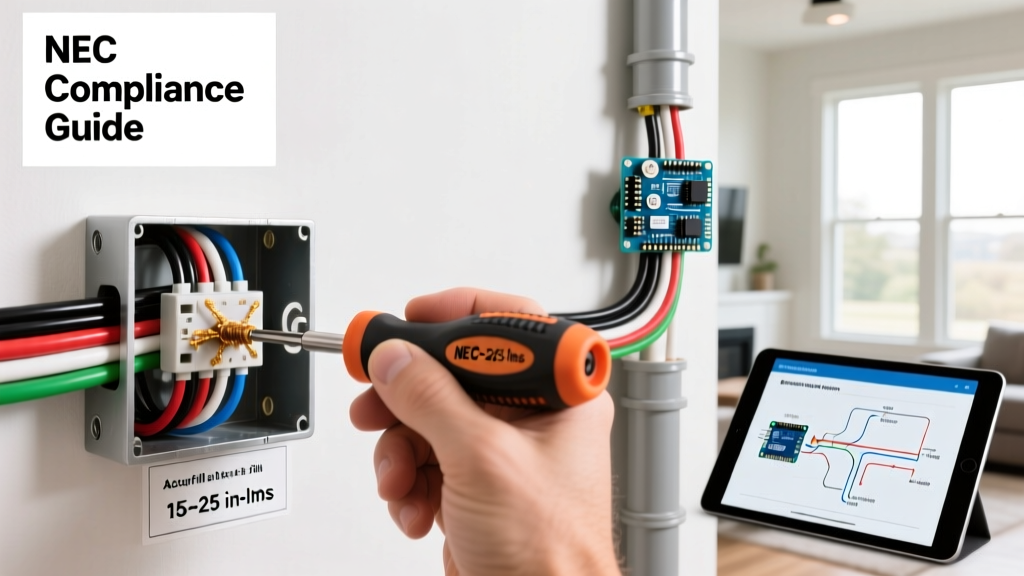
NEC Article 334.30 (Securing and Supporting): Nonmetallic-sheathed cable (NM-B) must be secured by staples, cable ties, straps, hangers, or similar fittings at intervals not exceeding 4.5 feet (1.4 m) and within 12 inches (300 mm) of every outlet box, junction box, cabinet, or fitting.
According to NFPA 70 (NEC) guidelines, this strict spacing requirement means a standard 2,000-square-foot home requiring 4,500 feet of NM-B cable will need a minimum of 1,200 to 1,500 individual staple points.
Time-Motion Installation Estimates
- Wood Studs (Standard Stapler): An experienced electrician can install 150-200 staples per hour using a pneumatic or heavy-duty manual cable stapler. Labor cost per 100 clips: ~$35.
- Concrete Masonry (Hammer Drill & Anchors): Drilling 3/16-inch holes for masonry nails or plastic anchors slows production to 40-50 clips per hour. Labor cost per 100 clips: ~$150.
- Powder-Actuated (Direct to Steel/Concrete): Using a low-velocity powder tool increases speed back to 120+ clips per hour, but adds $0.85 per fastener in powder-load and pin costs.
Real-World Project Estimation Scenarios
To illustrate how these variables impact a budget, consider these two common 2026 project profiles.
Scenario A: Residential Basement Remodel (1,000 Sq. Ft.)
- Cable Type: 12/2 NM-B (approx. 1,200 linear feet).
- Clip Requirement: ~350 insulated 1/2-inch steel staples (Gardner Bender or equivalent).
- Material Cost: $12.00 (Bulk box).
- Labor Time: 2.5 hours of dedicated fastening time.
- Labor Cost: $237.50 (at $95/hr).
- Total Clip & Fastening Budget: $249.50
Scenario B: Commercial Warehouse LED Retrofit
- Cable Type: MC (Metal Clad) Cable and 3/4-inch EMT drops.
- Clip Requirement: 400 heavy-duty steel MC cable stackers and 150 galvanized conduit cleats.
- Material Cost: $380 (Stackers) + $210 (Cleats & Masonry Screws) = $590.
- Labor Time: 14 hours (overhead ladder/lift work on CMU walls).
- Labor Cost: $1,750 (at $125/hr commercial rate).
- Total Clip & Fastening Budget: $2,340.00
Common Failure Modes and Edge Cases
When estimating costs, always factor in a 5% contingency for edge cases and structural anomalies that force a change in clip type mid-project. Industry data featured in Electrical Construction & Maintenance (EC&M) frequently highlights the following field failures:
- Galvanic Corrosion: Using standard zinc-plated steel clips to secure bare copper grounding wires or aluminum-sheathed cables in damp environments creates a galvanic cell. The steel rusts, and the conductor degrades. Solution: Budget for tin-plated copper or isolated nylon clips in damp locations.
- Cable Jacket Piercing: Using standard 1/2-inch staples on 12/2 or 10/3 NM-B cable without a depth-stop stapler frequently results in piercing the PVC jacket and nicking the copper. This causes arc faults and fails inspection. Solution: Always estimate for insulated stackers or depth-adjustable staplers when using large-gauge Romex.
- Thermal Creep in Plenums: Standard nylon zip-ties and mounts are strictly prohibited in return-air plenums due to toxic smoke emission during a fire. Solution: You must budget for metal P-clips or specifically rated plenum-grade fluoropolymer mounts, which cost 400% more than standard nylon.
Frequently Asked Questions (FAQ)
Can I use zip-ties instead of manufactured electric clips for wiring?
The NEC allows cable ties to secure wiring, provided they are listed for the purpose. However, standard hardware-store zip-ties lack a mounting head and require a separate screw-mount base. Furthermore, inspectors will reject standard nylon zip-ties in plenum spaces or outdoor UV applications unless they carry specific UL listings (e.g., UL 62275). Always budget for listed cable management systems rather than generic ties.
Do smart home wiring harnesses require different clips?
Yes. Low-voltage data cables (Cat6A, fiber optic) have strict bend-radius requirements. Using standard nail-in staples will crush the dielectric foam inside Cat6A, destroying its 10Gbps transmission capabilities. You must estimate for specialized J-hooks, Velcro straps, or wide-radius plastic clips specifically designed for data harnesses.
How do I account for waste in my material estimate?
For standard residential staples, factor in a 10% waste and misfire rate. Pneumatic staplers occasionally jam, and manual staplers frequently bend nails when hitting dense engineered lumber (LVL) or knots in standard SPF studs. For expensive stainless steel conduit cleats, assume a 2% waste rate.