
The Great Debate: Tackling Electrical Installation House Wiring Yourself
The decision to undertake a major electrical installation house wiring project is one of the most consequential choices a homeowner can make. With the rise of high-draw appliances, Level 2 EV chargers, and whole-home smart automation in 2026, the demand for robust, modern electrical systems has never been higher. However, the gap between watching a YouTube tutorial and successfully passing a municipal rough-in inspection is vast. While swapping out a single duplex receptacle is a standard weekend task, rewiring a home or installing a new 200-amp service requires a deep understanding of the National Electrical Code (NEC), load calculations, and precise physical execution.
This analysis breaks down the financial realities, code compliance hurdles, and catastrophic failure modes associated with DIY versus professional electrical installation house wiring, giving you the data needed to make an informed decision for your property.
The Financial Reality: DIY Materials vs. Professional Labor
The most common driver for DIY electrical work is cost avoidance. Professional electricians in 2026 charge between $85 and $150 per hour, and whole-house rewiring projects typically range from $4 to $8 per square foot. However, the material costs for DIYers have also risen due to global copper market fluctuations and the increased complexity of modern code-mandated safety devices.
Below is a comparative cost matrix for a standard 2,000-square-foot home undergoing a complete rewire, including a new 200A panel, 40 circuits, and smart-home-ready low-voltage pathways.
| Project Phase / Component | DIY Cost Estimate (2026) | Professional Cost Estimate | Key Variables & Notes |
|---|---|---|---|
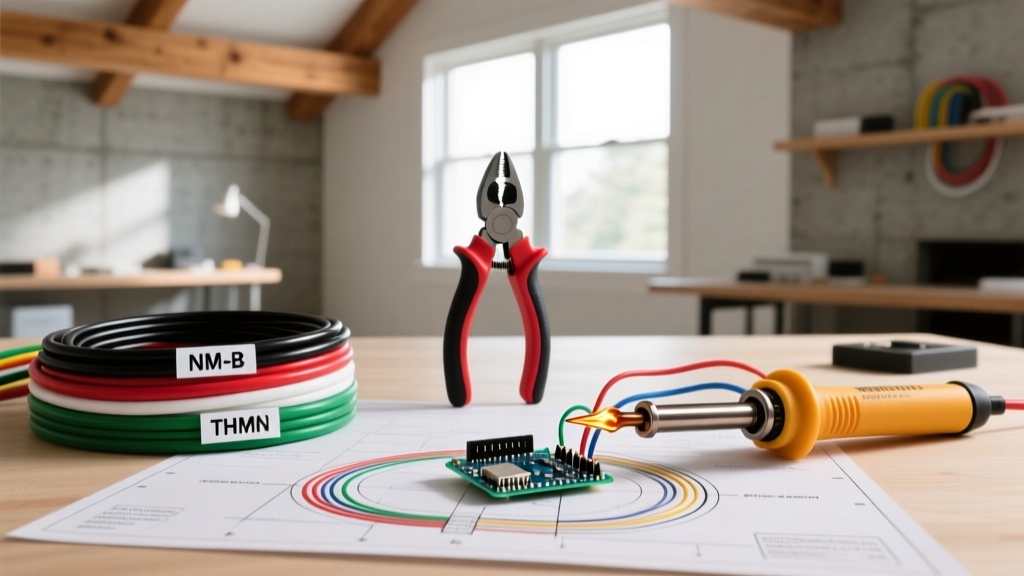
| Wire & Cable (NM-B / THHN) | $2,800 - $3,500 | $4,000 - $5,500 | Pros buy in bulk master reels; DIYers pay retail markup on 250ft rolls. |
| Load Center & Breakers | $1,800 - $2,400 | $2,500 - $3,200 | NEC mandates AFCI/GFCI combo breakers ($55+ each) for most living spaces. |
| Devices, Boxes & Trim | $800 - $1,200 | $1,200 - $1,800 | Includes commercial-grade spec receptacles, deep remodel boxes, and nail plates. |
| Permits & Inspections | $250 - $600 | $300 - $800 | Some jurisdictions restrict permit pulling to licensed contractors only. |
| Labor & Project Management | $0 (Sweat Equity) | $6,000 - $12,000 | Pros complete a 2,000 sq ft rewire in 5-8 days; DIY takes 3-6 weeks. |
| Total Estimated Cost | $5,650 - $7,700 | $14,000 - $23,300 | DIY saves roughly 60%, but carries immense liability and time costs. |
Navigating the NEC: Permits, Inspections, and Code Traps
The NEC is updated every three years, and by 2026, the vast majority of US municipalities have adopted either the 2020 or 2023 editions, with early adopters moving to the 2026 standards. According to the NFPA Code Adoption Tracker, local amendments often make these codes even stricter. The most significant hurdle for DIYers is not the physical pulling of wire, but the administrative and technical compliance required to pass inspections.
Code Warning: Failing to pull a permit for a major electrical installation house wiring project can result in your insurance provider denying claims in the event of an electrical fire, and can halt the sale of your home during a buyer's inspection contingency.
Common Code Traps for DIYers
- NM-B Stapling and Clearance (NEC 300.4): Wires must be kept at least 1.25 inches back from the face of the framing stud. If the stud is narrow or the wire is routed through a bored hole too close to the edge, a steel nail plate must be installed. DIYers frequently miss this, leading to failed rough-in inspections and future drywall screw punctures.
- Box Fill Calculations (NEC Article 314): Every junction box and device box has a maximum cubic inch capacity based on the number and gauge of wires, clamps, and devices inside. Cramming six 12/2 cables into a standard 18-cubic-inch remodel box is a severe code violation and a fire hazard.
- AFCI/GFCI Expansion: Modern codes require Arc-Fault Circuit Interrupter (AFCI) protection in almost all living areas, and Ground-Fault (GFCI) protection in kitchens, baths, garages, and outdoors. Using dual-function CAFCI/GFCI breakers is often the cleanest solution, but it drastically increases the panel budget.
Common DIY Failure Modes (And How Pros Avoid Them)
When professional electrical installation house wiring fails, it is usually due to long-term degradation or external damage. When DIY wiring fails, it is almost always due to fundamental installation errors made on day one. The NFPA Fire Statistical Reports consistently highlight that electrical distribution and lighting equipment is a leading cause of home structure fires, often stemming from poor workmanship.
1. Multi-Wire Branch Circuit (MWBC) Neutral Overloads
An MWBC shares a single neutral wire between two hot legs on opposite phases. If a DIYer replaces the original 2-pole breaker with two separate single-pole breakers without installing a handle tie, a future homeowner might turn off only one breaker to work on a circuit. The shared neutral will still be carrying the return current from the active leg, and if the circuits are heavily loaded, the neutral can overheat and melt inside the wall, as it is not protected by a breaker on its specific leg.
2. Improper Torque on Breaker Lugs
Tightening a breaker lug 'until it feels tight' is a recipe for thermal runaway. Copper and aluminum expand and contract at different rates under load. If a 100A main breaker lug is under-torqued, the resulting micro-arcing generates immense heat, eventually melting the bus bar. Pros use calibrated dial torque screwdrivers (like the CDI 401SMV or Wera VDE series) and torque wrenches to hit exact manufacturer specifications—typically 35 to 50 inch-pounds for standard branch circuit breakers in Square D or Siemens panels.
3. Undersized Grounding Electrode Conductors (GEC)
When upgrading to a 200-amp service, NEC Table 250.66 mandates a minimum #4 AWG copper wire for the grounding electrode conductor connecting the panel to the ground rods or ufer ground. DIYers frequently attempt to reuse the existing #6 AWG wire from an old 100-amp panel to save money, creating a dangerous bottleneck that cannot safely clear a high-fault current event.
The Decision Framework: What You Can (and Cannot) DIY
To help you decide how to approach your electrical installation house wiring project, we have categorized common tasks based on risk, code complexity, and required tooling. According to industry data from Angi's Rewiring Cost Guide, labor makes up the bulk of professional costs, but the liability transfer is often worth the premium.
Green Light: Safe for Experienced DIYers
- Device Swaps: Replacing standard receptacles, switches, and hardwired light fixtures on existing, code-compliant circuits.
- Like-for-Like Panel Breaker Swaps: Adding or replacing a standard breaker in an existing panel (provided the panel is not a recalled Federal Pacific or Zinsco model, and box fill/bus bar ratings are not exceeded).
- Low-Voltage Wiring: Running Cat6, coaxial, or thermostat wire (under 50V) does not require the same stringent NEC compliance as line-voltage wiring, making it an excellent DIY starting point.
Red Light: Hire a Licensed Professional
- Main Service Upgrades: Dropping the utility feed, swapping the meter base, and installing a new 200A/400A load center. This requires coordination with the utility company and carries lethal arc-flash risks.
- Whole-House Rewires: Fishing wires through finished walls, managing box fill, and executing complex 3-way/4-way switch loops across multiple floors.
- Subpanel Installations: Running heavy-gauge feeder wire (e.g., 2/2/2/4 MHF or THHN in conduit) and properly separating the neutral and ground bars in a subpanel—a mistake that creates parallel neutral paths and shock hazards.
Final Verdict: Investing in Safety and Compliance
While the upfront cost of professional electrical installation house wiring is significantly higher than the DIY route, the value extends far beyond mere convenience. Licensed electricians carry liability insurance, pull the necessary permits, and provide warranties on their labor. More importantly, they possess the institutional knowledge to navigate local code amendments and avoid the hidden failure modes that cause electrical fires years down the line. If your project involves the service entrance, new dedicated circuits for high-draw appliances, or opening up finished walls, the professional route is not just a luxury—it is a critical investment in your home's safety and long-term insurability.