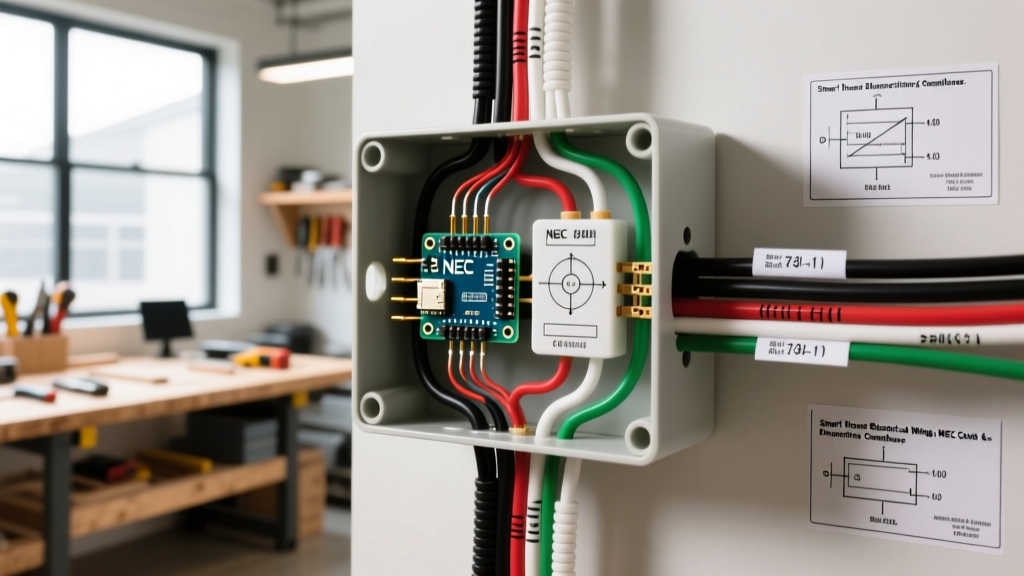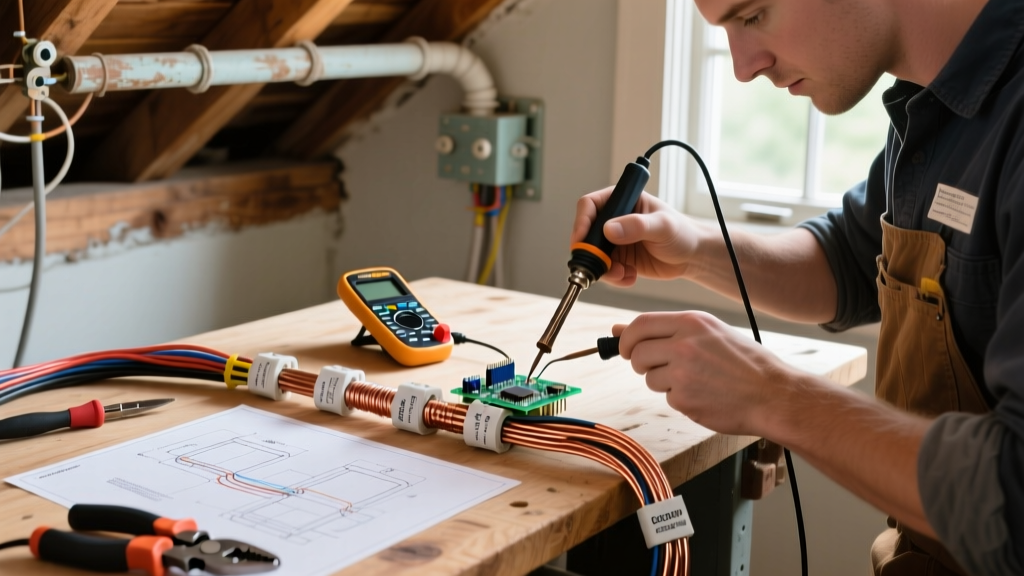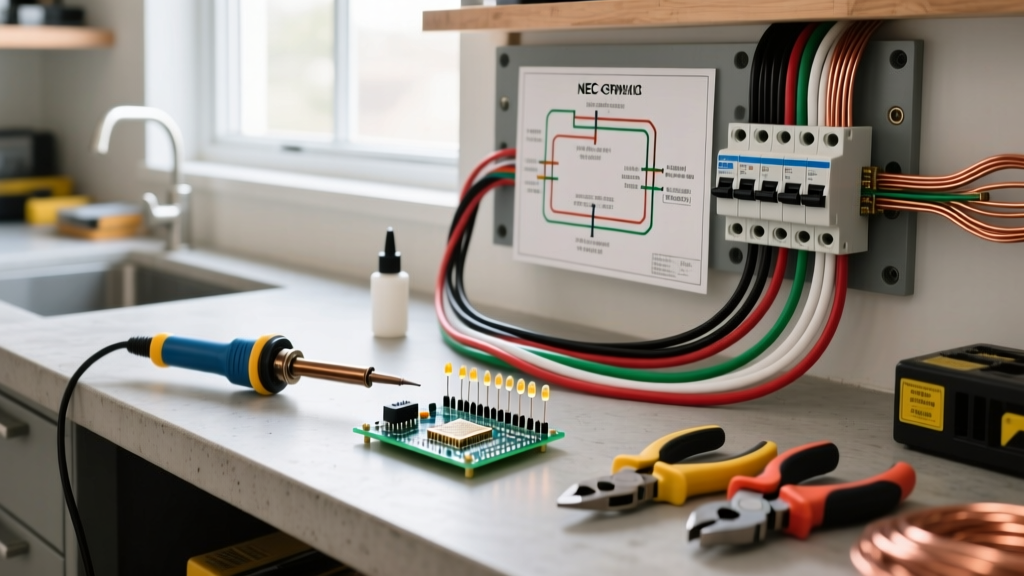

The Hidden Dangers in Residential Circuits
Understanding the basics of home electrical wiring is not merely about making a light turn on; it is fundamentally about managing thermal energy and preventing catastrophic failure. According to the National Fire Protection Association (NFPA), electrical failures and malfunctions account for roughly 13% of all home structure fires, resulting in over $1.5 billion in direct property damage annually. The majority of these incidents do not stem from complex engineering flaws, but from basic misunderstandings of circuit capacity, improper terminations, and outdated protection devices.
When approaching any residential wiring project—whether you are extending a 20-amp kitchen circuit or replacing a damaged receptacle—safety protocols must dictate your workflow. This guide bypasses superficial DIY advice and dives into the exact National Electrical Code (NEC) standards, torque specifications, and testing methodologies required to ensure your home's electrical infrastructure remains safe and compliant in 2026.
Decoding the Breaker Panel: Your First Line of Defense
The service panel is the brain of your home's electrical system. Modern panels, such as the Square D QO series or Eaton BR line, utilize thermal-magnetic trip mechanisms designed to protect the wire, not the appliance. The thermal element responds to slow, sustained overloads (like plugging three space heaters into a single 15-amp circuit), while the magnetic element trips instantaneously during a short circuit.
A critical safety practice often ignored by DIYers is matching the breaker brand to the panel manufacturer. While a breaker might physically snap into a bus bar stab of a different brand, the UL listing is voided. The contact resistance between mismatched breakers and bus bars increases over time, generating localized heat that can melt the panel's interior insulation long before the breaker trips.
Arc Fault vs. Ground Fault: A Critical Comparison
The National Electrical Code (NEC / NFPA 70) has drastically expanded the requirements for advanced protection devices over the last few cycles. Understanding the difference between AFCI and GFCI is non-negotiable for modern wiring safety.
| Protection Type | Trip Threshold | Primary Hazard Prevented | Typical Cost (2026) | NEC Required Locations |
|---|---|---|---|---|
| AFCI (Arc Fault) | Parallel: 75A / Series: 5A | Electrical Fires (Arcing) | $38 - $55 | Bedrooms, living rooms, kitchens, laundry |
| GFCI (Ground Fault) | 4 to 6 milliamps | Electrocution / Shock | $25 - $42 | Bathrooms, garages, outdoors, within 6ft of sinks |
| Dual Function (DF) | Combined AFCI + GFCI | Fire and Shock | $55 - $75 | Kitchens and laundry rooms (where both are mandated) |
Wire Gauge and Ampacity: The Math That Prevents Fires
Wire sizing is governed by the physics of resistive heating (I²R). As current flows through copper, resistance generates heat. If the wire is too thin for the amperage, the insulation (typically rated for 90°C) will degrade, melt, and eventually ignite surrounding framing.
- 14 AWG Copper: Rated for 15 Amps. Used exclusively for general lighting and bedroom receptacles.
- 12 AWG Copper: Rated for 20 Amps. The standard for kitchen, bathroom, and outdoor receptacles.
- 10 AWG Copper: Rated for 30 Amps. Reserved for heavy appliances like electric dryers and RV hookups.
Expert Insight: The 60°C Termination Rule
Most DIYers look at NEC Table 310.16 and assume they can push 12 AWG THHN wire (rated 30A at 90°C) to 30 amps. This is a fatal error. Per NEC 110.14(C), because standard residential breakers and receptacles are only tested and rated for 60°C or 75°C terminations, you must size the wire based on the lowest temperature rating in the circuit. Therefore, 12 AWG wire is strictly capped at 20 Amps in residential applications, regardless of its 90°C insulation rating.
Safe Stripping and Termination Techniques
The U.S. Consumer Product Safety Commission (CPSC) frequently flags improper wire termination as a leading cause of residential electrical fires. The days of casually pushing stripped wire into the back of a receptacle are over.
Why You Must Avoid "Backstabbing"
Push-in (backstab) terminals rely on a small internal spring-metal wedge to grip the wire. Under continuous high-draw loads (like a 1,500-watt microwave), thermal expansion and contraction cause this wedge to loosen over time. This creates a high-resistance connection, leading to arcing and melting. Always use the screw terminals.
The Torque Specification Mandate
Since the 2017 NEC cycle, torque specifications for electrical terminations have been strictly enforced. Under-tightening a lug causes arcing; over-tightening strips the threads or shears the conductor. For a standard Square D QO 20-amp breaker, the terminal lug requires exactly 35 inch-pounds of torque. Professionals use calibrated torque screwdrivers, such as the WIHA 32081 or Klein Tools 32500, to ensure the connection is mechanically sound and electrically optimal.
The Multimeter Protocol: Verifying a Dead Circuit
Never trust a breaker label. Panels are frequently mislabeled by previous owners or electricians. Before stripping any wire, you must verify the absence of voltage using a True-RMS multimeter (like the Fluke 117) or a dedicated non-contact voltage tester (like the Klein NCVT-3). Follow the strict "Live-Dead-Live" testing protocol:
- Test a Known Live Source: Insert your probes into a confirmed active outlet to verify your meter is functioning and the battery is not dead.
- Test the Target Circuit: Turn off the breaker. Test the target receptacle or wire. Test Hot-to-Neutral, Hot-to-Ground, and Neutral-to-Ground to check for backfed voltage or shared neutrals.
- Test the Known Live Source Again: Return to the active outlet to confirm the meter did not fail or blow an internal fuse during step two.
Frequently Asked Questions (FAQ)
Can I mix 14 AWG and 12 AWG wire on the same 20-amp circuit?
No. While physically possible, it is a severe code violation and safety hazard. If you place 14 AWG wire (rated for 15A) on a 20-amp breaker, the breaker will not trip until the current exceeds 20 amps. In the event of an 18-amp overload, the 14 AWG wire will overheat and potentially catch fire while the breaker remains completely closed.
Is it safe to use aluminum wire for home branch circuits?
Modern AA-8000 series aluminum alloy wire is perfectly safe and code-compliant for large feeder cables (like service entrance conductors or sub-panel feeds) when properly terminated with anti-oxidant paste (e.g., Noalox) and torqued to spec. However, solid aluminum branch circuit wiring (14 or 12 AWG) installed in the 1960s and 70s is a known fire hazard due to thermal expansion mismatches with copper/brass terminals and should be evaluated by a licensed electrician for pigtail remediation using COPALUM or AlumiConn connectors.
Do I need a permit to replace a single electrical outlet?
In most jurisdictions, like-for-like replacements of receptacles, switches, and light fixtures do not require a permit, provided you are not altering the circuit's capacity or adding new wiring. However, upgrading a standard 2-prong outlet to a grounded 3-prong outlet, or adding GFCI protection to an ungrounded circuit, may trigger local inspection requirements depending on your municipal building codes. Always check with your local Authority Having Jurisdiction (AHJ) before beginning work.