
The Definitive Answer: Is Rubber an Insulator or Conductor?
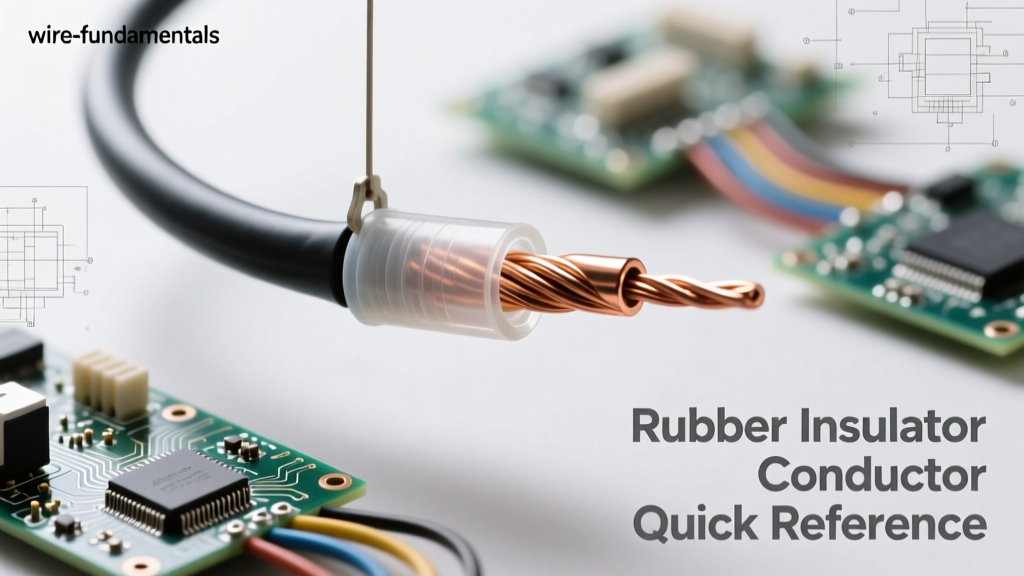
When electrical apprentices, engineers, and DIYers search the exact phrase is rubber a insulator or conductor, they are usually holding a piece of flexible, heavy-duty cable and wondering about its safety profile. The definitive answer is that pure, natural rubber is a highly effective electrical insulator. It possesses a high dielectric strength and immense electrical resistivity, making it fundamentally incapable of conducting electricity under normal operating voltages.
However, in modern electrical engineering, the rubber used in wire insulation and cable jacketing is rarely 'pure.' It is a highly engineered elastomer compounded with fillers, vulcanizing agents, and chemical protectants. While these compounds remain insulators, specific manufacturing variations—such as carbon-black doping or the addition of metallic powders—can alter the material's electrical properties. This quick-reference guide breaks down the molecular physics, dielectric data, and field applications of rubber in electrical systems.
The Physics: Why Pure Rubber Blocks Current
To understand why rubber resists electrical flow, we must look at solid-state physics and band theory. In conductive materials like copper, the valence band (where electrons reside) and the conduction band (where electrons move freely) overlap. This allows electrons to drift easily when a voltage is applied.
Rubber, primarily composed of polyisoprene polymers, features strong covalent bonds that tightly lock valence electrons in place. The 'band gap'—the energy required to excite an electron from the valence band to the conduction band—is exceptionally wide, typically exceeding 5.0 electron volts (eV). Because standard electrical systems (120V to 35kV) cannot provide the localized energy density required to bridge this massive band gap, the electrons remain bound, and the material acts as a robust insulator. According to testing standards like ASTM D149 for Dielectric Breakdown Voltage, it takes an immense concentration of electrical pressure (kV/mm) to force a conductive path through virgin rubber.
Quick-Reference Table: Dielectric Strength of Rubber Compounds
Not all rubber is created equal. The table below outlines the dielectric strength and thermal limits of the most common rubber-based insulations and jackets used in wire manufacturing, compliant with NFPA 70 (National Electrical Code) standards.
| Material Type | Dielectric Strength (kV/mm) | Max Continuous Temp | Primary Electrical Application |
|---|---|---|---|
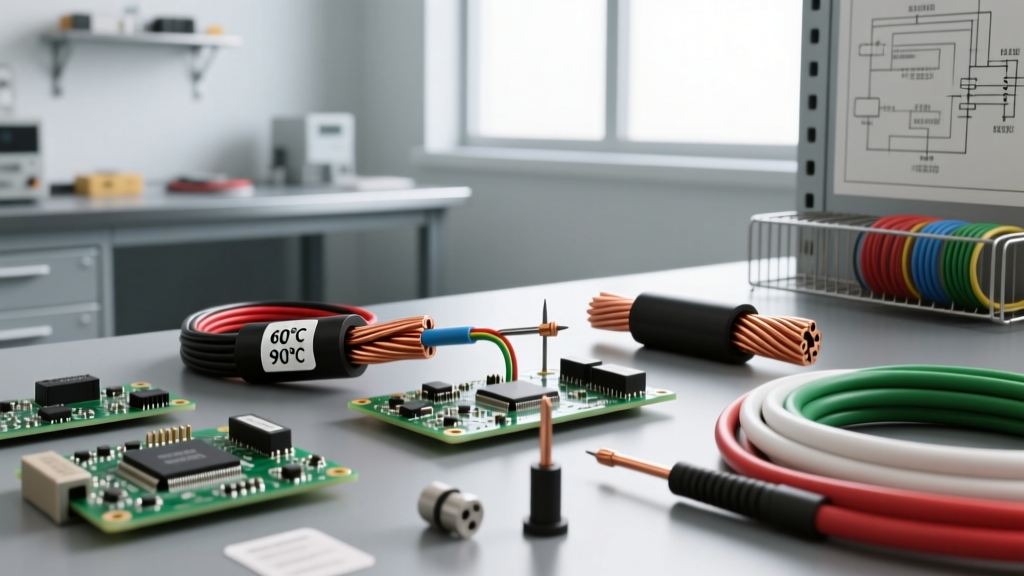
| Natural Rubber (Polyisoprene) | 25 - 40 kV/mm | 75°C | Legacy wiring, antique restoration, low-voltage flex cords. |
| EPR (Ethylene Propylene Rubber) | 25 - 35 kV/mm | 90°C - 105°C | Medium/High Voltage underground cables, motor leads. |
| Silicone Rubber | 20 - 30 kV/mm | 150°C - 200°C | High-temp appliance wiring, aerospace, industrial ovens. |
| Neoprene (Polychloroprene) | 15 - 20 kV/mm | 90°C | Heavy-duty cable outer jackets (SOOW, SJOOW). |
| EPDM (Ethylene Propylene Diene) | 20 - 30 kV/mm | 90°C | Splicing tape, busbar insulation, outdoor terminations. |
The Exceptions: When Rubber Becomes Conductive
While rubber is fundamentally an insulator, specific engineered scenarios can render it conductive or dangerously leaky:
- Carbon Black Doping: Carbon black is routinely added to rubber jackets (like Neoprene) to provide UV protection and ozone resistance. If the carbon black concentration is too high, or if it forms continuous percolation networks within the polymer matrix, the rubber's volume resistivity drops drastically, allowing micro-currents to leak.
- Conductive Silicones: In EMI/RFI shielding applications, silicone rubber is intentionally doped with silver, nickel, or copper particles. This creates a highly conductive elastomer used for gaskets in military and telecommunications enclosures.
- Moisture and Surface Tracking: Rubber is naturally hydrophobic. However, if a rubber-insulated cable is exposed to industrial dust, salt spray, and moisture, a conductive film can form on the surface. This leads to 'tracking'—a phenomenon where leakage currents carbonize the surface, eventually creating a permanent, conductive path through the insulation.
- Thermal Degradation: When rubber is subjected to temperatures beyond its rated maximum (e.g., overloading a 75°C cable to 120°C), the polymer chains break down. The material turns brittle, cracks, and absorbs ambient moisture, destroying its dielectric properties.
Field Identification: Common Rubber-Insulated Cables
Electricians and technicians frequently encounter rubber in flexible cords and heavy-duty industrial cables. Recognizing these types is critical for proper ampacity derating and environmental placement.
SOOW and SJOOW Cables
These are the workhorses of portable industrial power. The acronym dictates the rubber's properties: Service (600V), Oil-resistant outer jacket (usually Neoprene), Oil-resistant inner insulation (usually EPR or EPDM), and Water/Weather approved. The 'J' in SJOOW denotes 'Junior' (300V rating). The rubber construction allows these cables to remain flexible in sub-zero temperatures where PVC jackets would shatter.
Welding Cables
Welding cables utilize thousands of strands of fine copper wire wrapped in a thick layer of EPDM or Neoprene rubber. The rubber insulation must withstand extreme mechanical abuse, molten slag, and high ambient heat while maintaining flexibility as the welder drags the cable across the shop floor.
EPR Medium-Voltage Cables
For underground utility distribution (5kV to 35kV), EPR is the industry standard. Its high dielectric strength and resistance to 'water treeing' (a degradation phenomenon common in older XLPE cables) make it the preferred insulation for harsh, wet subterranean environments.
Troubleshooting Rubber Insulation Failure in the Field
When inspecting rubber-insulated wiring, look for these specific failure modes:
- Ozone Cracking: If you see microscopic, perpendicular cracks on the surface of a rubber jacket near high-voltage terminations, this is ozone damage. Poorly terminated connections cause 'corona discharge,' which ionizes surrounding oxygen into ozone. Ozone aggressively attacks the double-carbon bonds in rubber elastomers, causing rapid mechanical failure.
- Compression Set: Rubber can suffer from 'compression set' if clamped too tightly under cable cleats or glands for extended periods. The rubber loses its elasticity, thins out, and reduces the localized dielectric thickness, increasing the risk of puncture under fault conditions.
- Ampacity Derating: Remember that rubber insulations generally have lower thermal conductivity than thermoplastics like THHN. When bundling multiple rubber-insulated cables in a conduit, heat dissipation is poor. You must apply strict NEC ampacity derating factors to prevent the rubber from baking from the inside out.
Quick-Reference Takeaway: Pure rubber is an exceptional insulator with a massive electron band gap. However, in the field, you are dealing with engineered elastomers. Always verify the specific compound (EPR, Silicone, Neoprene), respect its maximum temperature rating, and inspect regularly for ozone tracking and compression damage to ensure dielectric integrity.