
The Core Question: Is Plastic a Conductor or Insulator?
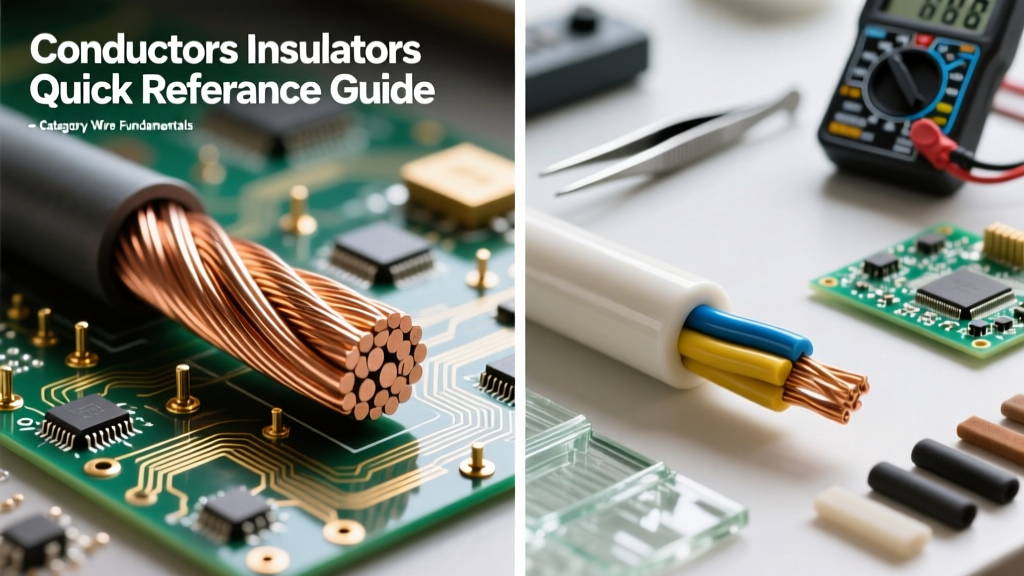
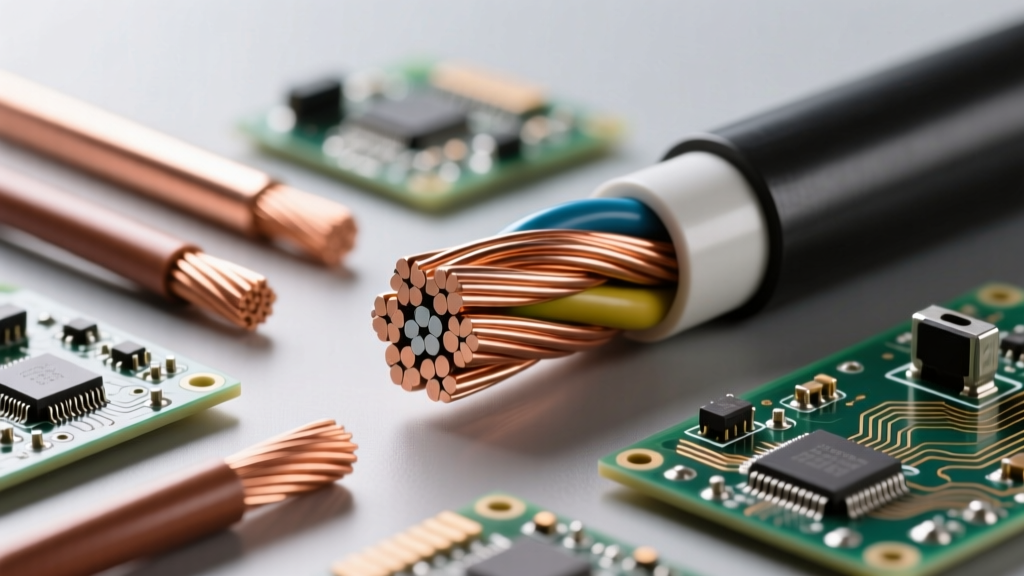
When students, DIY enthusiasts, and apprentice electricians ask, "is plastic a conductor or insulator of electricity?", the fundamental textbook answer is definitive: plastic is an insulator. Unlike copper or aluminum, which possess a "sea" of free-flowing valence electrons that readily carry electrical charge, the molecular structure of standard plastics consists of tightly bound covalent bonds. These bonds lock electrons in place, preventing the flow of electrical current under normal conditions.
However, in the realm of electrical safety and practical wiring, treating plastic as an absolute, unbreakable barrier is a dangerous oversimplification. According to OSHA electrical safety guidelines, insulation failure is a leading cause of arc flashes, short circuits, and electrical fires. To work safely with wiring, you must understand not just that plastic insulates, but exactly when and how it stops insulating. This safety guide explores the physics of polymer insulation, the phenomenon of dielectric breakdown, and the hidden risks of carbon tracking.
The Physics of Polymer Insulation
To understand why plastic resists electricity, we must look at its atomic structure. Conductors have overlapping valence and conduction bands, allowing electrons to jump freely. Insulators like polyvinyl chloride (PVC) or cross-linked polyethylene (XLPE) feature a massive "band gap." It requires an extraordinary amount of energy to excite an electron across this gap. In standard household wiring (120V to 240V), the electrical pressure (voltage) is vastly insufficient to bridge this gap, making the plastic jacket a highly effective safety barrier.
The Danger Zone: Dielectric Breakdown Explained
No insulator is perfect. Every plastic material has a specific threshold known as its dielectric strength, typically measured in kilovolts per millimeter (kV/mm). This metric defines the maximum electrical field the plastic can withstand before its molecular structure is violently torn apart, allowing current to punch directly through the material.
For instance, standard PVC has a dielectric strength of roughly 20 to 40 kV/mm. If you have a 1mm thick PVC wire jacket, it would theoretically take 20,000 to 40,000 volts to cause a pure dielectric puncture. While this seems like a massive safety margin for a 120V household circuit, the real-world safety margin is drastically reduced by physical imperfections, thermal thinning, and manufacturing micro-voids. As detailed by Georgia State University's HyperPhysics, the dielectric breakdown of solid insulators is often catastrophic and irreversible, resulting in a permanent conductive puncture path.
Carbon Tracking: When Plastic Turns Conductive
The most severe safety hazard regarding plastic insulation is not pure voltage puncture, but a phenomenon called carbon tracking (or arc tracking). This is where the answer to "is plastic a conductor" shifts from "no" to "yes, fatally."
When a high-voltage arc occurs across the surface of a plastic insulator—or when a wire overheats and causes internal micro-arcing—the intense heat vaporizes the polymer. Because most common wire insulations (like PVC and PE) are hydrocarbon-based, the vaporization process leaves behind a residue of pure carbon. Carbon is a highly effective electrical conductor. Over time, these microscopic carbon deposits form a branching, tree-like conductive path across the plastic. Once the carbon track bridges the gap between the live conductor and the ground or neutral, a massive short circuit occurs, often resulting in an electrical fire.
Safety Warning: Carbon tracking is a primary reason why aerospace and high-voltage industrial applications avoid standard PVC wiring in favor of specialized fluoropolymers like PTFE (Teflon) or PEEK, which do not leave conductive carbon residues when exposed to extreme electrical arcing.
Material Comparison Chart: Dielectric Strength & Thermal Limits
Understanding the specific plastic used in your wiring is critical for safety. The table below compares common electrical plastics based on their insulating properties and failure thresholds.
| Polymer Material | Dielectric Strength (kV/mm) | Max Operating Temp | Carbon Tracking Risk | Common Application |
|---|---|---|---|---|
| PVC (Polyvinyl Chloride) | 20 - 40 | 70°C - 105°C | High | Standard residential NM-B (Romex) wiring |
| XLPE (Cross-linked PE) | 50 - 70 | 90°C - 125°C | Moderate | High-voltage underground cables, automotive |
| PTFE (Teflon) | 60 - 100 | 250°C+ | Very Low | Aerospace, military, high-temp industrial |
| Nylon (Polyamide) | 15 - 25 | 105°C | Moderate | Wire jacketing for abrasion resistance |
| PEEK | 40 - 60 | 250°C+ | Low | Specialized high-performance electronics |
Environmental and Mechanical Degradation Risks
Even if the voltage never exceeds the dielectric strength, plastic insulation can degrade into a conductive hazard through environmental and mechanical stressors. Safety inspections must account for the following failure modes:
- Photodegradation (UV Exposure): Plastics like PVC and PE are highly susceptible to ultraviolet radiation. UV light breaks the long polymer chains, causing the plastic to become brittle and develop micro-cracks. These cracks allow moisture to reach the conductor. Water, combined with environmental dust, creates a highly conductive surface layer that bypasses the plastic's insulating properties entirely.
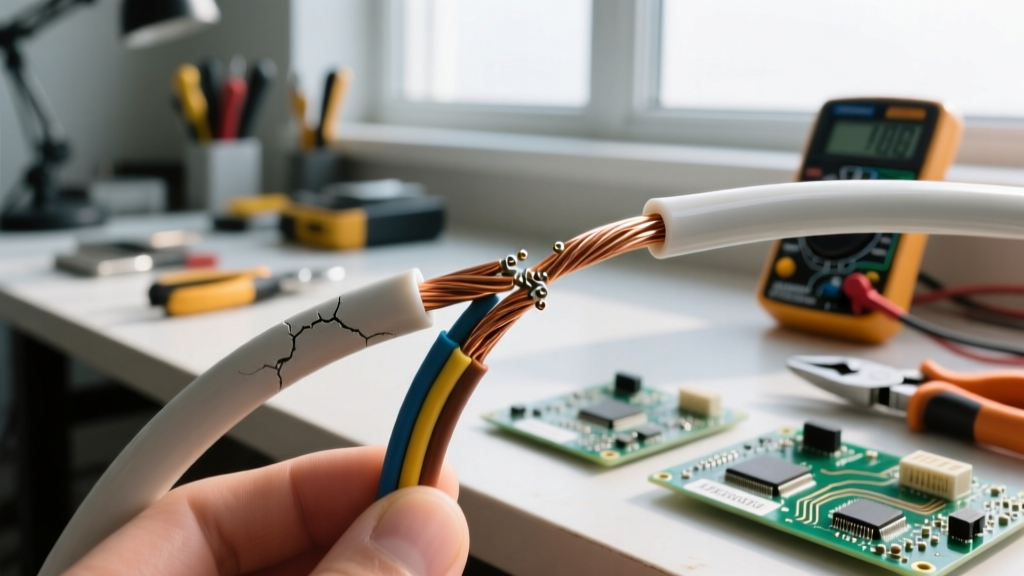
- Thermal Cycling and Plasticizer Loss: Over time, the chemical plasticizers added to PVC to keep it flexible evaporate or bake out due to continuous thermal cycling (the wire heating up under load and cooling down). The resulting "dry rot" causes the insulation to crack when the wire is bent, exposing live conductors.
- Mechanical Compression: Over-tightening cable clamps or staples compresses the plastic jacket. If a 1mm jacket is compressed to 0.2mm, its dielectric breakdown threshold is reduced by 80%, making it highly vulnerable to voltage spikes and surges.
Conductive Polymers: The Engineered Exceptions
For the sake of scientific accuracy, it is worth noting that some plastics are engineered specifically to be conductors. In the late 1970s, scientists discovered that doping certain polymers, such as polyacetylene, with iodine or other halogens could create a molecular structure capable of conducting electricity. This discovery won the 2000 Nobel Prize in Chemistry.
Today, Intrinsically Conductive Polymers (ICPs) like PEDOT:PSS are used in antistatic packaging, OLED displays, and specialized sensors. However, you will never find these materials used as standard wire insulation. If you are handling standard electrical wiring, circuit breaker casings, or junction boxes, the plastic is definitively engineered to be an insulator.
Field Safety Checklist for Inspecting Plastic Insulation
To maintain a safe electrical environment, DIYers and professionals should never assume plastic insulation is infallible. Implement the following inspection protocols based on guidelines aligned with the NFPA 70 (National Electrical Code):
- Visual and Tactile Inspection: Run your fingers along older wiring (especially in attics or near heat sources). If the PVC jacket feels stiff, cracked, or flakes off like a dry leaf, the plasticizers have failed. The wire must be replaced immediately.
- Check for Crown Marks: Inspect areas where wires pass through metal studs or joists. If the plastic jacket shows a flattened "crown" or indentation from a staple, the localized reduction in dielectric thickness is a severe shock and fire hazard.
- Megohmmeter (Megger) Testing: For industrial or heavy-duty DIY projects, do not rely on visual inspection alone. Use a Megger to apply a high-voltage DC charge (e.g., 500V or 1000V) to measure the insulation resistance. A reading below 1 Megohm indicates that the plastic's insulating integrity has been compromised by moisture, carbon tracking, or internal degradation.
- Respect Bend Radii: Never bend a wire tighter than its specified minimum bend radius. Sharp bends stretch the outer layer of the plastic jacket, thinning it out and creating microscopic stress fractures that invite moisture and eventual dielectric failure.
Final Safety Verdict
So, is plastic a conductor or insulator of electricity? Under normal, undamaged conditions, plastic is a highly reliable and essential electrical insulator. However, safety professionals know that insulation is not a permanent state—it is a conditional one. Heat, UV radiation, mechanical stress, and electrical arcing can all transform a safe plastic insulator into a conductive pathway for disaster. Always respect the thermal and dielectric limits of your wiring materials, and replace any polymer insulation that shows signs of physical or environmental degradation.