
The Core Question: Is Paper a Conductor or Insulator?
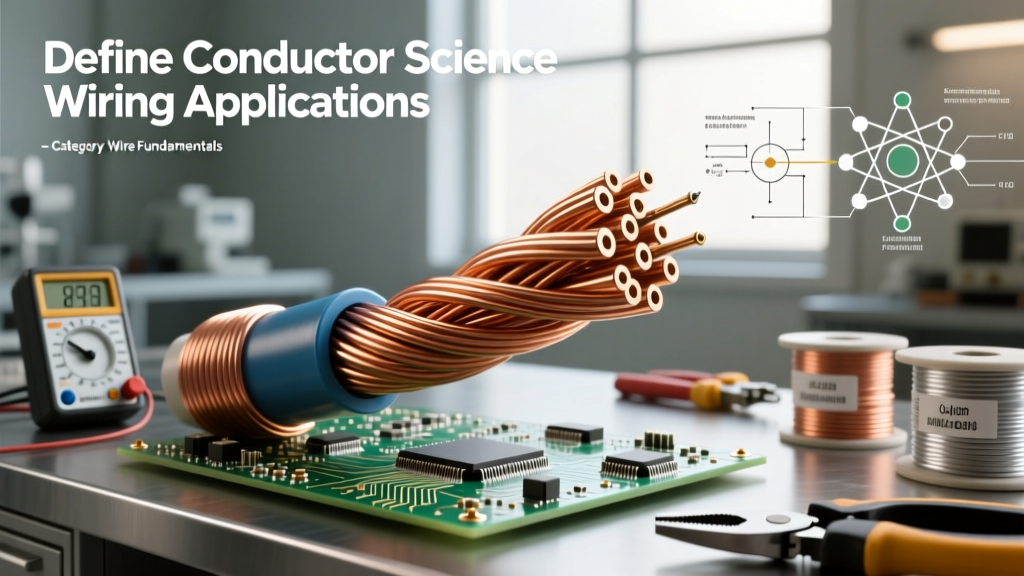
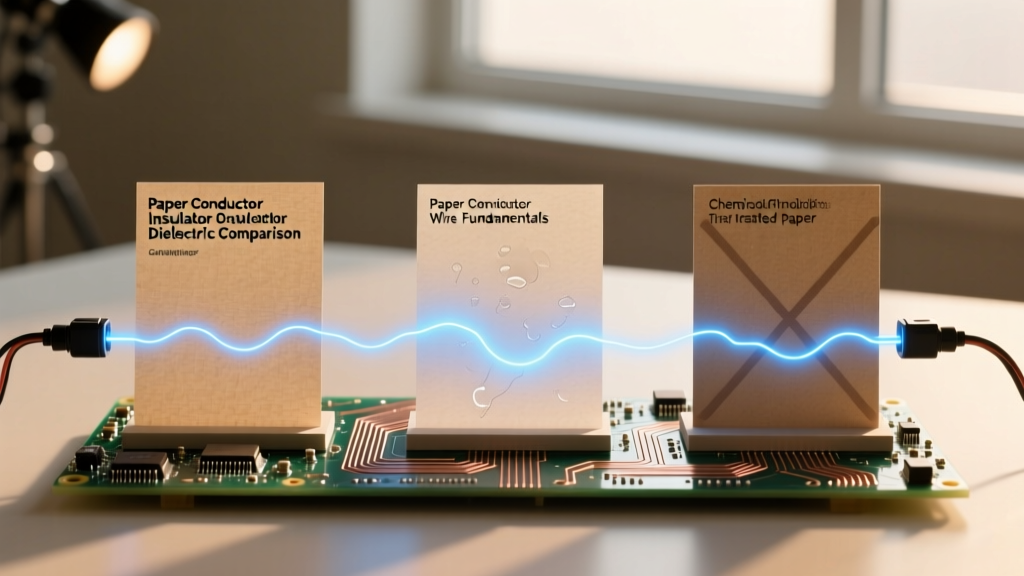
When evaluating fundamental electrical materials, a common question arises among DIY enthusiasts and junior engineers: is paper a conductor or insulator? The definitive answer is that in its natural, dry, and untreated state, paper is an insulator (specifically, a dielectric). It possesses a high volume resistivity and a wide electronic bandgap, preventing the free flow of electrical current. However, paper's insulating properties are highly conditional. Environmental factors such as moisture, chemical contamination, and thermal degradation can rapidly transform this reliable dielectric into a dangerous semiconductor or full conductor.
To understand paper's role in electrical systems, we must look beyond a simple binary classification and examine the material science of cellulose, the mechanisms of dielectric breakdown, and how engineers have historically manipulated paper to handle high-voltage applications.
The Physics of Cellulose as a Dielectric
Paper is primarily composed of cellulose, a complex carbohydrate polymer with the chemical formula (C6H10O5)n. In a dry state, the electrons within the cellulose molecular bonds are tightly bound to their respective atoms. According to Georgia State University's HyperPhysics, insulators are characterized by a large energy bandgap (typically greater than 5 eV) between the valence band and the conduction band. Because dry paper's bandgap is so wide, ambient thermal energy or standard electrical fields cannot excite electrons into the conduction band.
- Volume Resistivity (Dry): ~10^10 to 10^14 Ω·m
- Dielectric Strength (Dry): ~15 to 20 kV/mm
- Dielectric Constant (Relative Permittivity): ~1.5 to 3.0
These metrics place dry Kraft paper in the same fundamental category as glass, rubber, and dry wood, making it an excellent barrier against electrical current under controlled conditions.
Dielectric Breakdown: When Paper Transitions to a Conductor
The classification of paper as an insulator falls apart when its physical or chemical structure is compromised. There are two primary failure modes that cause paper to conduct electricity: moisture ingress and thermal carbonization.
Moisture Ingress and Ionic Conduction
Cellulose is highly hygroscopic, meaning it readily absorbs water from the atmosphere due to abundant hydroxyl (-OH) groups in its polymer chain. Pure water is a poor conductor, but the water absorbed by paper contains dissolved atmospheric gases, dust, and ionic impurities. When paper's moisture content exceeds just 2% to 3% by weight, its volume resistivity plummets from 10^14 Ω·m to as low as 10^6 Ω·m. The absorbed water creates microscopic conductive pathways, allowing leakage currents to flow. In high-voltage environments, this leakage current generates heat, which boils the moisture, creating steam pockets that lead to catastrophic dielectric breakdown.
Thermal Carbonization and Electrical Tracking
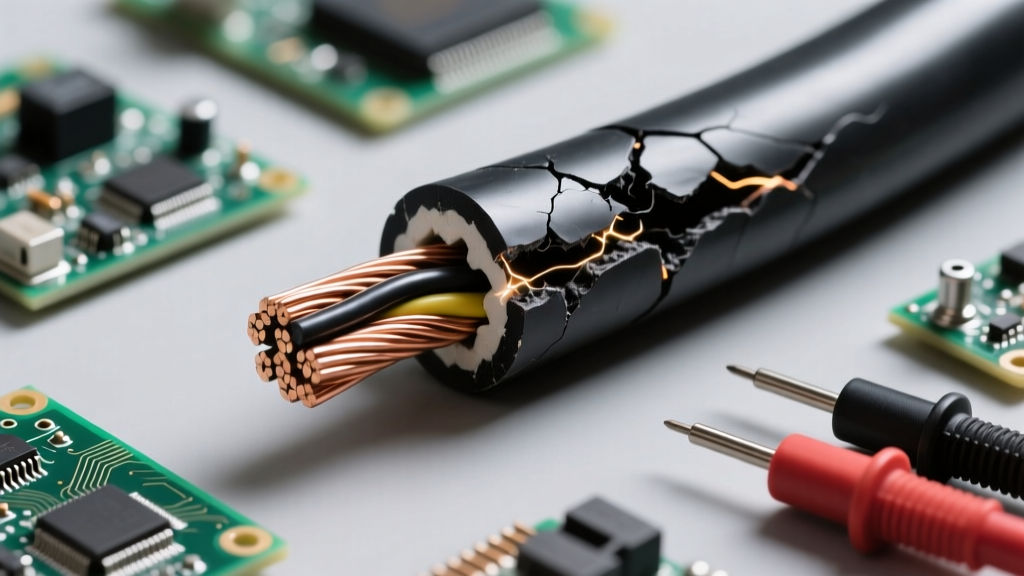
If dry paper is subjected to localized electrical arcing or extreme overheating, it undergoes pyrolysis. The heat drives off hydrogen and oxygen in the form of water vapor and volatile gases, leaving behind amorphous carbon. Unlike cellulose, carbon is a highly effective electrical conductor (resistivity of ~3 to 60 x 10^-5 Ω·m). This process, known as carbon tracking, etches a permanent, conductive carbon scar across the surface or through the bulk of the paper. Once a carbon track forms, the paper has permanently transitioned from an insulator to a conductor, often resulting in a dead short circuit.
Material Comparison: Paper vs. Modern Polymer Insulators
While paper was the backbone of early 20th-century electrical insulation, modern synthetic polymers have largely replaced it in consumer wiring. Below is a comparison of how untreated paper stacks up against standard wire insulation materials.
| Material | Dielectric Strength (kV/mm) | Max Operating Temp (°C) | Moisture Resistance | Primary Application |
|---|---|---|---|---|
| Dry Kraft Paper | 15 - 20 | 105 (Class A) | Poor (Highly Hygroscopic) | Legacy transformers, capacitors |
| PVC (Polyvinyl Chloride) | 10 - 15 | 70 - 105 | Excellent | Standard building wire (THHN/THWN) |
| XLPE (Cross-Linked PE) | 20 - 25 | 90 - 130 | Excellent | Medium/High voltage underground cables |
| PTFE (Teflon) | 60 - 100 | 260 | Impervious | Aerospace, extreme temp environments |
As noted in the DOE Electrical Science Handbook, while modern polymers offer superior moisture resistance and thermal stability, paper remains relevant in specific high-voltage applications due to its low cost, high mechanical tensile strength, and excellent compatibility with dielectric oils.
Historical and Modern Applications of Paper Dielectrics
Engineers have developed methods to mitigate paper's natural weaknesses, turning its fibrous structure into an advantage for high-voltage insulation.
Oil-Impregnated Paper Cables (PILC)
Paper Insulated Lead Covered (PILC) cables were the standard for underground high-voltage distribution from the 1920s through the 1970s. In these cables, layers of Kraft paper are wrapped tightly around the copper conductor and then vacuum-dried and impregnated with a Mass-Impregnated Non-Draining (MIND) dielectric compound (a mixture of mineral oil and rosin). The oil fills the microscopic air voids in the paper, preventing partial discharge and blocking moisture ingress. The entire core is then sheathed in a seamless lead tube. Properly maintained PILC cables have an operational lifespan exceeding 80 years, though they are now being phased out in favor of XLPE due to the environmental hazards of lead and the labor-intensive splicing process.
High-Voltage Capacitors
In capacitor design, the goal is to maximize surface area while minimizing the distance between conductive plates. Thin, highly calendered paper is used as the dielectric separator between aluminum foil layers. By impregnating the paper with wax or specialized capacitor oils, manufacturers increase the dielectric constant and prevent corona discharge. Research into dielectric materials from institutions like MIT OpenCourseWare highlights how the microscopic porosity of paper allows for deep, uniform penetration of these impregnating fluids, a property that solid plastic films struggle to match without specialized surface treatments.
Troubleshooting Paper Insulation in Legacy Electrical Systems
Electricians and maintenance engineers working on legacy industrial equipment, such as older oil-filled transformers or PILC cable networks, must regularly test the integrity of paper insulation. Because paper degrades primarily through moisture absorption and thermal aging, standard continuity testing is insufficient.
Instead, professionals use an Insulation Resistance Tester (Megger) to perform a Polarization Index (PI) test. The PI is calculated by dividing the insulation resistance reading at 10 minutes by the reading at 1 minute.
Expert Diagnostic Insight: A PI ratio of less than 1.0 indicates that the paper insulation is heavily saturated with moisture or contaminated with conductive carbon tracking, requiring immediate drying or replacement. A healthy, dry paper insulation system will typically yield a PI ratio greater than 2.0, demonstrating strong dielectric polarization over time.
Additionally, dissolved gas analysis (DGA) is used on the oil surrounding paper insulation in transformers. High levels of carbon monoxide (CO) and carbon dioxide (CO2) in the oil are direct chemical indicators that the cellulose paper is undergoing thermal degradation and losing its insulating capabilities.
Final Verdict and Safety Protocols
To definitively answer the prompt: paper is an insulator, but it is a fragile, environmentally dependent one. In a dry, controlled state, its dielectric strength is more than adequate to block electrical current. However, its extreme vulnerability to moisture and thermal carbonization means it should never be used as a primary insulator in modern residential or commercial wiring.
If you are working with vintage electronics, legacy PILC cables, or antique transformers containing paper insulation, always assume the paper has absorbed ambient moisture over the decades. Never apply high voltage to untested paper-insulated components. Always perform insulation resistance testing, and rely on modern, moisture-impervious polymers like XLPE or PVC for any new wiring or repair projects.