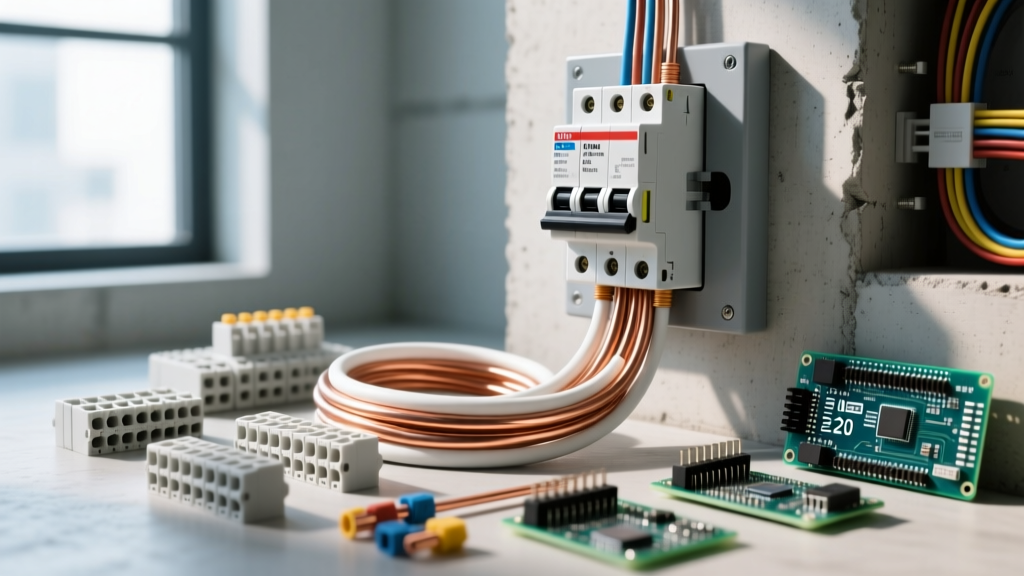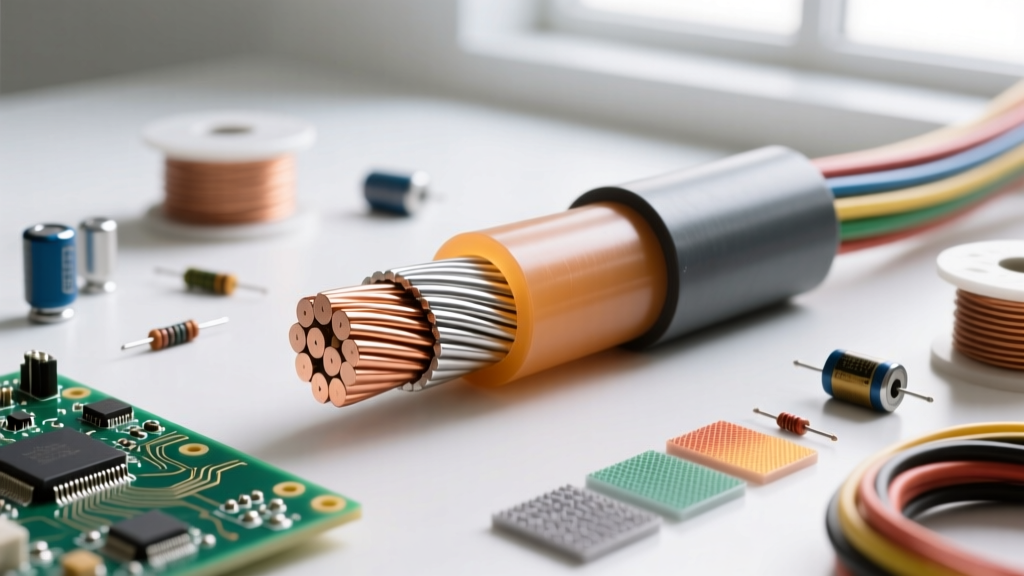

The Core Question: Insulator or Conductor?
Every time you strip a piece of 22 AWG hookup wire or solder a joint on a printed circuit board, you are relying on one of the most fundamental dichotomies in physics. But what actually makes a material allow electricity to flow freely, and what stops it dead in its tracks? When evaluating components for your next DIY electronics project or home wiring task, determining whether a specific material will act as an insulator or conductor is the foundation of both functionality and safety.
At the most basic level, a conductor is a material that permits the flow of an electric current, while an insulator resists that flow. However, as any seasoned electrical engineer will tell you, the line between the two is not just a simple binary; it is governed by atomic structure, temperature, and voltage stress. In this beginner's explainer, we will bridge the gap between quantum physics and practical wire sizing, giving you the knowledge to choose the right materials for your builds.
The Atomic Secret: Why Materials Behave Differently
To truly understand electrical flow, we have to zoom in to the atomic level. According to Georgia State University's HyperPhysics, the behavior of a material is dictated by its electron 'band gap'.
Conductors: The Free Electron Highway
In conductive materials like copper, silver, and aluminum, the valence band (where electrons normally reside) and the conduction band (where electrons are free to move) overlap. This means that even a tiny amount of voltage is enough to push electrons through the material. Copper is the undisputed king of DIY and residential wiring because it offers an optimal balance of high conductivity, ductility, and cost. Silver is technically a better conductor, but its price and tendency to tarnish make it impractical for standard wire manufacturing.
Insulators: The Electron Roadblocks
Insulators, on the other hand, feature a massive 'band gap' between the valence and conduction bands. The electrons are tightly bound to their parent atoms and require an enormous amount of energy to break free and carry a current. Materials like PVC (Polyvinyl Chloride), PTFE (Teflon), and rubber serve as the protective jackets for our wires, keeping the current exactly where we want it.
Real-World Material Showdown
When selecting wire for a project, you aren't just choosing a conductor; you are choosing an insulation system. The National Electrical Manufacturers Association (NEMA) sets rigorous standards for these combinations. Below is a comparison of common materials you will encounter in the wild.
| Material | Role | Resistivity (Ω·m) | Max Temp Rating | Common Application |
|---|---|---|---|---|
| Silver | Conductor | 1.59 × 10⁻⁸ | 961°C (Melts) | High-end audio contacts, RF connectors |
| Copper | Conductor | 1.68 × 10⁻⁸ | 1085°C (Melts) | PCB traces, THHN building wire, breadboards |
| Aluminum | Conductor | 2.82 × 10⁻⁸ | 660°C (Melts) | High-voltage transmission, service entrance cables |
| PVC | Insulator | > 10¹² | 75°C - 105°C | Standard household wiring, basic hook-up wire |
| Silicone | Insulator | > 10¹² | 150°C - 200°C | Flexible RC wiring, 3D printer hot-ends |
| PTFE (Teflon) | Insulator | > 10¹⁴ | 200°C - 260°C | Aerospace, high-temp soldering environments |
The Danger Zone: Dielectric Breakdown
One of the most critical concepts for beginners to grasp is that no insulator is perfect. If you apply enough voltage to an insulator, it will eventually become a conductor. This phenomenon is known as dielectric breakdown.
Take air, for example. Under normal conditions, air is an excellent insulator. However, if the voltage gradient exceeds roughly 3,000 volts per millimeter, the air molecules ionize, creating a conductive plasma channel. This is exactly what happens when a spark jumps across a gap, or when lightning strikes. In your DIY projects, if you route high-voltage traces too close together on a PCB without adequate clearance or conformal coating, the air (or the fiberglass substrate) will break down, resulting in a catastrophic short circuit.
Expert Safety Note: Never assume a wire's insulation is rated for any voltage just because it is thick. According to OSHA electrical safety guidelines, insulation must be rated for the specific voltage and environmental conditions (like moisture and UV exposure) it will face. A thick silicone jacket might handle 600V, but a degraded PVC jacket in a damp outdoor enclosure could leak current at much lower voltages.
Practical DIY Checklist: Avoiding Material Traps
Understanding the theory is great, but how does this apply when you are shopping for wire or troubleshooting a failing circuit? Here are the most common material-related traps beginners fall into, and how to avoid them.
1. The CCA (Copper Clad Aluminum) Trap
When shopping online for cheap bulk wire, you will often encounter CCA wire. This is an aluminum core coated with a thin layer of copper. While it looks like a conductor made of pure copper, it behaves differently. Aluminum has a higher resistivity than copper, meaning CCA wire will run hotter and suffer from greater voltage drop over long distances. Furthermore, aluminum oxidizes rapidly when exposed to air, leading to high-resistance, fire-hazard connections at your terminal blocks. Always verify you are buying 100% bare copper for critical DC and AC wiring.
2. Insulation Melting During Soldering
If you are working with standard PVC-insulated wire and apply a soldering iron for too long, the insulation will melt back, exposing the conductor. This not only looks sloppy but creates a shock and short-circuit hazard. If your project requires tinning wires near the termination point, upgrade to PTFE (Teflon) or Silicone insulated wire, which can withstand soldering temperatures without deforming.
3. UV and Thermal Degradation
Insulators degrade over time. Standard PVC becomes brittle and cracks when exposed to direct sunlight (UV radiation) or the high ambient heat of an automotive engine bay. If you are wiring outdoor solar panels or under-hood automotive sensors, you must select insulators specifically formulated for environmental resistance, such as XLPE (Cross-Linked Polyethylene), which offers superior thermal and UV stability.
Summary: Making the Right Choice
Whether you are designing a microcontroller circuit or wiring a new 240V workshop outlet, the interplay between the conductor and the insulator dictates the safety and efficiency of your system. Always match the conductor's gauge to your current requirements to prevent resistive heating, and always match the insulator's material to your environmental and voltage requirements to prevent dielectric failure. By respecting the atomic physics of your materials, you will build projects that are not only functional but inherently safe and long-lasting.