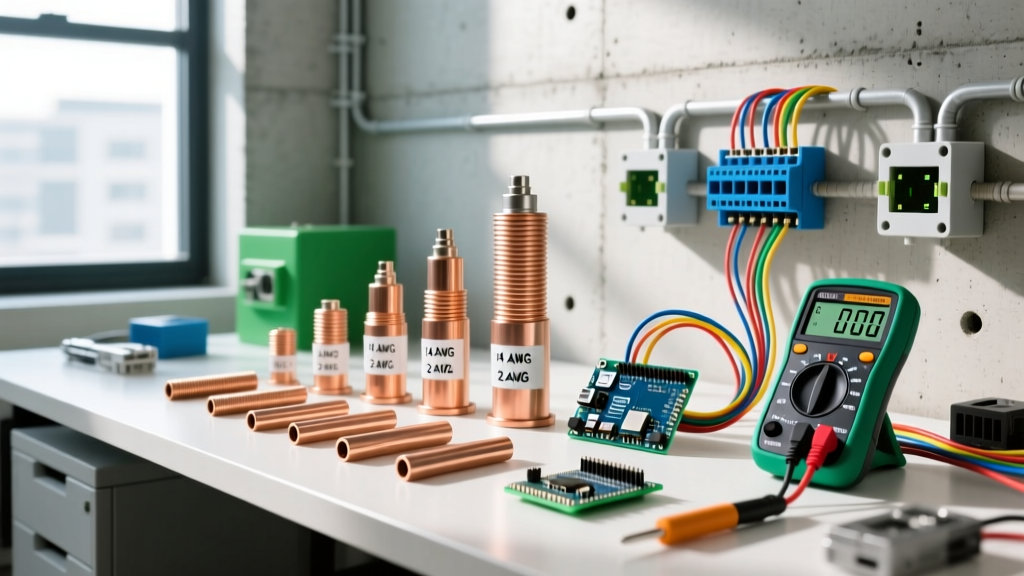

When electrical engineers and physicists define electric conductors, they typically describe a material that permits the free flow of electrical charge. However, for DIY enthusiasts, electricians, and home inspectors, defining a conductor goes far beyond textbook physics. It is the foundational step in preventing arc faults, thermal overloads, and fatal electrocution hazards. Misunderstanding the physical properties, environmental limitations, and code-mandated handling of conductors is a leading cause of residential electrical fires.
This comprehensive safety guide bridges the gap between atomic theory and practical, life-saving wiring protocols, ensuring your next electrical project meets the rigorous standards of the National Electrical Code (NEC) and OSHA safety guidelines.
The Atomic Reality: Why Electrons Flow and Generate Heat
To truly define electric conductors, we must look at the atomic lattice. Conductors like copper and aluminum possess a 'sea of free electrons' in their outermost valence shells. These electrons are loosely bound to their parent atoms, allowing them to drift easily when an electromotive force (voltage) is applied.
However, this flow is never perfectly frictionless. As electrons collide with the atomic lattice of the conductor, kinetic energy is converted into thermal energy (heat). This is known as Joule heating. From a safety perspective, this means every conductor has a strict thermal limit. If the current exceeds the conductor's ampacity, the heat generated will outpace the wire's ability to dissipate it, leading to insulation melting, short circuits, and structural fires.
Conductor Misidentification: A Leading Cause of Electrical Fires
One of the most fatal errors in DIY wiring is assuming all conductors serve the same safety purpose. The NEC strictly categorizes conductors into current-carrying (ungrounded/hot and grounded/neutral) and non-current-carrying (equipment grounding conductors).
The 'Neutral-as-Ground' Fatal Flaw
A dangerous and code-violating practice involves using a bare copper ground wire as a current-carrying neutral, or bonding the neutral and ground on a sub-panel. If a neutral conductor breaks upstream, the return current will seek the path of least resistance—often energizing the metal chassis of appliances, water pipes, and enclosures. By properly defining and separating these conductors, you ensure that fault currents have a dedicated, low-impedance path back to the source, tripping the breaker instantly rather than electrifying your home's plumbing.
Material Conductivity and Safety Thresholds
Not all conductors are created equal. The International Annealed Copper Standard (IACS) sets pure annealed copper at 100% conductivity. Below is a critical comparison of common residential conductors and their inherent safety hazards.
| Conductor Material | Conductivity (% IACS) | Melting Point | Primary Safety Hazard |
|---|---|---|---|
| Silver (Ag) | 105% | 961°C (1763°F) | Cost-prohibitive; rarely used in residential wiring. |
| Copper (Cu) | 100% | 1085°C (1984°F) | Oxidation is conductive; highly reliable but susceptible to theft. |
| Gold (Au) | 70% | 1064°C (1947°F) | Used only for micro-plating on contacts to prevent corrosion. |
| Aluminum (Al) | 61% | 660°C (1220°F) | Oxidation is highly resistive; high risk of thermal runaway at terminations. |
The Aluminum vs. Copper Safety Divide
When you define electric conductors for branch circuits, the choice between copper and aluminum dictates your termination hardware. In the 1970s, the use of pure aluminum (AA-1350) in residential branch circuits resulted in widespread fires due to creep (metal deformation under pressure) and high-resistance aluminum oxide formation at receptacle screws.
Modern aluminum wiring uses AA-8000 series alloys, which are vastly superior. However, safety protocols demand strict adherence to device markings:
- CU/AL: Acceptable for copper and older aluminum alloys (rarely used today).
- AL/CU: Standard for copper and modern AA-8000 aluminum, but only for larger gauge feeders (typically 1/0 AWG and above).
- CO/ALR: The only safe receptacle or switch rating for 15A and 20A aluminum branch circuits. The 'R' stands for revised, featuring deeper slot designs and specialized metal alloys that resist aluminum oxidation.
Never apply standard anti-oxidant paste (like Noalox) to copper-to-copper connections. It is strictly formulated to break down the resistive aluminum oxide layer on aluminum conductors and can attract dust and moisture if misapplied.
Termination Safety: The Torque Specification Mandate
A conductor is only as safe as its weakest termination. A loose connection increases contact resistance, creating a localized hot spot that can ignite surrounding insulation. To combat this, the National Electrical Code (NEC) 110.14(D) mandates that terminations must be tightened to the manufacturer's specified torque values.
For a standard 15-Amp residential receptacle using 14 AWG copper wire, the typical torque requirement is 14 inch-pounds. Relying on 'hand-tight' or 'wrist-torque' is no longer acceptable under modern safety inspections. DIYers and professionals alike must use a calibrated torque screwdriver to ensure the conductor is securely clamped without stripping the screw or crushing the wire strands.
Environmental Degradation and Ampacity Derating
The physical environment drastically alters a conductor's safety profile. The NEC defines base ampacities in Article 310.16, assuming an ambient temperature of 30°C (86°F). If you route THHN conductors through an attic in a hot climate where ambient temperatures reach 50°C (122°F), you must apply a temperature correction factor.
For THHN (rated at 90°C), the correction factor at 50°C is 0.82. This means a 12 AWG wire normally rated for 30 Amps (at 90°C column for derating) must be multiplied by 0.82, reducing its safe current-carrying capacity to 24.6 Amps. Failing to derate conductors in high-heat environments guarantees premature insulation failure.
The Live-Dead-Live Testing Protocol
Before touching any conductor, OSHA electrical safety standards and NFPA 70E require verification of an electrically safe work condition. You must never trust a breaker label or a non-contact voltage tester alone. You must perform the Live-Dead-Live test using a calibrated digital multimeter or a dedicated voltage tester:
- LIVE: Test your meter on a known, verified energized source (like a live receptacle) to prove the meter is functioning correctly.
- DEAD: Test the target conductors (Phase-to-Phase, Phase-to-Neutral, and Phase-to-Ground) to confirm zero voltage.
- LIVE: Return to the known energized source and test the meter again to prove it did not fail or blow an internal fuse during the 'Dead' test.
Summary: Respecting the Conductor
To define electric conductors accurately is to respect the immense energy they channel. Whether you are selecting the correct CO/ALR receptacle for an aluminum branch circuit, applying precise torque to a terminal screw, or executing a rigorous Live-Dead-Live test, safety is dictated by the physical and chemical realities of the materials you are handling. Always consult the latest NFPA 70E guidelines for personal protective equipment (PPE) and safe work practices before beginning any electrical diagnostic or repair.