
Understanding the Conductor and Insulator Definition
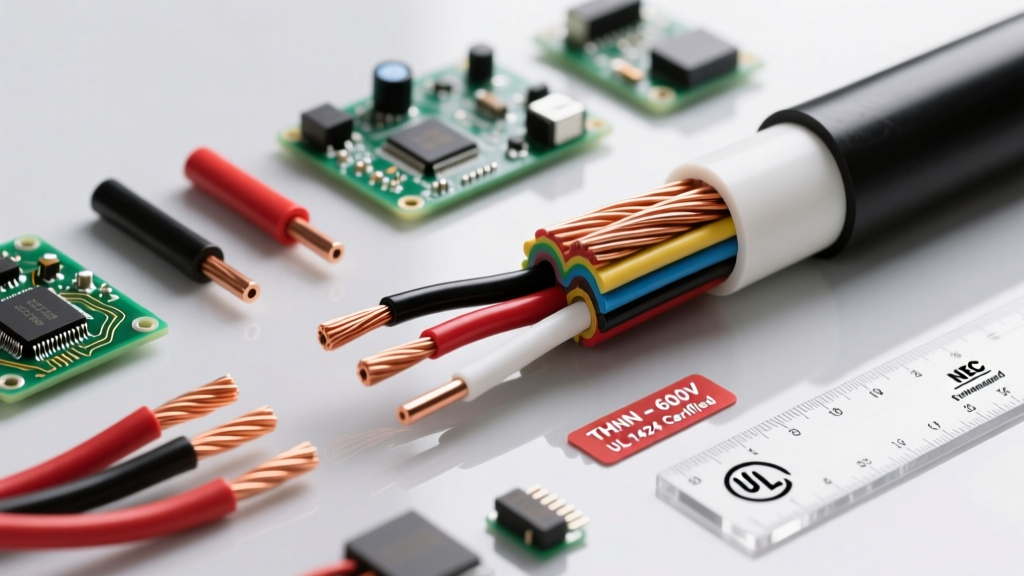
Every time you strip a piece of 12 AWG THHN wire to wire a new outlet, you are interacting with the most fundamental binary relationship in electrical engineering. To safely and effectively design, build, or repair electrical circuits, you must deeply understand the conductor and insulator definition and how these materials interact under real-world conditions.
At its most basic level, a conductor is a material that permits the free flow of electrical current (electrons) with minimal resistance. An insulator, conversely, is a material that strongly resists this flow, confining the electrical current to its intended path. While this sounds like simple textbook theory, the practical implications of these definitions dictate everything from the ampacity of your branch circuits to the thermal limits of your breaker panel.
The Atomic Divide: Why Materials Behave Differently
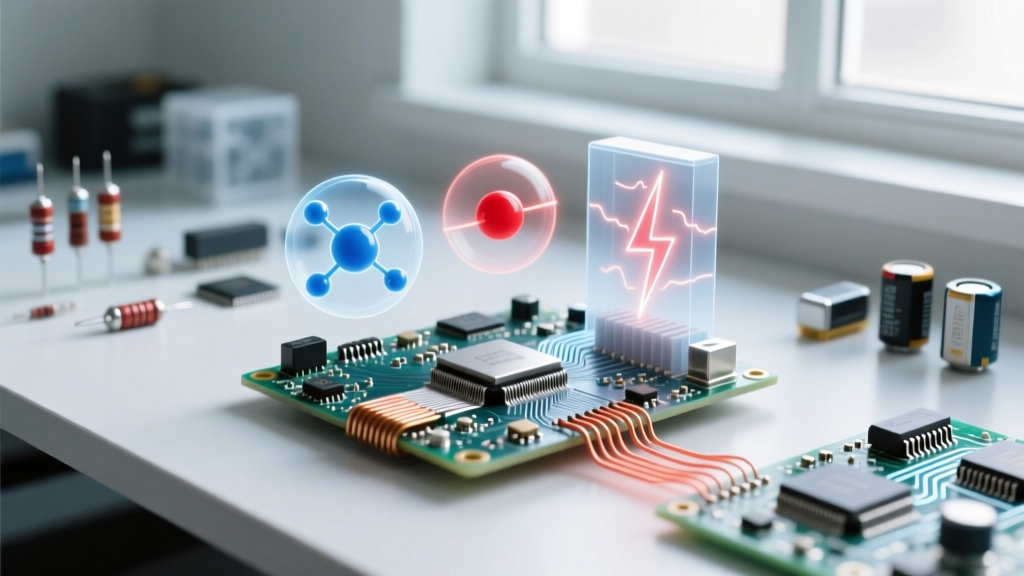
To truly grasp the conductor and insulator definition, we have to look at the atomic structure of materials. The behavior of any electrical material is dictated by its valence electrons—the electrons in the outermost shell of an atom.
Conductors: The Electron Highways
In conductive materials like copper, silver, and aluminum, the valence electrons are loosely bound to their parent atoms. According to Georgia State University's HyperPhysics, these materials have overlapping 'valence' and 'conduction' bands. This means that even a tiny amount of electromotive force (voltage) can knock these electrons free, creating a cascading flow of charge we call current. Copper, the undisputed king of residential wiring, has a single valence electron that is highly mobile, making it an exceptionally efficient pathway for electricity.
Insulators: The Electron Roadblocks
Insulators, such as PVC (polyvinyl chloride), rubber, and glass, have tightly bound valence electrons. Their atomic structure features a massive 'band gap' between the valence and conduction bands. It requires an enormous amount of energy to force an electron across this gap. In standard 120V or 240V residential wiring, the voltage is nowhere near high enough to bridge this gap, meaning the insulation successfully traps the current inside the copper conductor.
Practical Wiring: Choosing the Right Conductor
When applying the conductor and insulator definition to your DIY projects, material selection is critical. Not all conductors are created equal, and choosing the wrong one can lead to voltage drop, overheating, or catastrophic failure.
- Copper (Cu): The standard for indoor branch circuits. Copper is measured against the International Annealed Copper Standard (IACS), where pure annealed copper is 100% IACS. It is highly ductile, resists oxidation, and handles thermal expansion well. For DIYers, copper is the default choice for all 14, 12, and 10 AWG indoor wiring.
- Aluminum (Al): Often misunderstood due to historical issues in the 1970s, modern AA-8000 series aluminum alloy is perfectly safe and required by the NEC for large service entrance cables (like 4/0 AWG). Aluminum has roughly 61% of the conductivity of copper by volume, meaning you must use a larger wire gauge to carry the same ampacity. It also requires specific anti-oxidant paste (like Noalox) and torque-rated lugs to prevent loose connections.
- Silver (Ag): While silver is actually the most conductive elemental metal (roughly 105% IACS), its high cost and tendency to tarnish restrict its use to specialized high-frequency RF applications, aerospace, and high-end audio contacts rather than standard wall wiring.
DIY Pro-Tip: When stripping a copper conductor, never use a knife or the wrong gauge hole on your wire strippers. Nicking the copper creates a localized point of high resistance. Under heavy load, this nick will generate excess heat, potentially degrading the surrounding insulation over time.
Practical Wiring: Insulators and Dielectric Strength
The insulator is just as important as the conductor. In modern wiring, we don't just use 'plastic'; we use highly engineered polymers designed to withstand heat, chemical exposure, and physical abrasion.
Understanding Dielectric Strength
Dielectric strength is the maximum electric field an insulator can withstand before it breaks down and begins to conduct. According to testing standards referenced by Fluke Corporation, insulation resistance degrades over time due to heat, moisture, and physical stress. If the voltage exceeds the dielectric strength of the jacket, the electricity will literally puncture the insulation, resulting in an arc flash or short circuit.
Common Insulation Materials in DIY Wiring
- PVC (Polyvinyl Chloride): The standard jacket for THHN/THWN-2 wire. It is flexible, cheap, and flame-retardant. However, standard PVC becomes brittle in extreme cold and can melt if subjected to sustained temperatures above 90°C (194°F).
- XLPE (Cross-Linked Polyethylene): Used in high-voltage underground cables and modern service entrance wires (like XHHW-2). The cross-linking process creates a 3D molecular bond that makes the insulation highly resistant to heat, moisture, and chemical solvents.
- PTFE (Teflon): Found in aerospace, military, and high-temperature industrial applications. It has an incredibly high melting point and excellent dielectric properties, but it is expensive and difficult to strip.
Comparison Chart: Conductors vs. Insulators in Wiring
To synthesize the conductor and insulator definition into a practical reference, review the comparison chart below detailing common materials you will encounter in electrical work.
| Material | Classification | Key Property | Primary Application |
|---|---|---|---|
| Soft Copper | Conductor | 100% IACS Conductivity | Indoor branch circuits, grounding |
| AA-8000 Aluminum | Conductor | 61% IACS / Lightweight | Service drops, heavy feeder cables |
| PVC / Nylon (THHN) | Insulator | ~20-40 kV/mm Dielectric | Standard indoor conduit wiring |
| XLPE (XHHW-2) | Insulator | High Thermal / Moisture Res. | Wet locations, underground feeds |
| Ceramic / Glass | Insulator | Extreme Temp Tolerance | High-voltage transmission lines |
Real-World Failure Modes: When Insulators Become Conductors
One of the most dangerous misconceptions among beginners is that the insulator is permanent. Under the right (or wrong) conditions, an insulator can undergo dielectric breakdown and temporarily or permanently become a conductor.
1. Thermal Degradation and Carbon Tracking
If a wire is overloaded and the breaker fails to trip, the conductor heats up. This heat bakes the PVC insulation, driving out its chemical plasticizers. The PVC turns brittle and cracks. Furthermore, if a minor surface arc occurs on dirty insulation, it can burn a microscopic path of carbon. Carbon is a conductor. This phenomenon, known as 'carbon tracking,' creates a conductive bridge across the insulator, leading to a dead short and potentially an electrical fire.
2. UV and Ozone Breakdown
Standard THHN wire is rated for dry, indoor locations. If you run THHN outdoors or in direct sunlight, the UV radiation will break down the polymer chains in the PVC jacket. The insulation will chalk, crack, and eventually expose the live conductor. Always use sunlight-resistant cables (like UF-B or XHHW-2) for outdoor DIY projects.
3. Moisture Ingress
Water itself, when perfectly pure, is an insulator. However, the water that enters outdoor conduit is full of dissolved minerals and dirt, making it highly conductive. If your insulation jacket has a micro-tear, mineral-rich water will wick into the wire, causing ground faults and tripping your GFCI breakers repeatedly.
Summary for the DIY Electrician
Mastering the conductor and insulator definition is about more than memorizing textbook physics; it is about respecting the physical limits of the materials in your walls. Always match your conductor material to the termination lugs (copper to copper, or use approved bi-metallic lugs for aluminum). Always respect the temperature ratings of your insulation, and remember that the NEC ampacity tables are ultimately based on the thermal limits of the insulator, not the melting point of the conductor. By understanding the atomic and physical boundaries of these materials, your DIY wiring projects will be safe, efficient, and built to last.