
The Atomic Bridge: Defining a Conductor in Chemistry
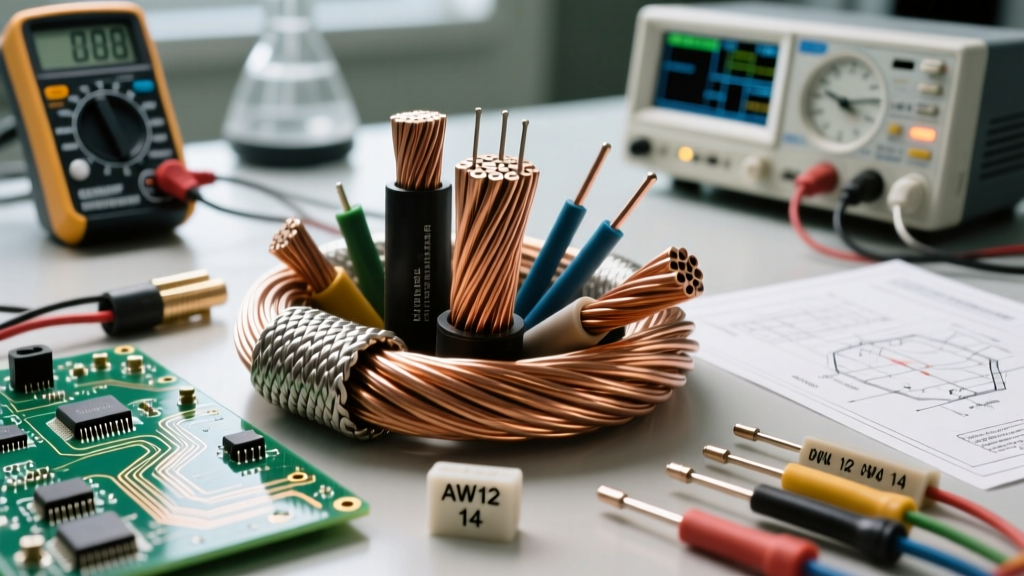
When electricians, engineers, and DIY enthusiasts select wire for a circuit, they typically focus on macroscopic properties: American Wire Gauge (AWG), ampacity, and insulation rating. However, the true behavior of any electrical material is dictated at the subatomic level. When we define a conductor in chemistry, we are not just talking about a material that allows current to flow; we are examining the quantum mechanical and chemical properties that permit the free migration of charge carriers.
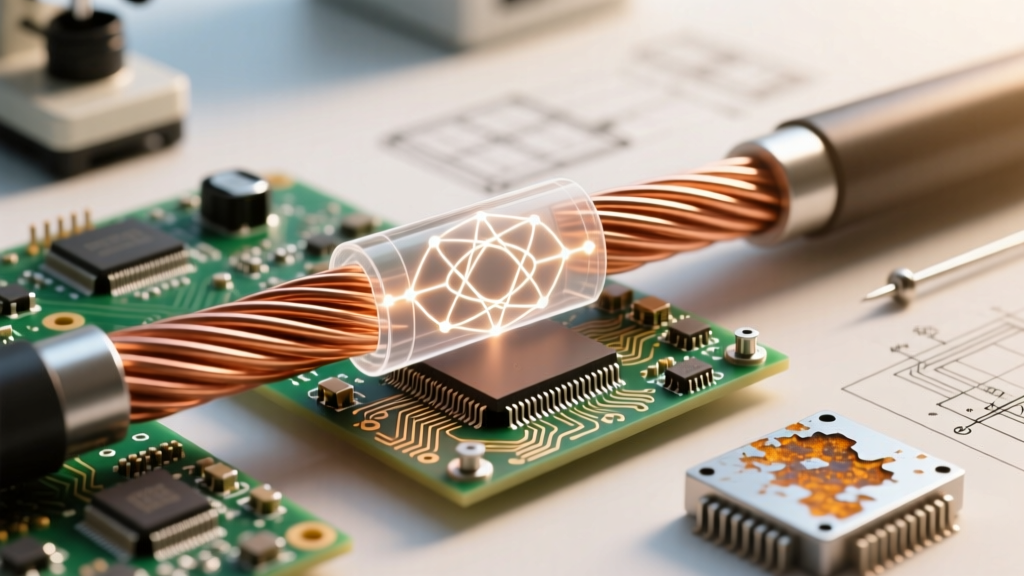
In chemical terms, a metallic conductor is defined by its atomic structure, specifically the configuration of its valence electrons. Take copper (Cu), the undisputed king of residential and commercial wiring. Copper's atomic number is 29, and its electron configuration is [Ar] 3d10 4s1. That single, loosely bound electron in the 4s orbital is the key to its electrical supremacy. Because this valence electron is shielded by the fully occupied 3d subshell, it requires very little energy to break free from its parent atom.
This phenomenon is described by the LibreTexts Chemistry database as the 'Electron Sea Model.' In a solid copper wire, trillions of copper cations are locked in a crystalline lattice, while their 4s1 valence electrons detach to form a shared, delocalized 'sea' of free electrons. When a voltage potential is applied across the wire, this electron sea drifts directionally, creating electrical current. Understanding this chemical foundation is critical for diagnosing real-world wiring failures, selecting specialized materials, and ensuring long-term circuit reliability.
Metallic vs. Electrolytic Conduction: A Crucial Distinction
To fully grasp the concept of a conductor in chemistry, we must distinguish between the two primary modes of conduction: metallic and electrolytic. While wire sizing charts focus entirely on metallic conduction, electrolytic conduction plays a massive, often overlooked role in electrical fundamentals—particularly in grounding systems and battery technology.
The Mechanisms of Flow
- Metallic Conduction: Current is carried by the flow of free electrons through a solid lattice. There is no physical transfer of matter, no chemical alteration of the conductor itself during normal operation, and resistance typically increases as temperature rises due to increased lattice vibrations (phonon scattering).
- Electrolytic Conduction: Current is carried by the physical movement of ions (cations and anions) through a liquid or gel medium. This involves the actual transfer of mass and is always accompanied by chemical reactions at the electrodes. Unlike metals, the resistance of an electrolyte generally decreases as temperature rises because the viscosity of the solvent drops, allowing ions to move more freely.
Real-World Application: Grounding Electrodes
Consider a copper-clad steel grounding rod driven into the earth. The metal rod acts as a metallic conductor, but the soil itself acts as an electrolytic conductor. The moisture and dissolved salts in the soil create an electrolyte that allows fault currents to dissipate into the earth. If the soil chemistry is highly resistive (e.g., dry, sandy, or rocky), electricians must use chemical ground enhancement materials (GEM) or salt treatments to increase the ionic conductivity of the soil, thereby lowering the impedance of the grounding electrode system.
Chemical Degradation: When Conductors Fail in the Real World
The most common cause of high-resistance failures in DIY and residential wiring is not mechanical breakage, but chemical degradation. When a metal interacts with oxygen, it forms an oxide layer. The chemical nature of this oxide layer dictates whether a connection will survive or become a fire hazard.
The Copper vs. Aluminum Oxide Dilemma
Copper oxidizes relatively slowly, and importantly, copper oxide (Cu2O) is a semiconductor. While not as conductive as pure copper, a thin layer of copper oxide will not completely halt current flow, and the mechanical pressure of a wire nut or terminal screw easily breaks through it to establish a solid metallic bond.
Aluminum, however, presents a severe chemical challenge. When exposed to air, aluminum instantly forms a layer of aluminum oxide (Al2O3). Chemically, aluminum oxide is a robust electrical insulator with a very high melting point. If an electrician simply strips an aluminum wire and twists it into a wire nut, the insulating oxide layer prevents proper current flow. The resulting high resistance generates immense heat, leading to melted insulation and electrical fires. This chemical reality is why aluminum wiring requires specialized antioxidant pastes (like Noalox) to chemically inhibit oxidation and mechanical abrasion to break the oxide layer during termination.
Expert Insight: The National Fire Protection Association (NFPA) consistently identifies faulty terminations and high-resistance connections as leading causes of electrical fires. Understanding the insulating nature of aluminum oxide is mandatory for anyone working on older homes or modern aluminum feeder cables.
Galvanic Corrosion: The Electrochemistry of Dissimilar Metals
Another critical intersection of wiring and chemistry is galvanic corrosion. When two dissimilar metals (like copper and aluminum) are connected in the presence of an electrolyte (such as ambient humidity or condensation), they form a primitive galvanic cell.
Because aluminum is more anodic (less noble) than copper on the galvanic series, it will act as the anode and sacrifice itself, corroding away to protect the copper cathode. This chemical reaction eats away at the aluminum wire at the termination point, increasing resistance and causing catastrophic thermal failure. To combat this electrochemical reaction, the Copper Development Association and the National Electrical Code (NEC) mandate the use of CO/ALR (Copper-Aluminum Revised) rated devices, which utilize specific nickel-plated or tin-plated terminal alloys designed to minimize the galvanic potential between the terminal and the aluminum conductor.
Material Selection Matrix: Chemical Traits of Common Wire Metals
When designing specialized circuits, RF applications, or marine electronics, understanding the chemical traits of your conductor is just as important as its AWG size. Below is a comparison of common conductive metals based on their chemical and electrical properties.
| Metal | Valence Configuration | Oxide Conductivity | Conductivity (% IACS) | Primary Chemical Vulnerability |
|---|---|---|---|---|
| Silver (Ag) | [Kr] 4d10 5s1 | Highly Conductive | 105% | Sulfidation (tarnish in high-sulfur environments) |
| Copper (Cu) | [Ar] 3d10 4s1 | Semi-Conductive | 100% | Oxidation and corrosion in acidic/alkaline soils |
| Gold (Au) | [Xe] 4f14 5d10 6s1 | Does Not Oxidize | 70% | None (Noble metal); mechanically soft |
| Aluminum (Al) | [Ne] 3s2 3p1 | Highly Insulative | 61% | Rapid oxidation and galvanic corrosion |
| Tin (Sn) | [Kr] 4d10 5s2 5p2 | Insulative (but soft) | 15% | Whisker growth and tin pest at low temps |
Solder Chemistry: The Hidden Conductor Maker
No discussion of the conductor in chemistry is complete without addressing soldering. Soldering is not merely melting metal to stick wires together; it is a complex chemical reaction designed to create an intermetallic compound (IMC).
When you apply rosin-core solder to a copper wire, the flux (typically abietic acid or mildly activated rosins) acts as a chemical reducing agent. It strips the insulating copper oxide layer from the surface. Once the bare copper is exposed, the molten tin-lead or tin-silver alloy dissolves a microscopic layer of the copper, forming a new chemical structure, typically Cu6Sn5. This intermetallic layer is the actual bridge that makes the joint a true electrical conductor. If the flux fails to remove the oxide, or if the joint is moved while cooling (creating a fractured, high-resistance 'cold joint'), the chemical bond fails, and the connection becomes a point of high resistance.
Practical Framework for DIYers and Electricians
How do you apply the chemistry of conductors to your daily electrical projects? Use this decision framework to ensure chemical compatibility and long-term reliability:
- Marine and High-Humidity Environments: Never use bare copper. The saltwater environment acts as a potent electrolyte, accelerating copper oxidation and galvanic corrosion. Always specify tinned copper wire. The tin coating acts as a sacrificial anode and a physical barrier against moisture, preserving the underlying copper lattice.
- High-Frequency RF and Audio Cables: Due to the 'skin effect,' high-frequency signals travel primarily on the outer surface of the conductor. This is why high-end RF cables use silver-plated copper. Even if the silver tarnishes (forming silver sulfide), the tarnish layer remains conductive, ensuring the signal path on the surface of the wire is unimpeded.
- Aluminum Feeder Terminations: When wiring a subpanel or heavy appliance using aluminum SER cable, you must chemically manage the oxide layer. Strip the wire, immediately coat it with an antioxidant inhibitor paste containing zinc dust, and use a torque screwdriver to apply the exact manufacturer-specified pressure. The mechanical force breaks the insulating Al2O3 layer, while the paste prevents oxygen from reforming it.
- Grounding in Poor Soil: If your soil chemistry is highly resistive, do not rely on a standard 8-foot copper rod. Drive multiple rods, use a ground ring, or treat the soil with bentonite clay and conductive carbon compounds to enhance the electrolytic conductivity of the earth.
Conclusion
Electrical current does not flow by magic; it flows because of the specific chemical and quantum properties of the materials we choose. By understanding the conductor in chemistry—from the delocalized electron sea of copper to the insulating dangers of aluminum oxide and the electrochemistry of galvanic corrosion—you transition from simply following a wire sizing chart to mastering the fundamental physics of your electrical systems. Whether you are soldering a microcontroller, terminating a 200-amp service, or driving a ground rod, respecting the chemistry of your materials is the ultimate key to safety, efficiency, and longevity in electrical design.