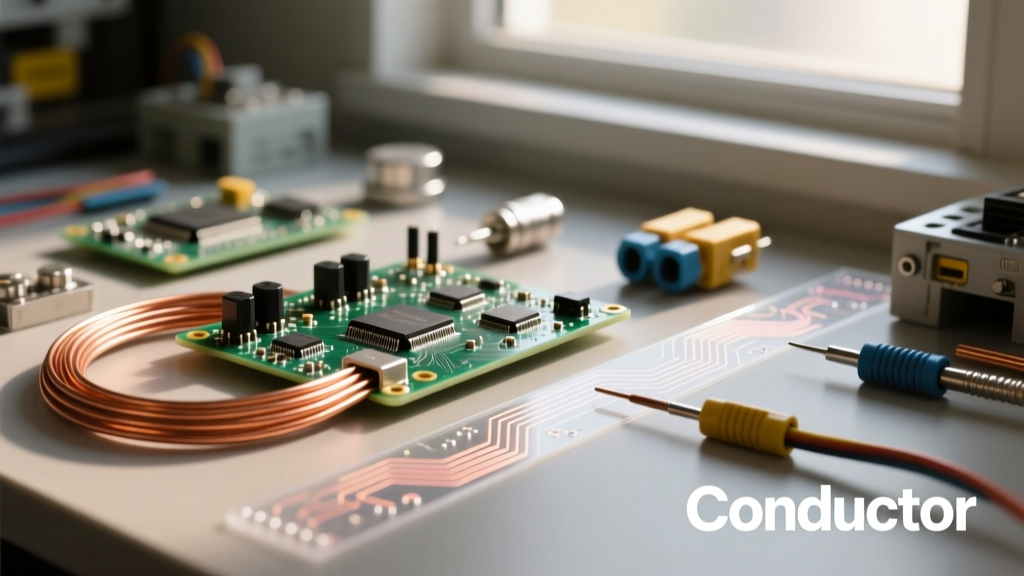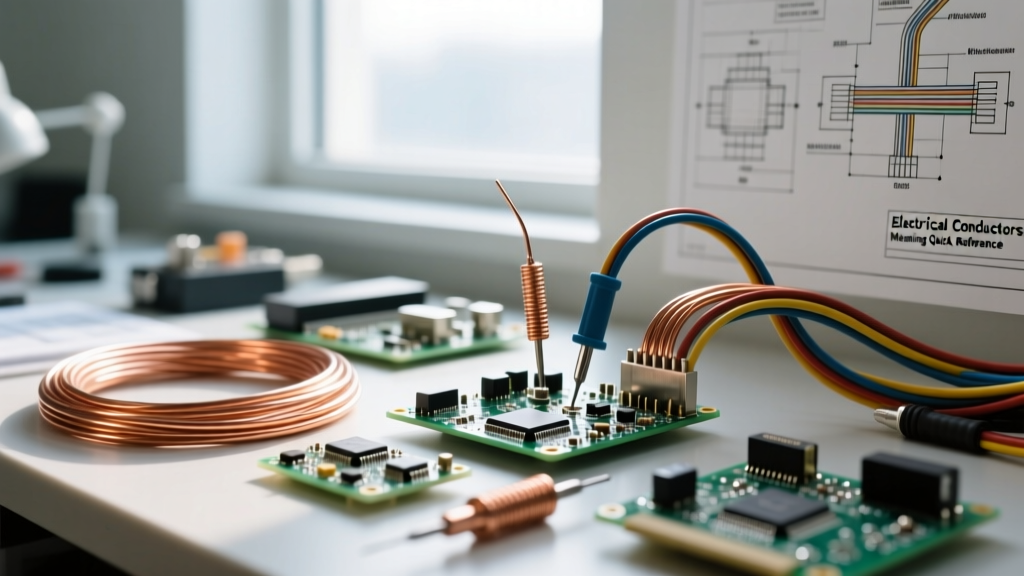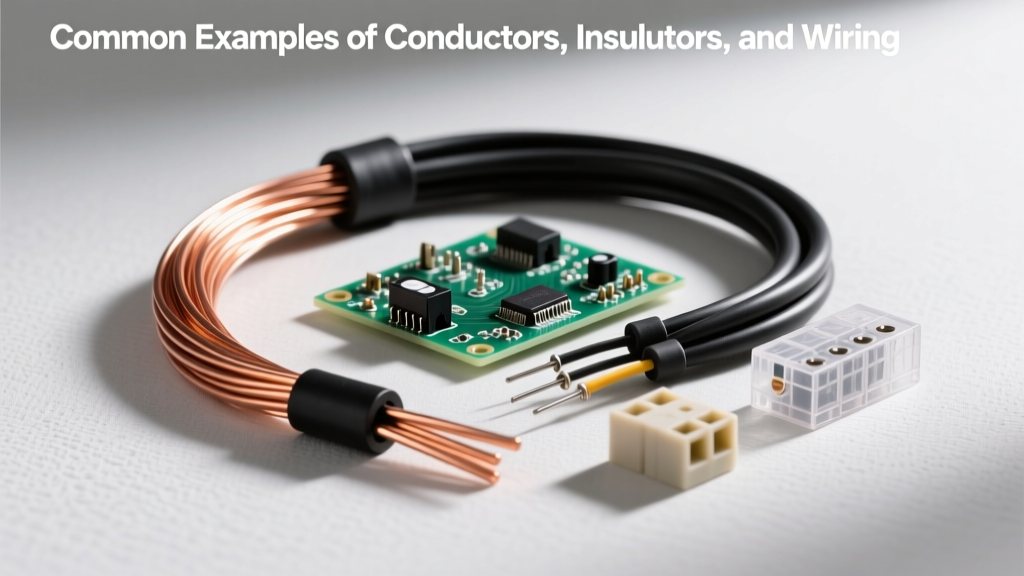

When you strip a piece of Romex or solder a joint on a custom PCB, you are interacting with the most fundamental duality in electrical engineering: the battle between electron flow and electron restriction. For beginners building DIY electronics or wiring a smart home, understanding the examples of conductors and insulators is not just academic trivia—it is the difference between a reliable circuit and a catastrophic fire hazard.
The Atomic Reason Behind Electrical Flow
Before diving into specific materials, we must understand why certain materials conduct electricity while others block it. The answer lies in atomic structure, specifically the valence electrons orbiting the nucleus.
In conductive materials, valence electrons are loosely bound to their parent atoms. This creates a "sea of electrons" that can easily drift when a voltage (electromotive force) is applied. Conversely, insulators possess tightly bound valence electrons. Their atomic structure requires massive amounts of energy to break these bonds, which is why they resist electrical current.
According to the Copper Development Association, the standard for electrical conductivity is the International Annealed Copper Standard (IACS), where pure annealed copper is defined as 100% conductive.
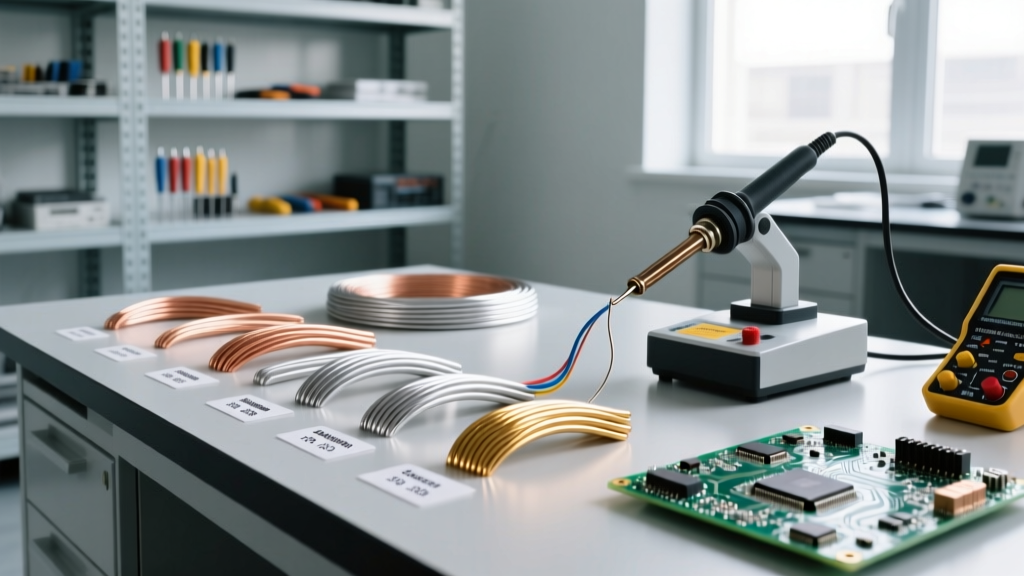
5 Real-World Examples of Conductors in Electronics
Not all conductors are created equal. While silver is technically the most conductive element on the periodic table, cost and mechanical properties dictate what actually ends up in your workshop. Here are the most common examples of conductors you will encounter.
1. Copper (Cu): The Undisputed King of Wiring
Copper is the baseline for almost all residential wiring (like THHN and Romex) and PCB traces. It offers an exceptional balance of high conductivity, ductility, and affordability. For high-end audio or precision instrumentation, you will often see Oxygen-Free Copper (OFC), which removes oxygen inclusions to prevent embrittlement and slightly improve conductivity.
2. Aluminum (Al): The High-Amperage Alternative
Aluminum conducts at about 61% of copper's capacity by volume, meaning you must use a larger wire gauge to carry the same current. However, it is significantly lighter and cheaper. According to NFPA 70 (National Electrical Code), aluminum branch circuit wiring must be specifically AA-8000 series alloy to prevent the thermal expansion and creep issues that caused fires in older 1970s homes.
3. Silver (Ag): The RF and Audio Specialist
Silver boasts the highest electrical and thermal conductivity of any metal. Because it is expensive, it is rarely used as bulk wire. Instead, you will find it as a thin plating over copper in high-frequency RF coaxial cables (due to the skin effect) and in the contact points of high-quality relays and switches.
4. Gold (Au): The Corrosion-Resistant Connector
Gold is actually a poorer conductor than copper or aluminum. Its primary advantage is that it is completely inert—it does not oxidize or tarnish. This makes gold the mandatory choice for low-voltage data connectors, PCB edge connectors, and audio jacks where a microscopic layer of oxide could disrupt a sensitive signal.
5. Nichrome (NiCr): The Intentional Resistor
Sometimes you want a material to resist current to generate heat. Nichrome, an alloy of nickel and chromium, has high electrical resistance and forms a protective oxide layer when heated. It is the standard conductor used in toaster heating elements, 3D printer hotends, and DIY foam cutters.
5 Crucial Examples of Insulators for Wire Protection
Insulators are the unsung heroes of electrical safety. They confine the current to its intended path, prevent short circuits, and protect users from lethal shocks. Here are the most vital examples of insulators used in modern wire manufacturing.
1. PVC (Polyvinyl Chloride): The Standard Jacket
PVC is the most common insulation for standard hookup wire and building wire (THHN/THWN). It is cheap, flexible, and resistant to most oils and chemicals. Standard PVC insulation is typically rated for 75°C to 90°C. However, it emits toxic hydrogen chloride gas when burned, making it unsuitable for confined aerospace or marine applications.
2. PTFE (Teflon): The High-Temperature Elite
PTFE offers incredible thermal stability, routinely handling temperatures up to 260°C (500°F) without melting. It also has an exceptionally low dielectric constant, making it ideal for high-speed data cables and military-grade wiring (MIL-W-22759). The downside? It is expensive and suffers from "cold flow," meaning it can deform under continuous mechanical pressure from screw terminals.
3. Silicone: The Flexible High-Current Choice
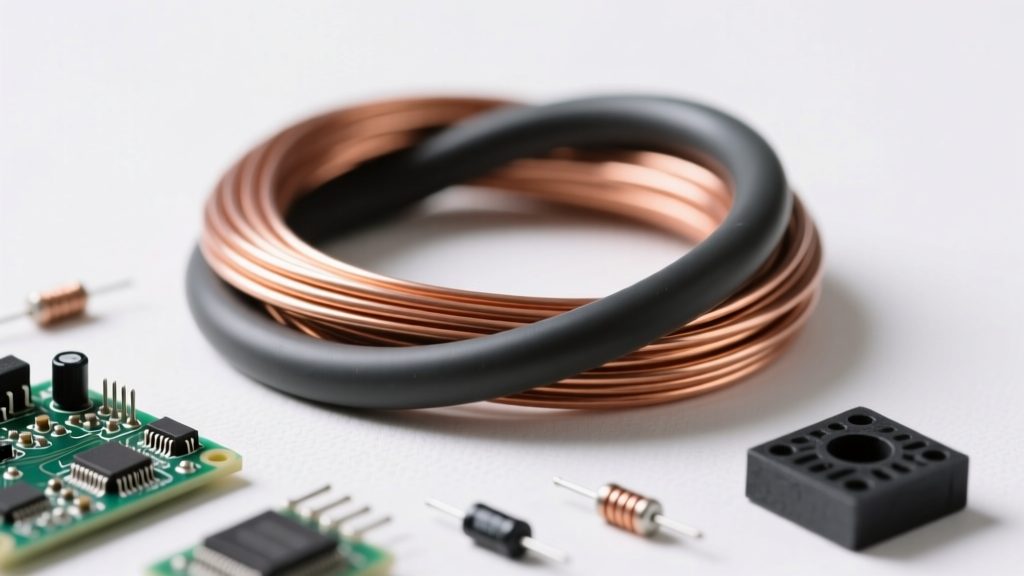
Silicone insulation is incredibly soft and flexible, capable of withstanding temperatures up to 200°C. It is the standard for high-current RC car batteries, drone power leads, and solar panel wiring where vibration and bending are constant. Its main weakness is low mechanical strength; it tears easily if dragged across a sharp chassis edge.
4. Ceramic: The Extreme Environment Survivor
While you won't find ceramic wrapping a flexible wire, it is the premier insulator for high-voltage and extreme-heat applications. Spark plug insulators, high-voltage transmission line suspension discs, and heating element standoffs rely on ceramic's ability to maintain its dielectric strength at temperatures that would vaporize plastics.
5. EPDM Rubber: The Outdoor and Marine Shield
Ethylene Propylene Diene Monomer (EPDM) rubber is highly resistant to UV radiation, ozone, and extreme weather. It is frequently used in outdoor solar cables, marine battery cables, and heavy-duty extension cords where standard PVC would become brittle and crack after a season in the sun.
Material Comparison Chart: Conductivity vs. Application
| Material | Type | Conductivity (% IACS) | Max Temp Rating | Primary DIY Application |
|---|---|---|---|---|
| Copper (Annealed) | Conductor | 100% | 1083°C (Melting) | Standard PCB traces, house wiring |
| Aluminum (AA-8000) | Conductor | 61% | 660°C (Melting) | Heavy feeder cables, service drops |
| Silver | Conductor | 105% | 961°C (Melting) | RF plating, audiophile contacts |
| PVC | Insulator | N/A (Dielectric) | 90°C | General purpose hookup wire |
| PTFE (Teflon) | Insulator | N/A (Dielectric) | 260°C | Aerospace, 3D printer hot wiring |
| Silicone | Insulator | N/A (Dielectric) | 200°C | High-current drone/RC battery leads |
Common Beginner Mistakes with Insulation and Conductors
Knowing the examples of conductors and insulators is only half the battle; applying them correctly is where beginners often fail. Avoid these critical pitfalls:
- Melting PVC Near Hotends: Beginners building 3D printers often use standard PVC-insulated wire for the hotend heater cartridge. Because the hotend reaches 250°C+, the PVC melts, shorts out against the metal chassis, and destroys the control board. Always use PTFE or fiberglass-braided wire for hotend connections.
- Overtightening Silicone Wire: Because silicone is so soft, tightening a screw terminal too hard can cause the insulation to "cold flow" or cut entirely, exposing bare strands. Always use ferrule crimps on the ends of silicone wire before inserting them into screw terminals.
- Mixing Copper and Aluminum: If you must connect a copper wire to an aluminum lug (such as at a main service panel), the galvanic reaction between the two dissimilar metals will cause corrosion and heat. You must use an anti-oxidant compound like Noalox and torque the lug to exact manufacturer specifications.
Sourcing the Right Materials for Your Next Build
When selecting wire for your next DIY project, always match the conductor's ampacity to your fuse size, and match the insulator's temperature rating to your operating environment. For general breadboarding and low-voltage DC projects, standard 22 AWG stranded copper with PVC insulation is perfect. For automotive or high-vibration environments, upgrade to silicone or cross-linked polyethylene (XLPE). By respecting the physical limits of these materials, you ensure your electrical builds remain safe, efficient, and reliable for years to come.