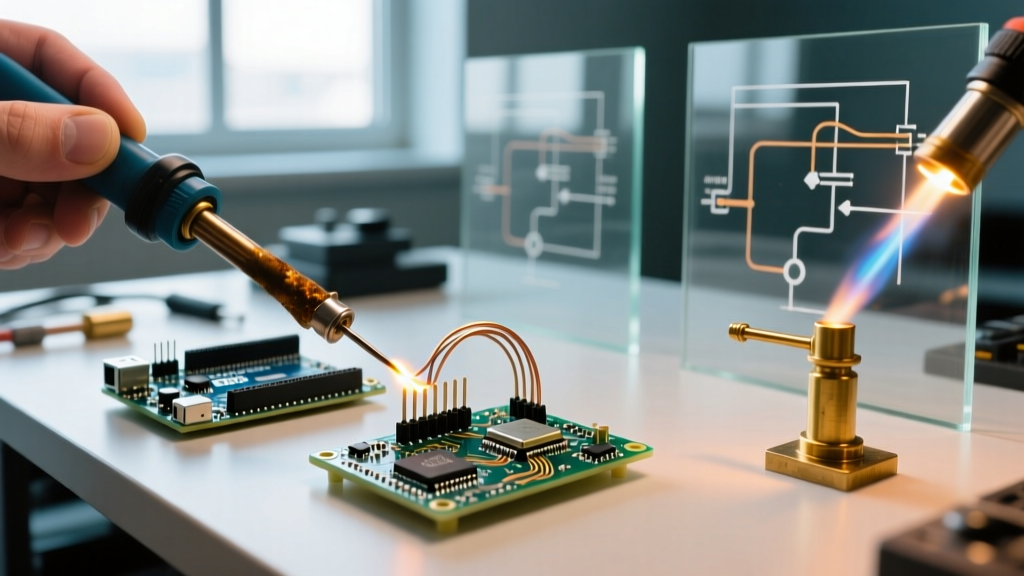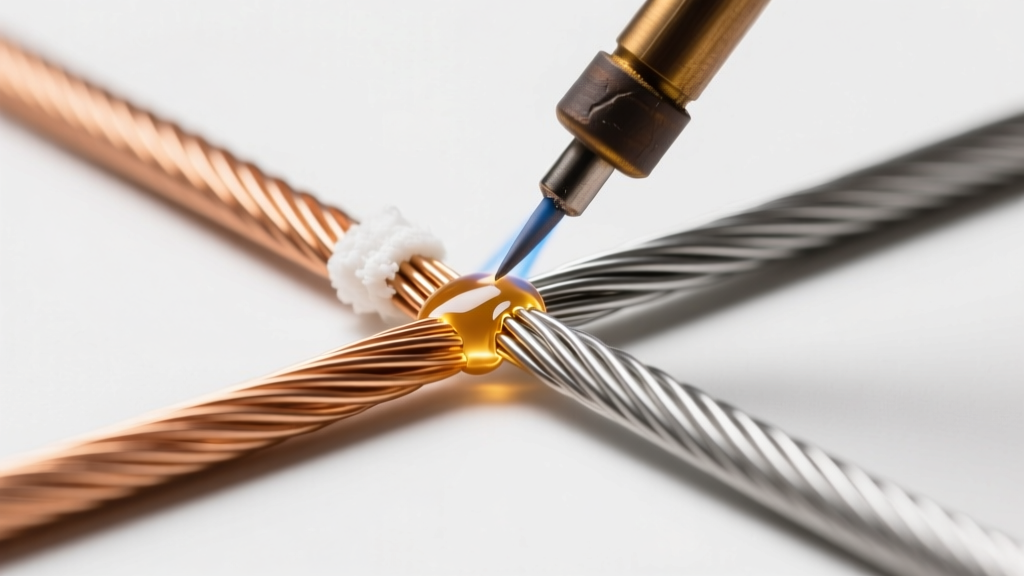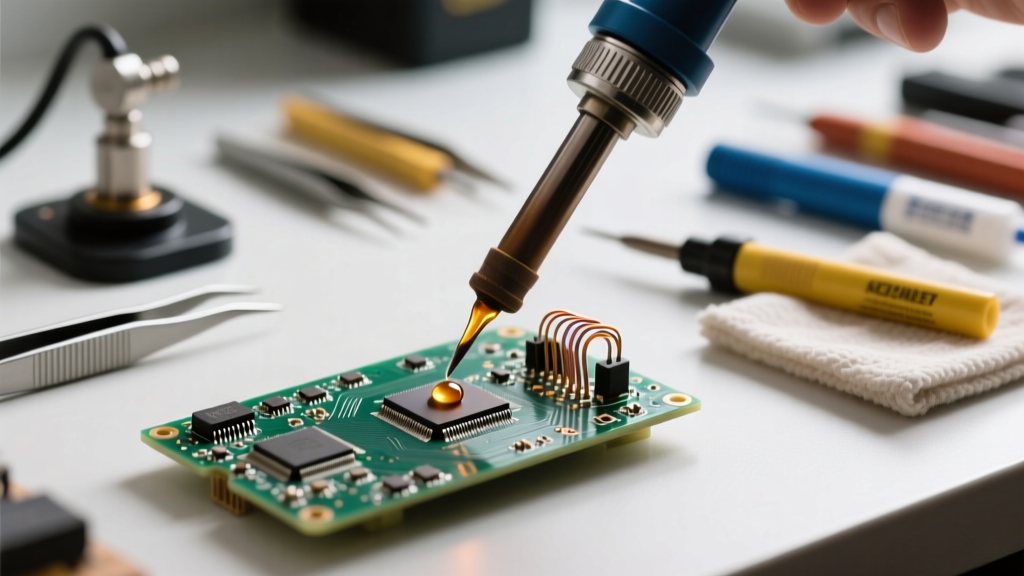

The Metallurgy of Soldering Wire Alloys in 2026
When most beginners hear the term soldering wire, they picture a single, universal spool of shiny metal. In reality, soldering is a complex metallurgical process where the filler metal (the wire) must be chemically and thermally matched to the base material you are joining. Using the wrong alloy or flux core will result in catastrophic joint failure, dewetting, or severe corrosion.
As of 2026, the global shift toward energy-efficient manufacturing and the surging cost of precious metals have drastically changed the soldering wire market. Silver-bearing lead-free alloys like SAC305 (Sn96.5/Ag3.0/Cu0.5) now frequently exceed $90 per pound due to silver market volatility. Consequently, many DIYers and commercial fabricators are pivoting to LCSC (Sn99.3/Cu0.7) or low-temperature Bismuth-based alloys. According to the Indium Corporation's Solder Alloy Guide, selecting the correct melting point and wetting characteristic is just the first step; matching the wire's flux core to the base metal's oxide layer is where true expertise lies.
Material-Specific Soldering Wire Guide
Different metals form different oxide layers when heated. Your soldering wire must either contain a flux core capable of dissolving that specific oxide, or it must be paired with an external flux. Below is the definitive guide to matching soldering wire to your base material.
1. Copper and Brass (The Standard)
Copper and its alloys (brass, bronze, phosphor bronze) are the most forgiving materials to solder. They form relatively weak oxide layers that are easily dissolved by standard rosin-based fluxes.
- Recommended Wire: Sn63Pb37 (Eutectic) or Sn60Pb40 for leaded applications. For RoHS-compliant or lead-free projects, use SAC305 or Sn99.3Cu0.7.
- Flux Core: Water-soluble (WS-333) or mildly activated rosin (RMA). The industry-standard Kester 245 or 44 flux cores remain the gold standard for copper PCB work and electrical splicing.
- Iron Temperature: 320°C - 350°C (608°F - 662°F).
- Cost Expectation: $35 - $45 per pound for standard Sn60Pb40; $45 - $60 for LCSC lead-free.
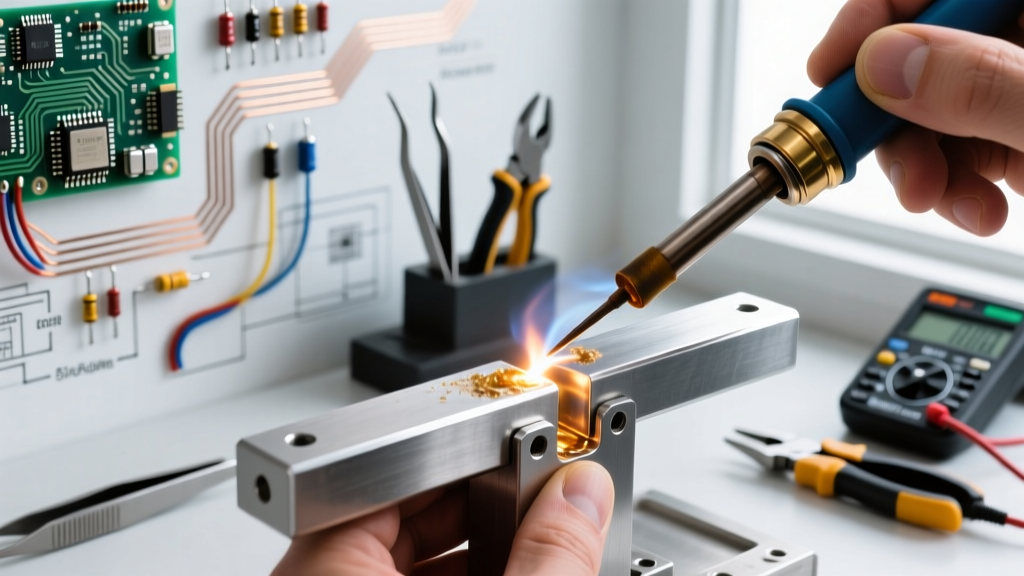
2. Stainless Steel and Nickel (The Challenge)
Stainless steel owes its corrosion resistance to a tough, invisible layer of chromium oxide. Standard rosin fluxes found in typical electronics soldering wire are entirely ineffective against chromium oxide. If you attempt to use standard wire on stainless steel, the solder will ball up and roll off (dewetting).
- Recommended Wire: Standard Sn60Pb40 wire can be used, but only if paired with a highly aggressive external acid flux (e.g., Superior Flux #130).
- Specialty Wire Alternative: Acid-cored soldering wire (such as Kester 135 core) exists, but it is generally manufactured in thicker diameters for plumbing or heavy fabrication, not fine electronics.
- Iron Temperature: 380°C - 420°C. Stainless steel acts as a massive heat sink; you need high thermal mass and higher temperatures to achieve wetting.
⚠️ CRITICAL SAFETY WARNING: Acid fluxes are highly corrosive and electrically conductive. If you are soldering stainless steel chassis grounds or structural components, you must neutralize the residue immediately after cooling using a baking soda and water solution, followed by an isopropyl alcohol rinse. Leaving acid flux on a joint will cause severe galvanic corrosion within weeks.
3. Aluminum (The Oxide Nightmare)
Aluminum is notoriously difficult to solder. The base metal melts at roughly 660°C, but its surface oxide layer (aluminum oxide) melts at a staggering 2072°C. Standard soldering wire will simply sit on top of the oxide layer without bonding to the aluminum beneath.
- Recommended Wire: You must use a specialized zinc-based or aluminum-specific alloy wire (e.g., Novacan Tix, La-Co 10101, or Superior Flux #30 core). These wires contain heavy metal salts and fluoride-based fluxes designed to etch through the aluminum oxide.
- Technique: You cannot just melt the wire onto the surface. You must use the tip of your iron (or a specialized ultrasonic soldering tip) to physically scrub the base metal through the pool of molten flux and solder. This mechanical action breaks the oxide layer, allowing the zinc/tin alloy to bond directly to the raw aluminum.
- Cost Expectation: Highly expensive. Expect to pay $25 to $40 for a small 4oz spool of specialized aluminum soldering wire.
4. Jewelry, Silver, and Copper Art (Hard Solders)
When working with precious metals or structural jewelry, soft solder (melting below 450°C) is unacceptable. The joints will lack structural integrity and will visibly tarnish at different rates than the base metal.
- Recommended Wire: Silver solder wire (technically a brazing alloy), such as Stay-Silv 5 (5% silver, melts at ~615°C) or Stay-Silv 15 (15% silver, melts at ~700°C).
- Flux: Requires a high-temperature paste flux (e.g., Harris Stay-Silv Black Flux) applied externally.
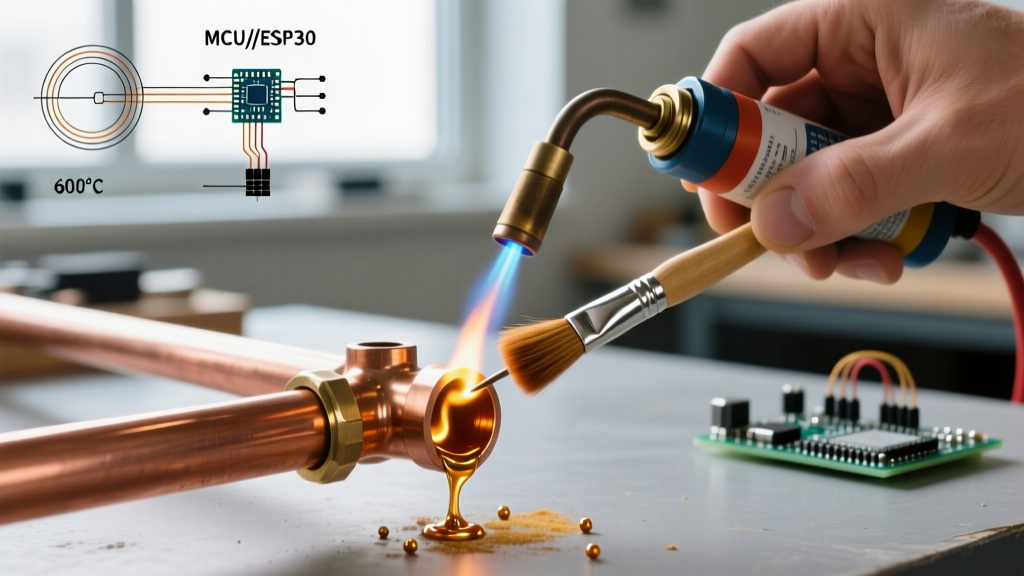
- Heat Source: Standard soldering irons cannot reach these temperatures. You must use a butane or oxy-acetylene torch. Note that according to NASA Electronic Parts and Packaging (NEPP) guidelines, any process exceeding 450°C is classified as brazing, not soldering, and requires entirely different structural validation.
Wire Diameter Selection Matrix
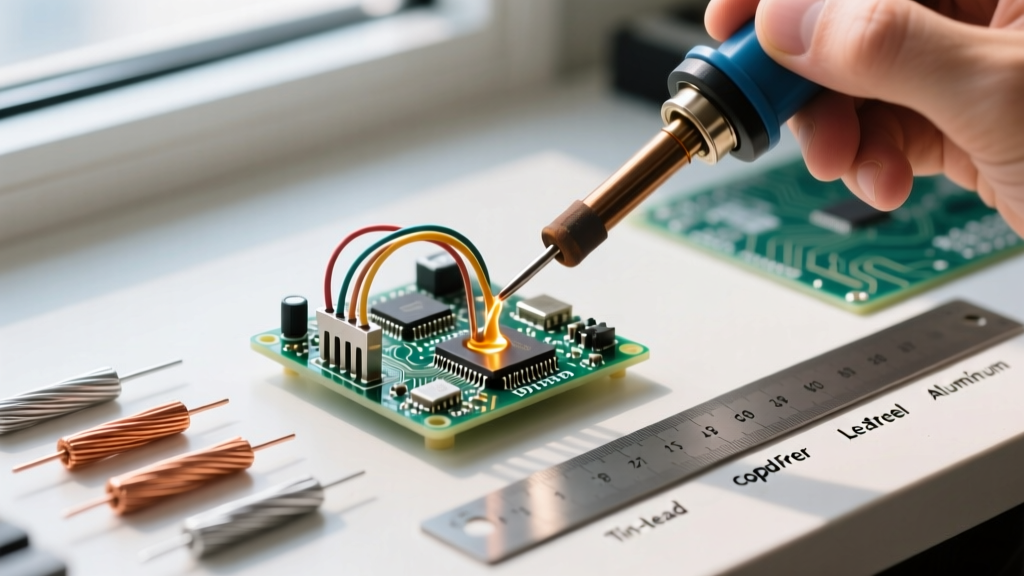
Choosing the correct soldering wire diameter is just as critical as the alloy. Using wire that is too thick for a delicate SMD pad will cause thermal shock and lift the pad. Using wire that is too thin for a heavy-gauge wire splice will result in a cold, starved joint.
| Wire Gauge / Diameter | Metric Equivalent | Best Application | Recommended Iron Tip |
|---|---|---|---|
| 30 AWG (0.010") | 0.25 mm | 0402 / 0603 SMD components, micro-jumpers, fine-pitch ICs | Micro pencil (0.4mm - 0.8mm) |
| 24 AWG (0.020") | 0.50 mm | Standard 0805 / 1206 SMD, standard DIP IC pins, general PCB repair | Chisel or bevel (1.0mm - 1.5mm) |
| 20 AWG (0.031") | 0.80 mm | Through-hole components, 22-18 AWG wire splicing, potentiometer lugs | Bevel or wide chisel (2.0mm) |
| 16 AWG (0.050") | 1.20 mm | Heavy gauge power wires (14-10 AWG), large grounding lugs, RC battery connectors | Heavy chisel (3.0mm - 4.0mm) |
Common Failure Modes by Material
Even with the correct soldering wire, environmental and thermal variables can cause joint failure. Here is how to diagnose material-specific issues:
Dewetting on Copper (Flux Exhaustion)
Symptom: The solder forms a tight ball and refuses to flow across the copper pad, leaving a distinct boundary line. Cause: The iron was left on the joint too long, burning off the rosin flux core before the solder could wet the surface. Fix: Remove the iron, clean the pad with isopropyl alcohol, apply external liquid flux, and reapply the soldering wire with a fresh iron tip.
Grainy / Dull Joints on SAC305 (Thermal Shock)
Symptom: The lead-free joint looks dull, rough, or cracked, resembling a cold joint even though adequate heat was applied. Cause: Lead-free SAC305 has a higher melting point (217°C) and a narrower plastic range than leaded solder. If the board is moved or subjected to a draft (like a cooling fan) while the joint is solidifying, the crystalline structure fractures, creating a 'disturbed joint'. Fix: Secure the workpiece in a third-hand tool. Do not blow on lead-free joints to cool them faster.
Inclusions on Aluminum (Trapped Oxide)
Symptom: The solder appears to have bonded, but a gentle pry test reveals the joint peels off, leaving a shiny but separate layer. Cause: The solder wetted the surface oxide layer rather than the base aluminum. The mechanical scrubbing step was skipped or insufficient. Fix: Score the aluminum lightly with a brass wire brush underneath the active flux pool during the soldering process to prevent immediate re-oxidation.
Expert Tips for Modern Workflows
If you are building or repairing modern, high-density electronics in 2026, consider keeping a spool of Sn42Bi58 (Bismuth-Tin) soldering wire on your bench. Melting at a remarkably low 138°C, this alloy is a lifesaver for repairing heat-sensitive components like Bluetooth modules, flexible printed circuits (FPCs), and plastic-housed connectors that would melt under the 350°C heat required for standard SAC305. While Bismuth solder is brittle and should not be used on connectors subject to mechanical stress, it is an invaluable tool for the specialized electronics technician's arsenal.