
Unboxing the Standard KNOOKOO T12 Assortment: What Actually Comes in the Box?
In the rapidly evolving landscape of electronics repair and DIY fabrication, the dominance of premium OEM brands is being seriously challenged by high-value alternatives. As of 2026, the soldering tip KNOOKOO assortment kits have become a staple on the workbenches of both hobbyists and professional repair technicians. But when you strip away the marketing and look at the actual hardware, what exactly are you getting for your money?
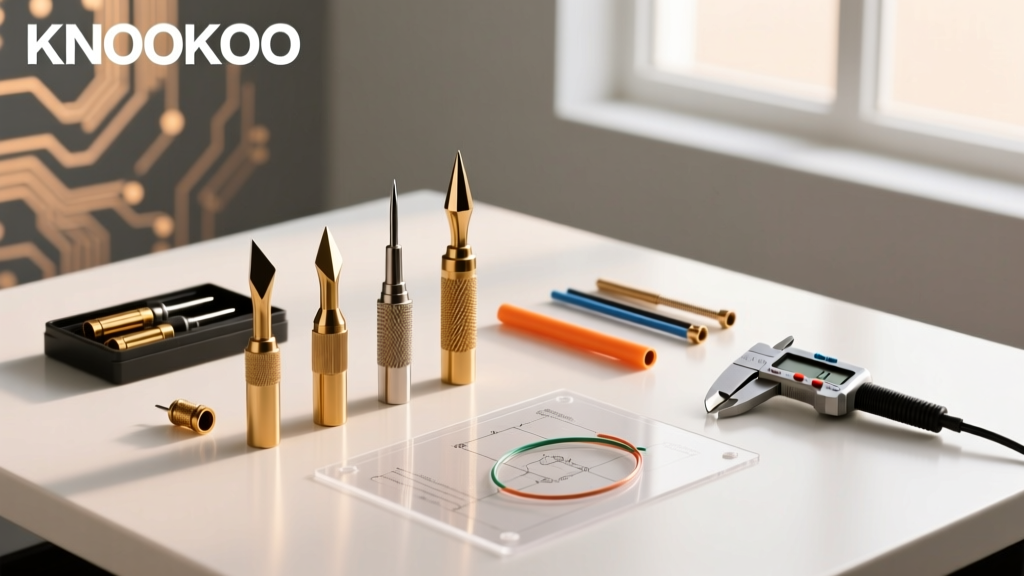
A standard KNOOKOO T12-compatible soldering tip kit typically arrives in a vacuum-sealed, anti-static blister pack or a compact, hinged plastic organizer. Inside a standard 5-piece or 10-piece assortment, you will not find standalone copper tips; instead, you are getting fully integrated T12 heater cartridges. This means the heating element, the thermocouple sensor, and the tip itself are fused into a single, unified metal shaft. This design eliminates the thermal lag associated with older ceramic heater designs, allowing for rapid thermal recovery when touching large ground planes.
The Core Metallurgy: How KNOOKOO Tips Are Engineered
To understand the value of these kits, we must examine the metallurgical cross-section. According to industry benchmarks and teardown analyses, a genuine KNOOKOO T12 tip features a multi-layered construction:
- Oxygen-Free Copper (OFC) Core: Provides the primary thermal conduit, pulling heat from the internal ceramic heater directly to the workpiece.
- Electroplated Iron Layer: Typically measuring between 100 to 150 microns thick. This layer protects the soft copper from being dissolved by molten solder and aggressive fluxes.
- Chromium Barrier: A micro-thin layer applied behind the iron plating to prevent oxidation from creeping in from the rear of the tip.
- Pre-Tinned Coating: A factory-applied layer of Sn63/Pb37 or SAC305 solder to prevent oxidation during storage and ensure immediate wetting upon first use.
While OEM tips from legacy Japanese manufacturers often boast an iron plating thickness closer to 200 microns, KNOOKOO's slightly thinner plating allows for marginally faster initial heat transfer, albeit with a slightly reduced total lifespan under extreme continuous-use conditions.
Detailed Breakdown: The 5 Essential Tip Profiles Included
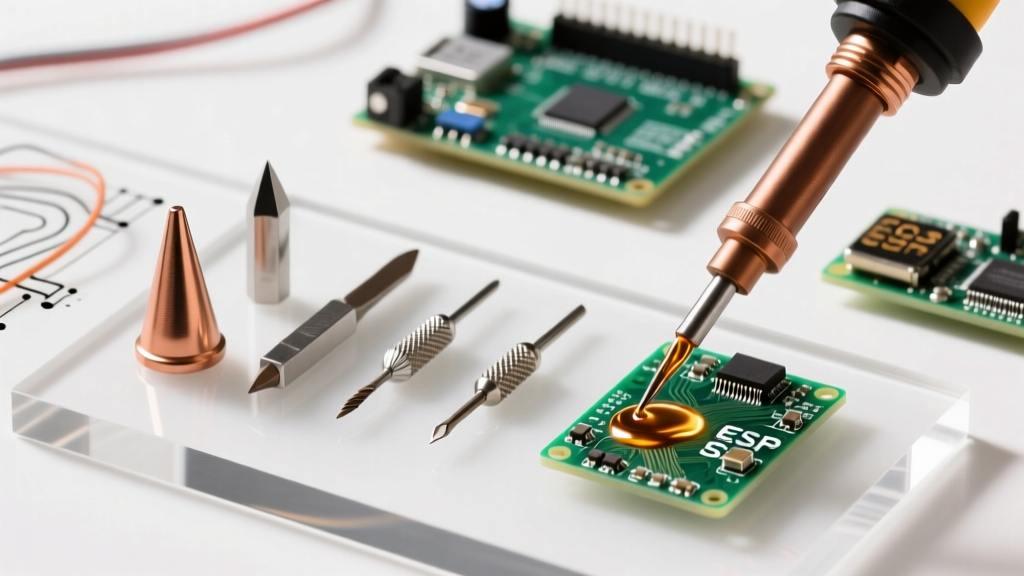
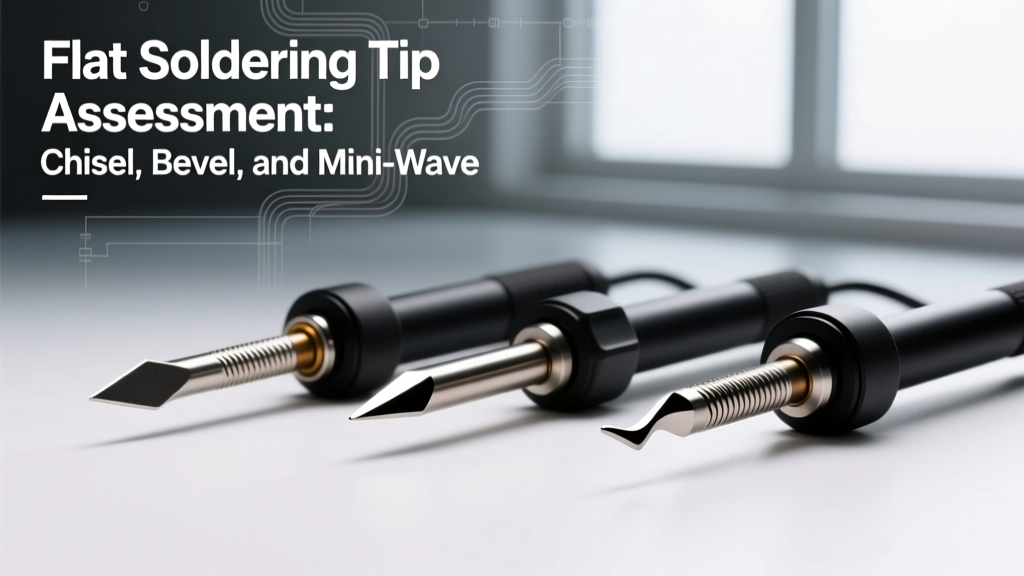
Most comprehensive KNOOKOO kits focus on the five most universally applicable geometries. Below is a breakdown of the specific models included in the standard assortment and their exact applications, aligned with modern surface-mount and through-hole requirements.
| Tip Model | Geometry | Dimensions | Primary Application | Thermal Mass |
|---|---|---|---|---|
| T12-D24 | Chisel | 2.4mm width | General purpose, 0805 SMD, standard through-hole | Medium |
| T12-K | Knife | 0.2mm edge | Drag soldering QFPs, scraping oxidized pads | High |
| T12-IL | Long Conical | 0.2mm point | Tight-pitch 0402 components, micro-jumper wires | Low |
| T12-C4 | Hoof (Bevel) | 4.0mm diameter | Drag soldering SOICs, heavy ground plane joints | Very High |
| T12-B2 | Short Bevel | 2.0mm angle | SMD rework, tinning heavy-gauge wires | Medium-High |
The inclusion of the T12-K (Knife) tip is where KNOOKOO kits truly shine for modern repair work. The knife edge allows technicians to use the point for precision 0402 rework, while the flat blade edge can be dragged across the pins of a 100-pin QFP microcontroller to clear solder bridges in seconds. Furthermore, the T12-C4 (Hoof) tip acts as a miniature solder reservoir, making it indispensable for dragging solder across SOIC-8 and SOIC-16 ICs without requiring excessive external solder wire feed.
KNOOKOO vs. OEM: The 2026 Cost-Benefit Reality
When evaluating a soldering tip KNOOKOO assortment, the pricing disparity is the most immediate talking point. In 2026, a single OEM Hakko T12 tip retails for approximately $26.00 to $32.00. In stark contrast, a 5-piece KNOOKOO T12 kit averages between $14.99 and $18.50.
Expert Insight: The cost per tip for KNOOKOO is roughly $3.50. Even if a KNOOKOO tip degrades 30% faster than an OEM equivalent when subjected to continuous 400°C lead-free (SAC305) soldering, the cost-per-hour of use still heavily favors the KNOOKOO assortment for 95% of independent repair shops and DIY enthusiasts.
However, it is vital to understand the trade-offs. The IPC J-STD-001 Standard dictates strict requirements for solder joint wetting and thermal profiles. While KNOOKOO tips meet these thermal transfer requirements flawlessly when new, their slightly thinner iron plating means they are more susceptible to 'pitting' if left idle at high temperatures for extended periods. For high-volume manufacturing environments where a tip must last 50,000 joints, OEM remains the standard. For prototyping, repair, and hobbyist kits, KNOOKOO offers undeniable economic efficiency.
Real-World Failure Modes and Edge Cases
No soldering tip is invincible. Based on extensive workshop testing, here are the specific failure modes you may encounter with the KNOOKOO T12 tips, and how to identify them before they ruin your PCB pads:
1. Iron Plating Dissolution (Pitting)
When using highly active Rosin Activated (RA) or water-soluble fluxes at temperatures exceeding 380°C, the acidic compounds can eat through the KNOOKOO's iron plating. Once the flux breaches the iron layer and touches the copper core, the tip will rapidly develop deep, black craters. Solution: Stick to No-Clean or RMA fluxes for daily use, and drop your idle temperature to 200°C when not actively soldering.
2. Thermal Shock Fractures
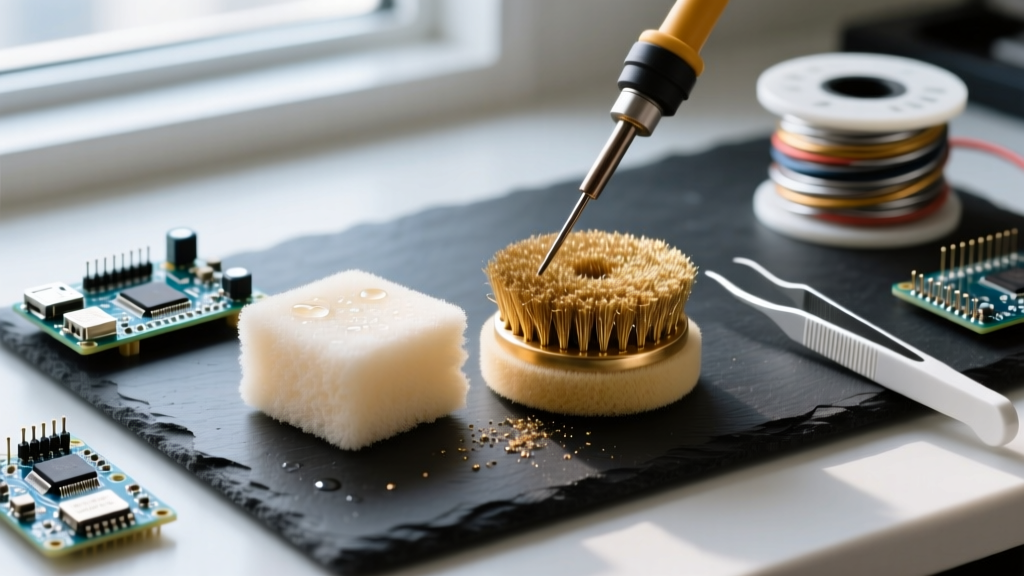
A common mistake among beginners is cleaning a 380°C KNOOKOO tip on a soaking wet cellulose sponge. The rapid temperature drop causes micro-fractures in the chromium and iron layers, leading to premature flaking. The NASA Electronic Parts and Packaging (NEPP) Program has long documented the detrimental effects of thermal shock on soldering iron metallurgy. Solution: Always use a dry brass wire sponge or a slightly damp (not wet) high-temp silicone cleaner.
3. 'Black Tip' Oxidation Syndrome
If you leave a KNOOKOO tip tinned with lead-free SAC305 solder at 350°C for more than 15 minutes without use, the tin will oxidize into a hard, black crust that refuses to accept new solder. Because the thermal mass of the T12 cartridge is so efficient, it cooks the flux out of the solder rapidly. Solution: Always tin the tip with a generous blob of cheap, leaded 63/37 solder before putting the station into sleep mode or turning it off. The leaded solder acts as a sacrificial oxidation barrier.
Maximizing the Lifespan of Your KNOOKOO Kit
To ensure your KNOOKOO soldering tip kit lasts well beyond its expected lifecycle, implement this strict maintenance protocol:
- Never use abrasive tools: Steel wool, sandpaper, or files will instantly destroy the microscopic iron plating. If a tip is heavily oxidized, use a chemical tip tinner (a mixture of phosphoric acid and solder powder) to restore it.
- Match the tip to the joint: Do not use the low-thermal-mass T12-IL conical tip to solder thick ground-plane wires. The tip will stall, prompting you to increase the station temperature to 420°C, which accelerates tip death. Use the T12-C4 hoof instead.
- Utilize Auto-Sleep: Ensure your T12 soldering station (whether it is a KNOOKOO branded station or a third-party controller like the Pine64 Pinecil) has the auto-sleep feature enabled. Dropping the temperature to 150°C when the handle is holstered will easily triple the lifespan of the iron plating.
Frequently Asked Questions (FAQ)
Are KNOOKOO T12 tips compatible with original Hakko FX-951 stations?
Yes. The KNOOKOO T12 tips are manufactured to the exact same physical dimensions and pinout configuration as the OEM T12 cartridges. They will fit seamlessly into Hakko FX-951, FX-952, and most modern open-source T12 handles without requiring firmware recalibration.
Do these tips contain lead out of the box?
The factory pre-tinning on most KNOOKOO T12 assortments utilizes Sn63/Pb37 (leaded) solder to ensure maximum shelf life and prevent oxidation during shipping. You should wipe this initial coating off with brass wool and re-tin with your preferred lead-free alloy if you are working on strict RoHS-compliant commercial assemblies.
Why does my KNOOKOO knife tip (T12-K) feel slightly magnetized?
The internal heater cartridge relies on a ceramic heating element and a thermocouple, but the outer stainless steel sleeve used in some budget T12 clones can exhibit slight magnetic properties due to the specific alloy blend used for the shaft. This does not affect thermal performance or the PID temperature control loop of your soldering station.