
The Anatomy of Tip Degradation: Why Iron Plating Fails
Every electronics engineer and DIY enthusiast eventually faces the same frustrating scenario: you pick up your soldering station, apply it to a pad, and the solder balls up and rolls off. The tip is coated in a crusty, blackish-blue oxide layer. This is where a proper soldering iron tips refresher becomes critical. Before we dive into restoration techniques, it is vital to understand what is actually happening at the metallurgical level.
Modern soldering tips are not solid copper. They consist of a copper core for rapid heat transfer, plated with a layer of iron (typically 0.003 to 0.005 inches thick) to resist solder erosion, and finally coated in chromium to prevent solder from climbing up the shaft. According to the workmanship standards outlined in IPC J-STD-001, maintaining the integrity of the iron plating is essential for reliable thermal transfer and preventing copper dissolution into the solder joint.
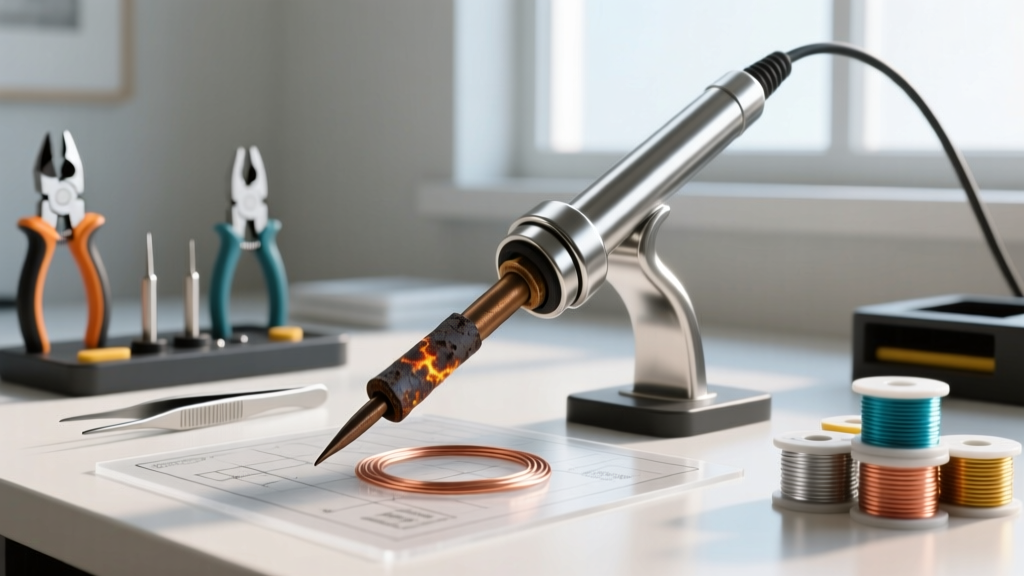
When the iron plating is exposed to high temperatures and atmospheric oxygen without a protective layer of molten solder, it rapidly oxidizes. This iron oxide layer acts as a severe thermal insulator. A blackened tip might read 350°C on your station's display, but the actual contact surface temperature dropping onto your PCB pad might barely breach 180°C, leading to cold solder joints and damaged components.
Step-by-Step Physical Refresher: Restoring a Blackened Tip
If your tip has turned black and refuses to wet, do not throw it away immediately. Follow this expert restoration protocol to strip the oxidation without breaching the microscopic iron plating.
Step 1: The Chemical Tip Tinner Method
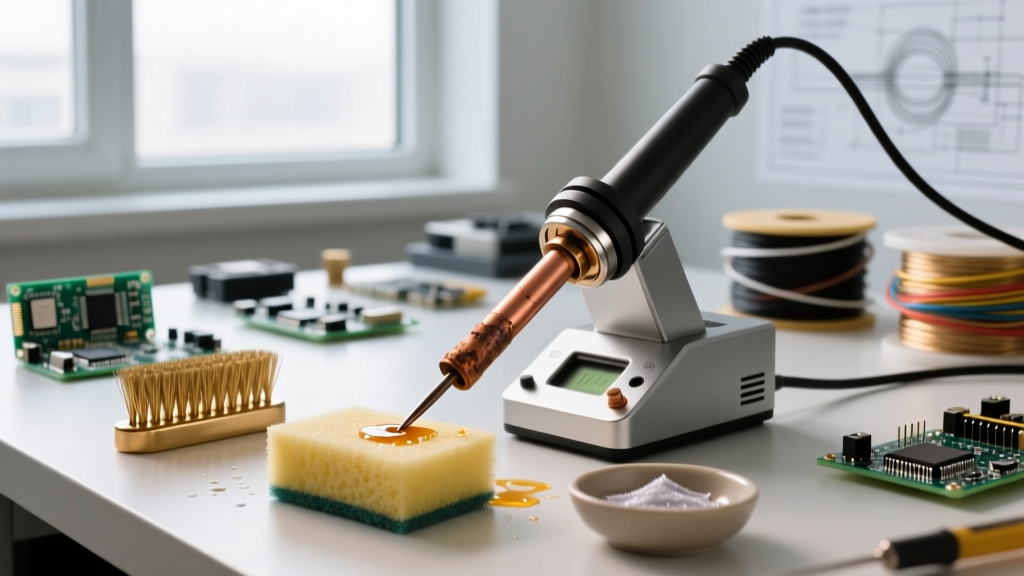
For moderate to severe oxidation, mechanical scraping is a guaranteed way to destroy the tip. Instead, use a chemical tip tinner like the Amtech TT-1 or Weller WTP1 (typically costing between $8 and $12). These compounds contain a mixture of mild abrasives, rosin flux, and solder powder.
- Set your station to a moderate 300°C (572°F). High heat will burn the flux in the tinner before it can work.
- Once heated, plunge the oxidized tip into the tip tinner compound for 2 to 3 seconds. You will see it smoke and bubble.
- Immediately withdraw the tip and wipe it vigorously on a dry brass wire sponge (such as the Hakko 599B).
- Repeat this plunge-and-wipe cycle 3 to 4 times until the shiny iron plating is revealed.
- Finish by heavily tinning the tip with fresh, high-quality rosin-core solder (e.g., Kester 245 or MG Chemicals 63/37).
Step 2: The "Rosin Block" Trick for Stubborn Oxide
If chemical tinner fails, locate a block of pure rosin flux or a heavily fluxed piece of braided solder wick. While the iron is at 280°C, press the tip into the solid rosin and simultaneously feed 63/37 Sn/Pb solder wire directly into the melting rosin pool against the tip. The localized, oxygen-deprived environment created by the boiling rosin, combined with the fresh solder, can often reduce stubborn iron oxide back to bare metal.
Expert Warning: Never use sandpaper, a metal file, or a Dremel tool on a modern soldering tip. You will instantly remove the 0.003-inch iron plating, exposing the soft copper core. Once the copper is exposed, the molten solder will dissolve the copper tip in a matter of hours, creating deep craters and ruining the tool permanently.
Temperature Profiling: The Silent Tip Killer
A major component of any soldering iron tips refresher is re-evaluating your thermal habits. Many hobbyists and even some production technicians leave their stations idling at 400°C (752°F) "just in case." This is catastrophic for tip longevity. The rate of oxidation doubles approximately every 10°C to 15°C increase above 300°C.
| Idle Temperature | Oxidation Rate | Estimated Tip Lifespan (Hakko T18) | Recommended Use Case |
|---|---|---|---|
| 250°C - 280°C | Very Low | 6 - 12 Months | Leaded solder (63/37), delicate SMD work |
| 300°C - 330°C | Moderate | 3 - 6 Months | Lead-free (SAC305), standard through-hole |
| 350°C - 380°C | High | 1 - 3 Months | Heavy ground planes, large connectors |
| 400°C+ | Extreme | 2 - 4 Weeks | Emergency desoldering only; never idle |
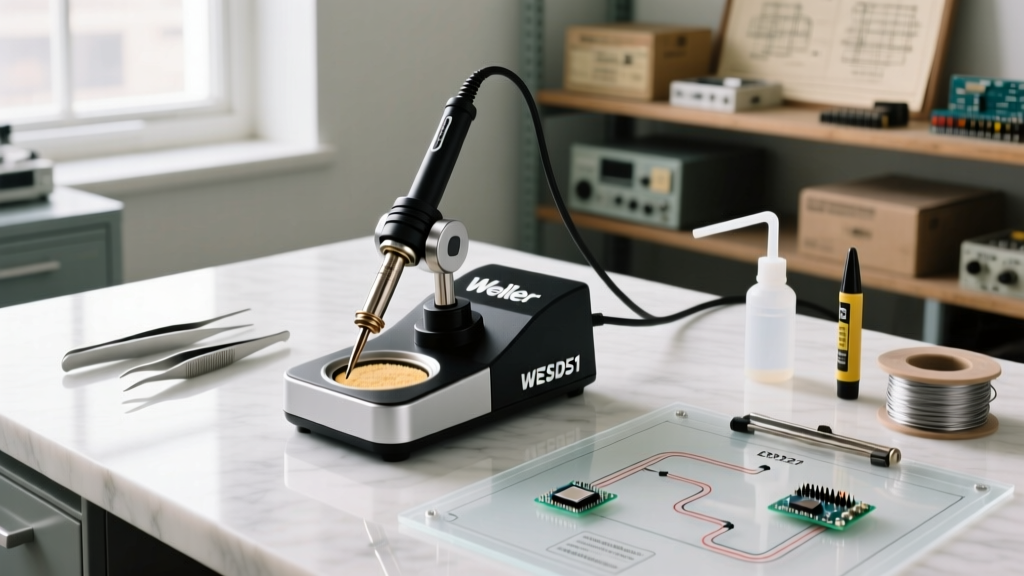
To combat this, modern stations like the JBC CD-2BE or the Pinecil V2 utilize aggressive sleep modes. The JBC system drops the tip temperature to 180°C the moment it is placed in the stand, virtually halting oxidation. If you are using an older analog station like the classic Weller WES51, you must manually dial down the temperature when stepping away from the bench for more than three minutes.
The Economics of Tip Replacement vs. Restoration
Understanding the cost structure of your specific ecosystem dictates how much time you should spend on a soldering iron tips refresher routine versus simply swapping the tip.
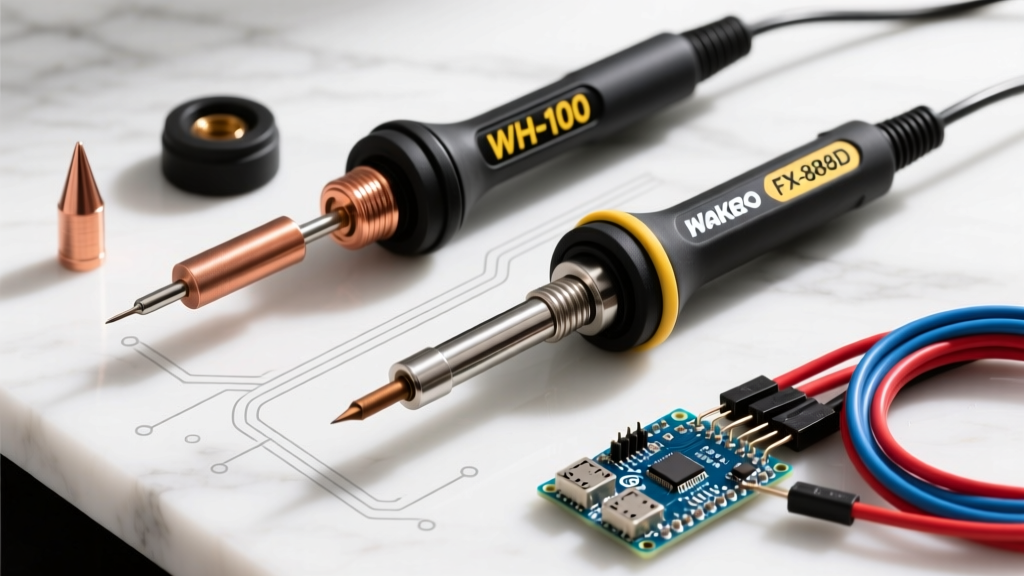
- Hakko T18 / FX-888D Ecosystem: Tips cost roughly $8 to $11 each. While restoration is good practice, the low replacement cost means you shouldn't spend more than 5 minutes trying to save a heavily pitted T18 tip.
- Weller RT Series (for WX microsoldering): Priced around $12 to $15. Similar to Hakko, replace if the iron plating shows physical craters.
- JBC C245 / C210 Ecosystem: JBC tips integrate the heating element directly into the tip cartridge, pushing the price to $45 to $55 per tip. In this ecosystem, mastering the chemical tinner and brass sponge refresher protocol is mandatory. Throwing away a JBC tip due to reversible oxidation is a massive waste of capital.
- Pinecil TS-B2 / TS-C4: At $4 to $6 per tip, these are highly disposable. Treat them like consumables, but maintain basic tinning habits to ensure consistent thermal performance.
Daily Maintenance Refresher: The 3-Tin Protocol
Prevention is always superior to restoration. To ensure your tips survive for years, adopt the "3-Tin Protocol" recommended by advanced manufacturing engineers and detailed in various NASA Electronic Parts and Packaging (NEPP) workmanship guidelines for space-flight hardware assembly.
- Tin Before Use: The moment the iron reaches melting temperature, apply a generous blob of sacrificial solder to the tip before you even look at your PCB.
- Tin During Idle: If you are pausing your work for more than 60 seconds, wipe the tip on your brass sponge and immediately apply a fresh coat of solder. Never leave a bare, shiny tip exposed to the air while hot.
- Tin Before Shutdown: This is the most critical step. When turning off your station, do not just wipe the tip clean. Melt a large, thick bead of rosin-core solder over the entire working surface of the tip. Let it cool and solidify into a protective shell. This shell will block oxygen from reaching the iron plating while the tool is stored.
When to Abandon Ship: Signs of Irreversible Pitting
Not all damage can be fixed with a soldering iron tips refresher. You must know the difference between oxidation and pitting. Oxidation is a surface-level chemical reaction that can be stripped. Pitting is a physical erosion of the iron plating caused by the solder dissolving the iron over time, or by mechanical abuse.
Run your fingernail lightly over the cooled, cleaned tip. If you feel deep grooves, craters, or a rough, sandpaper-like texture, the iron plating has been breached. The underlying copper is now exposed to the molten solder. At this stage, the tip will constantly form intermetallic compounds, leading to rapid physical degradation and uneven heat distribution. Discard the tip immediately to avoid ruining your PCB pads with copper-contaminated solder joints.
Frequently Asked Questions
Can I use a wet cellulose sponge instead of a brass sponge?
While traditional wet sponges work, they cause rapid thermal shock to the tip. Dropping a 350°C tip into a 20°C wet sponge causes microscopic fracturing in the iron plating over time. A dry brass wire sponge (like the Hakko 599B) removes oxidation via gentle friction without dropping the tip's core temperature.
Does lead-free solder destroy tips faster?
Yes. Lead-free alloys like SAC305 require higher temperatures (typically 350°C+) and contain higher tin content, which aggressively leaches the iron plating. If you work exclusively with lead-free solder, expect to replace your tips 3x to 4x faster than if you were using 63/37 Sn/Pb, and rely heavily on chemical tip tinners to maintain the plating.
Why does my new tip turn black within 10 minutes?
This is usually caused by using a highly active, acidic plumbing flux (like zinc chloride) instead of electronics-grade rosin flux (RMA or No-Clean). Acidic fluxes will eat through the chromium and iron plating almost instantly. Always verify your flux chemistry against Weller Tools technical documentation to ensure compatibility with iron-plated tips.