
The True Cost of Soldering: Beyond the Sticker Price
If you are setting up an electronics workbench in 2026, one of the first questions you will face is: how much does a soldering iron cost? The short answer is that a soldering iron can cost anywhere from $15 for a basic USB-C portable stick to over $650 for an advanced RF-driven rework station. However, the sticker price is only half the equation. The true cost of ownership includes replacement tips, power supply requirements, fume extraction, and the hidden cost of thermal recovery failures on complex PCBs.
In this comprehensive best-of comparison, we break down the 2026 soldering iron market into three distinct tiers. We will analyze the exact models that dominate each price bracket, their thermal physics, and the hidden ecosystem costs you need to budget for.
2026 Soldering Iron Price Tiers: A Best-Of Comparison
Tier 1: The Budget & Portable Segment ($15 – $40)
The budget tier has been completely revolutionized by open-source hardware and USB-C Power Delivery (PD). Gone are the days of dangerous, unregulated mains-powered sticks. Today, budget irons utilize DC-DC buck converters and PID temperature control algorithms running on RISC-V or ARM microcontrollers.
- Pine64 Pinecil V2 ($26): The undisputed king of budget irons. Powered by the Bouffalo Lab BL706 chip, it supports USB-C PD 3.0 and QC 3.0. With a 65W power supply, it hits 350°C in about 12 seconds. It uses cheap, widely available TS100/Pine64 compatible tips.
- Sequre S60P ($35): A slightly more premium portable option featuring a built-in OLED screen and excellent firmware customization. It is ideal for field technicians and drone repair.
The Trade-Off: Budget irons lack heavy thermal mass. If you attempt to solder a thick ground plane on a 4-layer PCB, the tip temperature will plummet, leading to cold solder joints. They are strictly for light through-hole and basic 0805 SMD work.
Tier 2: The Prosumer Sweet Spot ($90 – $160)
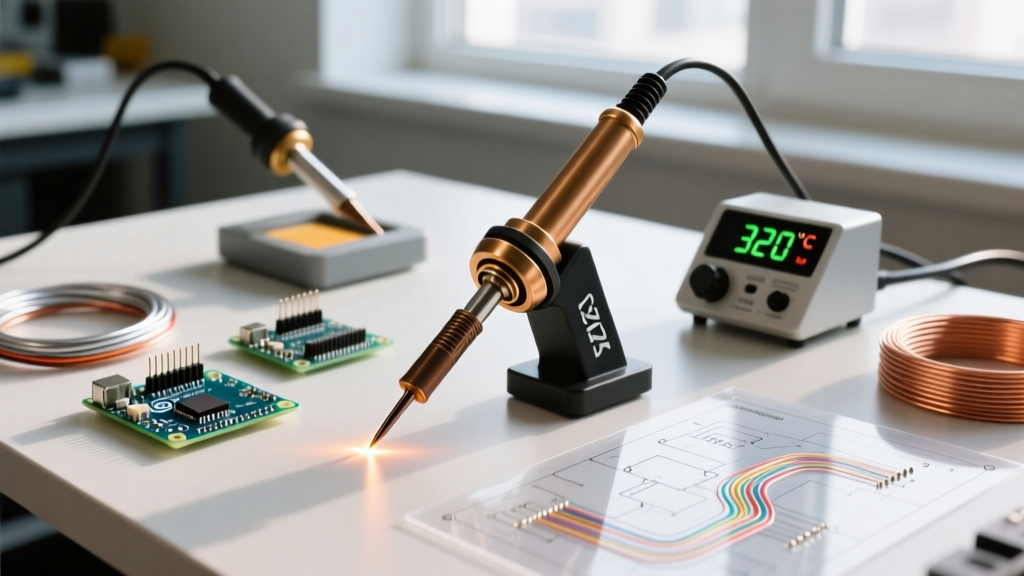
This is where you find the legendary workhorses of university labs, repair shops, and serious hobbyists. These stations use dedicated AC transformers or heavy-duty switching power supplies to deliver consistent wattage to a ceramic heating element.
- Hakko FX-888D ($115): The industry standard for over a decade. It delivers 70W of power and uses the T18 tip series. The thermal recovery is adequate for most DIY and prototyping tasks, though the separate heater and tip design means a slight lag in heat transfer compared to integrated cartridges.
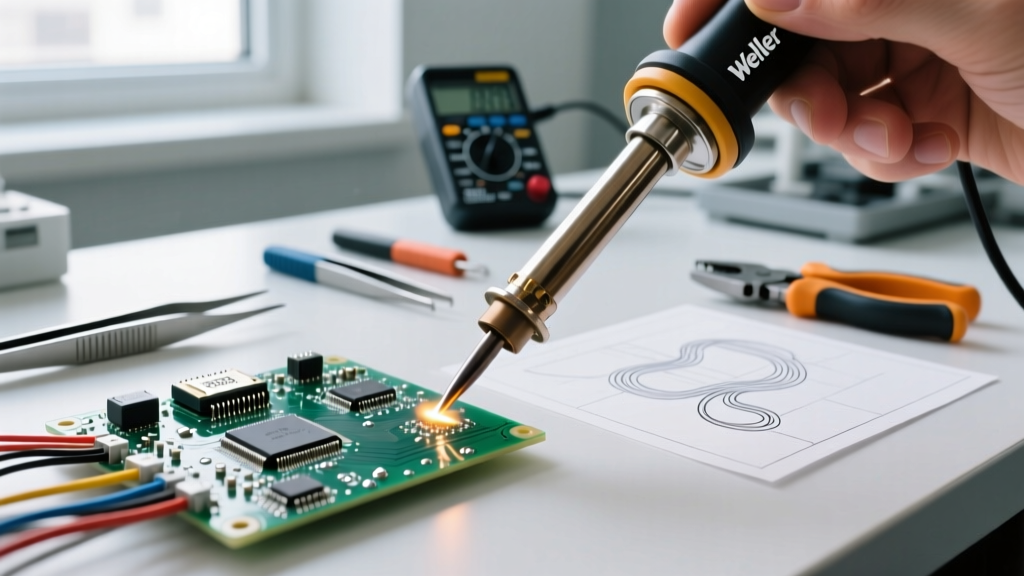
- Weller WE1010NA ($140): Offers 70W with a slightly faster heat-up time than the Hakko. It features a robust, heat-resistant stand and an intuitive single-button interface. The ETA tips are durable and resist oxidation well when used with lead-free solder.
Tier 3: Industrial & Rework Stations ($250 – $650+)
When you are reworking BGA chips, soldering 12-layer server motherboards, or working in a high-volume manufacturing environment, thermal recovery speed is non-negotiable. Industrial stations integrate the heater directly into the tip cartridge, reducing the thermal path to near zero.
- JBC CD-2BQE ($575): JBC's C245 cartridge system is legendary. The 130W station detects when the iron is in the stand and instantly drops the temperature to sleep mode, extending tip life by up to 5x. It recovers from a 350°C to 400°C jump in under 2 seconds.
- Metcal PS-900 ($650): Uses SmartHeat® RF technology. Instead of a thermostat, an RF generator induces current directly into the ferromagnetic core of the tip. When the tip reaches its Curie temperature, it becomes non-magnetic and stops heating. This provides flawless, closed-loop thermal regulation without traditional sensors.
Cost vs. Performance Matrix
| Model | Tier | 2026 Price | Wattage | Heat-Up Time (to 350°C) | Replacement Tip Cost |
|---|---|---|---|---|---|
| Pinecil V2 | Budget | $26 | 65W (PD) | ~12 Seconds | $3 - $5 |
| Hakko FX-888D | Prosumer | $115 | 70W | ~25 Seconds | $8 - $12 |
| Weller WE1010NA | Prosumer | $140 | 70W | ~20 Seconds | $9 - $14 |
| JBC CD-2BQE | Industrial | $575 | 130W | ~2 Seconds | $40 - $60 |
| Metcal PS-900 | Industrial | $650 | 90W (RF) | ~8 Seconds | $50 - $85 |
Hidden Costs: The Ecosystem Tax
Knowing how much a soldering iron costs is useless if you ignore the ecosystem required to use it safely and effectively. Budget at least an additional $100 to $200 for the following essentials:
- Fume Extraction ($50 - $300): Soldering flux vaporizes into hazardous particulates. As noted in safety guidelines from organizations like NIOSH and the CDC, prolonged exposure to rosin-based flux fumes can cause occupational asthma. A basic Hakko FA-400 fan filter costs around $75, while a proper benchtop HEPA/Carbon extractor like the Hakko FA-430 will cost closer to $250.
- Quality Solder Wire ($35 - $55 per lb): Cheap Amazon solder is often adulterated with excess flux cores that spatter or lack proper alloy ratios. Invest in Kester 245 (63/37 Leaded) or Kester 275 (Lead-Free SAC305). According to the IPC J-STD-001 standard, proper flux activation and wetting rely heavily on high-purity alloys.
- Tip Maintenance ($15): Never use a wet sponge; it causes thermal shock and micro-fractures in the iron plating. Buy a brass wire sponge (like the Hakko 599B for $12) and a tube of tip tinner (like MG Chemicals 8341) to re-tin oxidized tips.
Decision Framework: Which Tier Do You Actually Need?
Do not overspend on a JBC station if you are only blinking LEDs on an Arduino, but do not buy a Pinecil if you are repairing MacBook logic boards. Use this framework to decide:
- Choose Tier 1 ($15-$40) if: You are a student, a hobbyist building simple kits, a cosplayer, or a field technician who needs a portable solution powered by a laptop charger. (For a deep dive into portable setups, see Hackaday's extensive review of the Pinecil architecture).
- Choose Tier 2 ($90-$160) if: You run a small repair business, work in a university makerspace, or frequently solder 0603 SMD components and standard DIP ICs. The Hakko FX-888D remains the most cost-effective reliable station for 90% of users.
- Choose Tier 3 ($250-$650+) if: You are doing heavy ground-plane soldering, BGA rework, or running a commercial production line where a 5-second delay in thermal recovery translates to lost revenue and failed IPC-A-610 inspections.
Frequently Asked Questions
Why are JBC and Metcal tips so expensive?
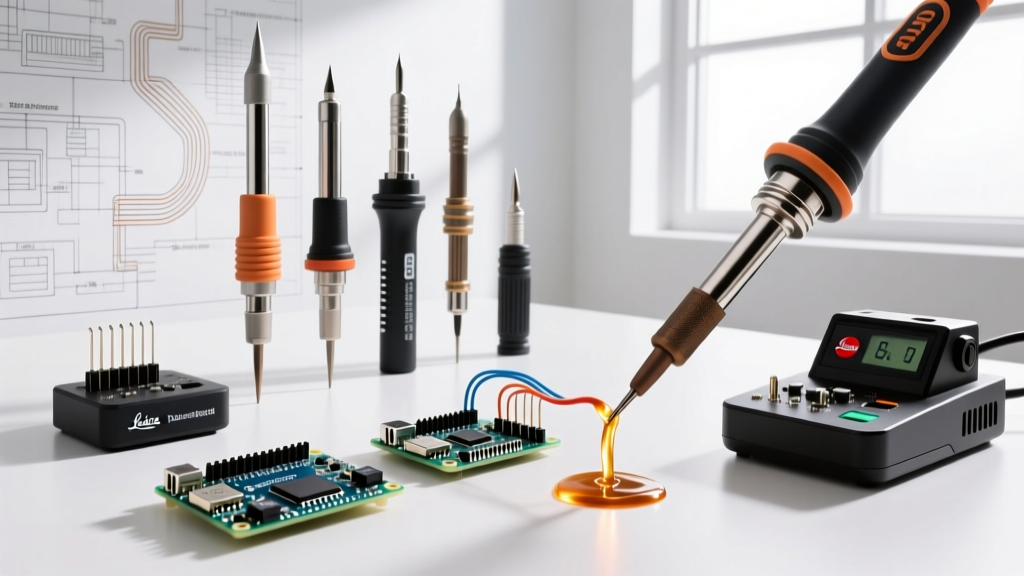
Unlike traditional irons where the tip is just a hollow copper sleeve that slides over a ceramic heater, JBC and Metcal tips are integrated cartridges. The heating element, thermocouple, and tip are manufactured as a single, sealed unit. This eliminates the air gap that causes thermal lag, but it means you are replacing the entire heater assembly every time you swap a tip shape.
Is a $20 USB-C iron safe to use on sensitive microcontrollers?
Yes, provided you are using a high-quality, grounded USB-C power supply. Cheap, unbranded wall warts can leak AC mains voltage onto the DC ground, which will instantly destroy sensitive MOSFETs and microcontrollers. Always use a reputable brand like Anker, UGREEN, or the official Pine64 power brick.
How often should I replace my soldering iron tip?
In a hobbyist environment, a well-maintained Tier 2 tip can last 3 to 5 years. In a commercial environment running lead-free solder at 380°C, a tip might degrade in 2 to 4 weeks. If the iron-plated working end of the tip becomes pitted, concave, or refuses to accept tinning, it must be replaced immediately to prevent cold joints.