
The Great Terminology Trap: What Are You Actually Trying to Join?
When professionals and advanced DIYers search for a silver soldering iron, they are usually navigating a complex metallurgical misunderstanding. In the electronics and plumbing trades, the term "silver soldering" is frequently misapplied to three entirely different processes, each requiring vastly different thermal tools. Before comparing budget and premium irons in 2026, we must define the actual thermal requirements of your workpiece.
- Electronics Assembly (SAC305): Lead-free electronics solder contains roughly 3% to 4% silver (Sn96.5/Ag3.0/Cu0.5). It melts around 430°F (221°C). A standard 60W-80W precision station is all you need.
- Heavy-Duty Plumbing & HVAC (95/5 Alloy): Often mistakenly called "silver solder" by plumbers, this 95% Tin / 5% Silver alloy melts at 452°F (233°C). It requires high-wattage irons or guns to overcome the thermal mass of thick copper pipes.
- True Silver Brazing (e.g., Harris Stay-Silv 15): This alloy contains 15% to 45% silver and melts between 1145°F and 1475°F (618°C - 802°C). No handheld soldering iron on the market can achieve these temperatures. This process strictly requires an oxy-acetylene or MAP-Pro torch.
According to the American Welding Society (AWS), the fundamental dividing line is temperature: soldering occurs below 840°F (450°C), while brazing occurs above it. Therefore, our 2026 budget vs. premium analysis focuses on the heavy-duty, high-wattage irons and guns required for high-thermal-mass joints using silver-bearing plumbing and electrical solders (like 95/5), where standard electronics irons fail catastrophically.
Budget Heavy-Duty Irons: The Weller D550PK Analysis
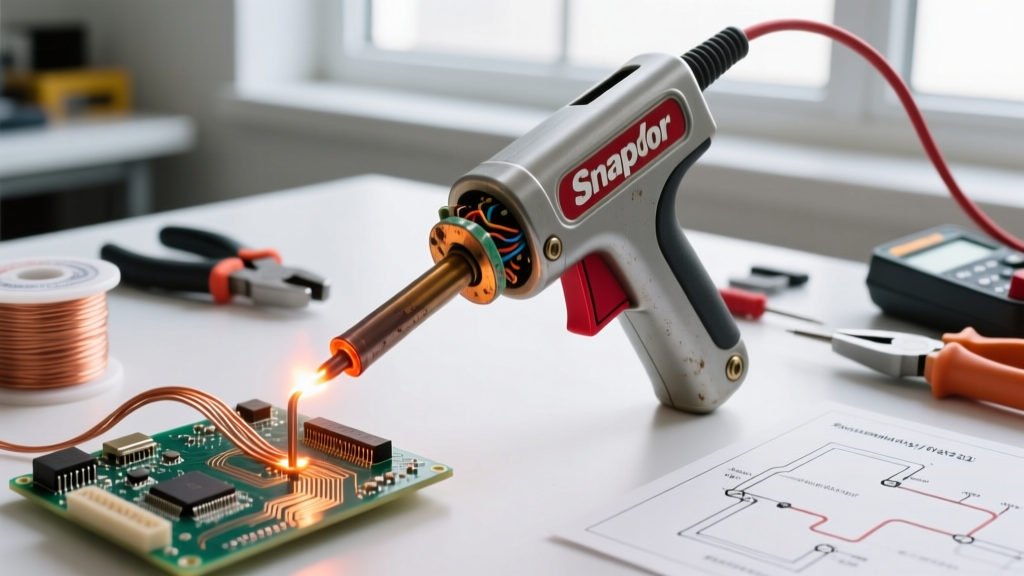
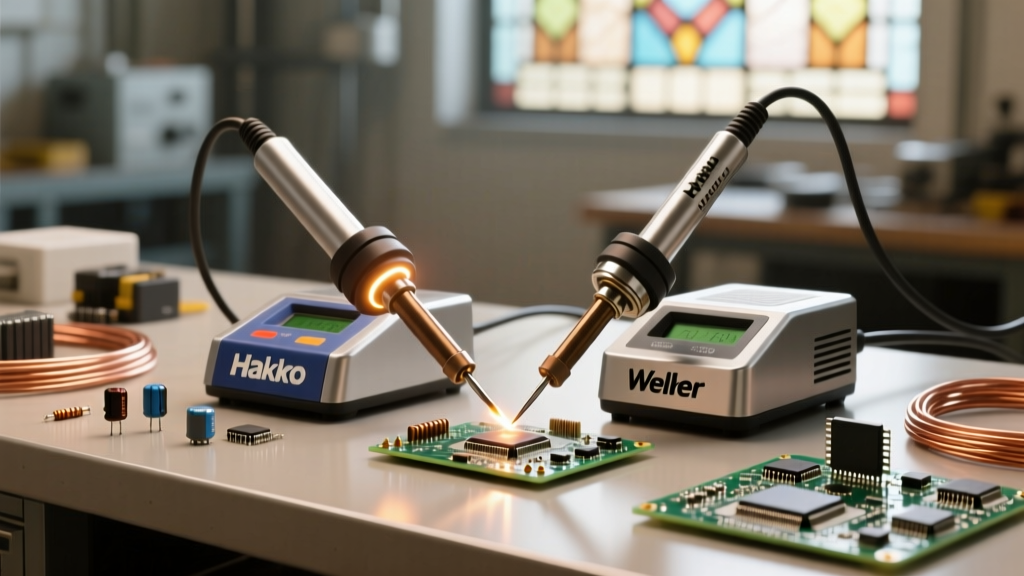
In the budget tier (under $150), the undisputed legacy workhorse is the Weller D550PK 120W/240W Soldering Gun. Priced around $115 in 2026, it relies on a transformer-based nichrome wire heating element.
The Thermal Reality of Transformer Guns
The D550 operates on a simple dual-trigger mechanism: half-press for 120W, full-press for 240W. While 240W sounds massive, the thermal recovery time is the critical failure point. When you apply the copper tip to a 3/4-inch copper pipe fitting slathered in water-soluble flux, the pipe acts as a massive heat sink. The 95/5 silver-tin solder requires the base metal to reach 452°F to trigger capillary action.
Expert Insight: If the base metal does not reach the alloy's liquidus temperature within 15 seconds, the flux burns off and oxidizes the copper. The solder will "paste" or ball up on the surface rather than drawing into the joint, resulting in a catastrophic leak under pressure.
The Weller D550 can handle 1/2-inch copper and heavy 10-AWG electrical grounding lugs, but it severely struggles with 3/4-inch or 1-inch plumbing joints due to thermal lag. Furthermore, the exposed copper tips suffer from rapid pitting when used with aggressive zinc-chloride plumbing fluxes, requiring frequent tip replacements.
Premium Thermal Powerhouses: Milwaukee M12 & Metcal Induction
The premium tier abandons heavy, wall-tethered transformers in favor of advanced ceramic heating elements, lithium-ion thermal management, and high-frequency induction.
The Cordless Contender: Milwaukee 2468-20 M12 Soldering Iron
Retailing at roughly $130 (bare tool) in 2026, the Milwaukee 2468-20 is a premium field tool. Unlike the Weller gun, it uses a proprietary ceramic heater powered by an M12 REDLITHIUM battery. It reaches 750°F (400°C) in just 15 seconds and maintains a locked temperature profile via onboard microprocessors.
For technicians soldering 95/5 silver-bearing alloys on commercial HVAC linesets or thick electrical busbars, the Milwaukee's continuous thermal feedback loop prevents the temperature drop-offs seen in budget transformer guns. The cordless form factor also eliminates the risk of dragging a heavy transformer cord across wet plumbing sites.
The Industrial Standard: Metcal MX-5200 Induction System
At the ultra-premium end ($1,100+), the Metcal MX-5200 utilizes SmartHeat® induction technology. Instead of a thermocouple and a heater, the tip itself is a ferromagnetic alloy. An RF generator induces eddy currents directly into the tip's skin. When the tip hits its engineered Curie-point (e.g., 700°F), it becomes non-magnetic, and heating stops instantly. As soon as a massive copper ground plane sucks heat away, the tip drops below the Curie-point, becomes magnetic again, and draws maximum power instantly.
This zero-lag thermal recovery is the only way to reliably solder massive multi-layer PCB ground planes or heavy-gauge silver-plated aerospace wiring without scorching the surrounding insulation.
Comparative Matrix: 2026 Heavy-Duty Soldering Tools
| Model | Tier | Power Source / Wattage | Max Temp Capability | Best Application | 2026 Street Price |
|---|---|---|---|---|---|
| Weller D550PK | Budget | 120W / 240W (Transformer) | ~900°F (482°C) | 1/2" Copper, Heavy Lugs | $115 |
| Milwaukee 2468-20 | Premium | M12 Lithium-Ion (65W equiv) | 750°F (400°C) | HVAC Field Work, 95/5 Alloy | $130 (Bare) |
| Weller D650PK | Mid-Premium | 200W / 300W (Transformer) | ~1000°F (538°C) | 3/4" Plumbing, Stained Glass | $185 |
| Metcal MX-5200 | Industrial | Induction (60W RF) | Curie-Point Dependent | Aerospace, Massive Ground Planes | $1,150 |
Thermal Failure Modes in Silver-Bearing Alloys
Using a budget iron on high-thermal-mass joints with silver-bearing solders introduces specific failure modes that compromise joint integrity. According to guidelines published by the Copper Development Association (CDA), capillary action requires precise heat distribution.
- Grain Boundary Penetration Failure: If a budget iron loses heat and the operator applies excessive physical pressure to force the 95/5 solder into the joint, the alloy cools too rapidly. This creates a grainy, crystalline fracture point that will vibrate loose in HVAC applications.
- Flux Charring: Budget irons with poor temperature regulation often overshoot when not under load. If the tip exceeds 800°F before touching the joint, it instantly vaporizes the rosin or acid flux, leaving bare, oxidized copper that the silver-tin alloy will refuse to wet.
- Tip Dissolution: Silver-bearing solders are highly aggressive to standard copper tips. Premium irons utilize iron-plated or specialized ceramic-coated tips to resist the leaching effect, whereas budget iron tips will pit and dissolve within weeks of heavy 95/5 use.
The Torch Reality: When to Abandon the Iron
It is vital to reiterate that if your project calls for true silver brazing—such as joining high-pressure refrigeration lines using Harris Stay-Silv 15 (which contains 15% silver and requires 1225°F / 663°C to melt)—you must put down the soldering iron and pick up a torch.
No electrical heating element in a handheld iron form factor can safely transfer 1200°F+ into a copper joint without destroying the tool's internal wiring and posing a severe burn and fire hazard. For true silver brazing, invest in a premium oxy-acetylene setup (like a Smith AW-1A) or a high-output MAP-Pro torch, as outlined by IPC standards for high-reliability mechanical joints.
Final 2026 Workbench Verdict
If your definition of a "silver soldering iron" involves joining thick copper plumbing, heavy electrical grounding lugs, or stained glass foil using 95/5 silver-tin solder, the Milwaukee 2468-20 M12 is the 2026 premium champion. Its closed-loop thermal management eliminates the cold-joint frustrations inherent in budget transformer guns like the Weller D550. However, if you are strictly working on electronics PCBs using SAC305 silver-alloy paste or wire, skip the heavy-duty guns entirely and invest in a precision 80W station like the Hakko FX-951. Match the tool to the metallurgy, not the marketing.