
The 8858 Platform Explained: Beyond the Brand Name
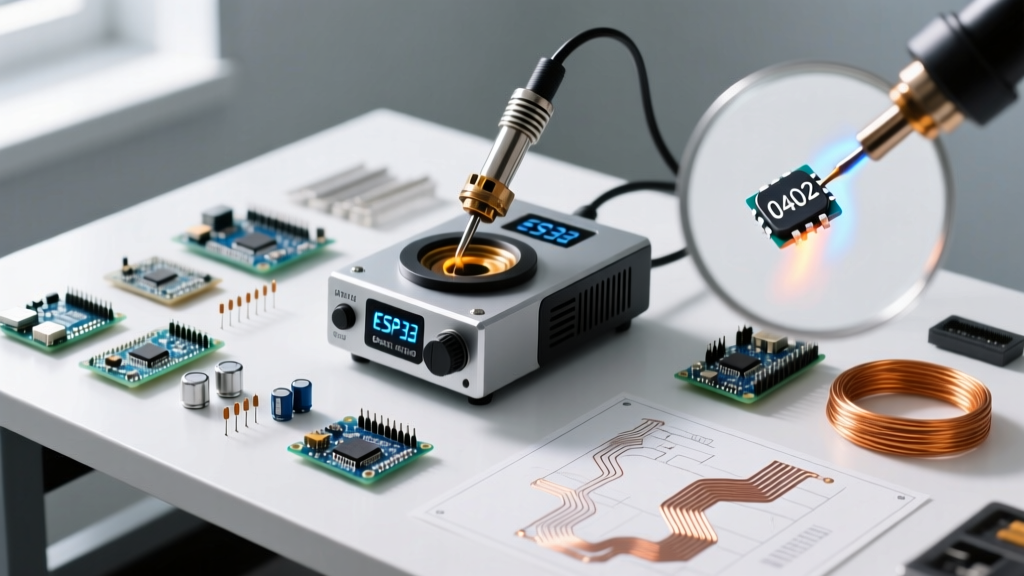
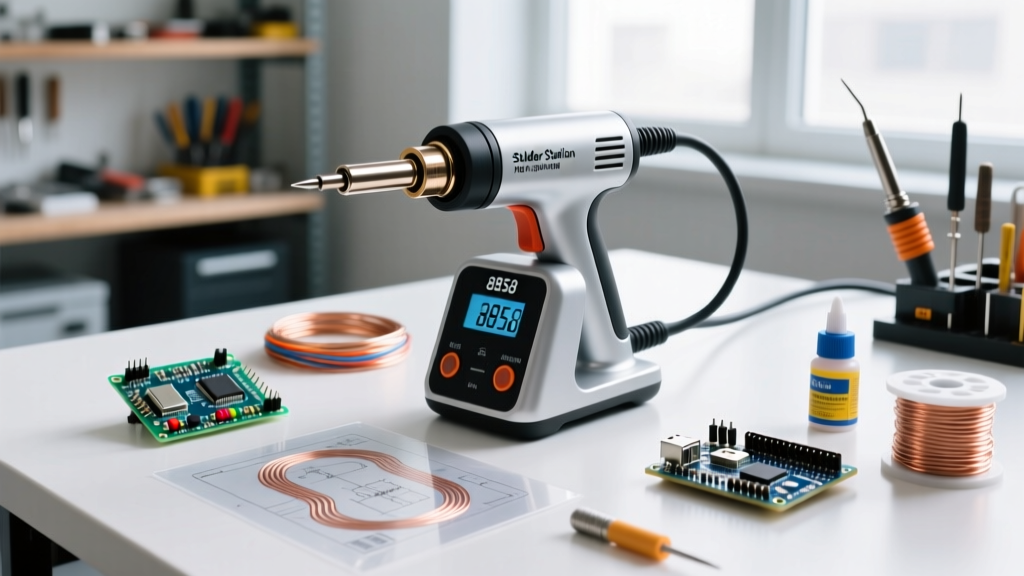
When hobbyists and entry-level technicians search for an 8858 soldering station hot air gun, they are rarely looking at a single proprietary product. Instead, the "8858" designation refers to a highly successful, open-architecture chassis design that has been adopted by Yihua, WEP, Zenstyle, and dozens of unbranded OEM factories. As of 2026, the Yihua 8858D remains the gold standard of this tier, offering a dual-module 2-in-1 rework station that pairs a 60W soldering iron with a 700W hot air rework gun. Priced between $45 and $65, it dominates the budget SMD (Surface Mount Device) rework market. But does it hold up under the thermal demands of modern, dense PCBs?
Yihua 8858D vs. Generic Clones: 2026 Market Breakdown
Not all 8858 stations are wired equally. While the external plastic shells and LCD/LED displays look identical, the internal PCB layouts, transformer quality, and ESD (Electrostatic Discharge) grounding paths vary wildly. Below is a comparative matrix of what you can expect on the market today.
| Feature | Yihua 8858D (OEM) | Generic 8858 Clone |
|---|---|---|
| Average Price (2026) | $55 - $65 | $35 - $42 |
| ESD Safe Grounding | Yes (via 3-prong IEC) | Rarely / Unverified |
| Hot Air Pump Type | Diaphragm (Base unit) | Diaphragm (Base unit) |
| Iron Tip Series | 900M (Iron-plated) | 900M (Low-grade alloy) |
| Temperature Stability | ± 5°C under load | ± 15°C (Heavy overshoot) |
Hot Air Gun Performance: Thermal Mass and Airflow Dynamics
The defining feature of the 8858 architecture is the placement of the air pump. Unlike the popular 858D model, which houses a loud, heavy brushless fan directly inside the handpiece, the 8858 utilizes a diaphragm pump located inside the main base unit. Air is pushed through a flexible silicone hose into the heating element. This results in a remarkably lightweight handpiece, reducing wrist fatigue during extended QFP (Quad Flat Package) reflow sessions.
Nozzle Selection and Thermal Profiling
Airflow on the 8858 hot air gun ranges from roughly 15 to 120 Liters per minute (L/min). When reworking delicate 0402 passives or BGAs, blasting 120 L/min will literally blow your components off the pads—a phenomenon often called the "popcorn effect."
- 0402 to 0805 Passives: Use a 3mm round nozzle. Set temperature to 340°C (leaded) or 380°C (lead-free) with airflow at 20 L/min.
- SOIC-8 to QFP-48 ICs: Use a 7mm to 12mm round nozzle. Keep airflow at 40 L/min to prevent adjacent connector melting.
- Large Ground Planes: The 8858 hot air gun struggles with heavy copper pours. You must use a dedicated PCB preheater (like an 853A) underneath the board to elevate the ambient temperature to 150°C before applying top-down hot air.
For comprehensive best practices on avoiding localized PCB delamination and pad lifting, we highly recommend consulting SparkFun's hot air rework guidelines, which emphasize continuous circular motion and the critical role of tacky flux.
The Soldering Iron Module: Capabilities and Limits
The soldering iron half of the 8858 station outputs 60W of power and utilizes the ubiquitous 900M series tips. These are iron-plated copper tips that slide *over* a ceramic heating element, rather than having the heater integrated into the tip (like T12 or JBC C245 cartridges).
The Reality Check: The 900M design inherently suffers from thermal lag. When you touch a massive ground plane, the tip temperature drops, and the station's PID controller takes 3 to 5 seconds to compensate. For standard logic board repairs, jumper wire soldering, and drag-soldering SOIC chips with ample flux, the 8858 iron is perfectly adequate. However, if your daily workflow involves soldering thick 12 AWG wires to XT60 connectors or reworking multi-layer server motherboards, you will outgrow this iron immediately and need to look into active-tip stations.
Expert Troubleshooting: Common 8858 Failure Modes
Having torn down dozens of these units over the years, our lab has identified three primary failure points that plague the 8858 platform after 18 to 24 months of heavy use:
- Blown Ceramic Fuses (F1/F2): The mainboard utilizes standard 5x20mm ceramic fuses (usually 2A 250V for the iron, 4A for the hot air gun). If your display turns on but the tool reads "S-E" (Sensor Error) or remains completely cold, check these fuses first before assuming the heating element is dead.
- Diaphragm Pump Fatigue: The internal rubber diaphragms harden over time due to heat and ozone exposure. Symptoms include a loud rattling noise and a severe drop in maximum airflow. Replacement pumps (model AP-15) cost about $8 and require basic soldering to swap.
- Handle Receptacle Pin Push-back: The 8-pin DIN or 5-pin aviation connectors on the front panel are notorious for loose internal crimps. If your iron works intermittently when you wiggle the cable, the female pins inside the chassis socket have pushed backward and lost contact tension.
Step-by-Step: Calibrating the Temperature Offset
Out of the box, budget stations often display a temperature that is offset from the actual tip temperature by 10°C to 20°C. To align your 8858 with industry standards like those outlined by the NASA Electronic Parts and Packaging (NEPP) Program for reliable solder joints, perform a manual calibration:
- Acquire a reliable K-type thermocouple and a digital multimeter with temperature readout.
- Unplug the station and open the chassis (remove the 4-6 Phillips screws on the bottom).
- Locate the two small blue variable resistors (trim pots) on the main PCB. They are usually labeled "IRON CAL" and "AIR CAL".
- Plug the station in (exercise extreme caution around the exposed 120V/240V mains inputs). Set the digital display to 350°C.
- Press the thermocouple bead firmly against the iron tip using a wooden clothespin (never use metal tweezers, which will act as a heatsink).
- Using a ceramic flathead screwdriver, slowly adjust the trim pot until the thermocouple reads exactly 350°C. Allow 60 seconds for the thermal mass to stabilize before finalizing.
Essential Accessories to Maximize Your 8858
The stock kit includes basic tweezers and a cheap brass sponge, but to do real SMD rework, you need to upgrade your consumables:
- Flux: Throw away the included rosin paste. Invest in Amtech NC-559-V2-TF or Chip Quik SMD291AX. Tacky flux is the invisible hand that holds your components in place and promotes capillary action during drag soldering.
- Kapton Tape (Polyimide): Essential for masking off adjacent plastic connectors and BGA chips to shield them from the 380°C hot air blast.
- Silicone Work Mat: The 8858 hot air gun will easily melt a standard wooden desk or ESD mat if pointed downward. A 500°C resistant silicone mat is non-negotiable.
Final Verdict: Who Should Buy the 8858?
"The 8858 soldering station hot air gun remains the undisputed king of the 'first SMD station' category. It offers 80% of the capability of a $400 Quick 861DW for roughly 12% of the price."
If you are an electronics student, a hobbyist building Arduino/ESP32 projects, or a technician doing light consumer electronics repair (drones, game consoles, basic smartphones), the Yihua 8858D is a phenomenal investment in 2026. The lightweight hot air gun makes stencil-free reflow surprisingly forgiving, and the soldering iron handles 90% of daily bench tasks. Just be mindful of its thermal limits on heavy ground planes, calibrate it on day one, and keep a spare set of fuses in your toolbox.