
The Oxide Barrier: Why Standard Solder Fails on Aluminum
Aluminum is notorious in electronics fabrication, DIY battery packs, and automotive wiring. Unlike copper, which readily accepts tin-lead or SAC305 solders with mild rosin flux, aluminum presents a severe metallurgical challenge. The moment bare aluminum is exposed to air, it instantly forms a passivation layer of aluminum oxide (Al2O3).
This oxide layer is incredibly tough and melts at roughly 2,072°C (3,762°F). Meanwhile, the underlying aluminum base metal melts at just 660°C (1,220°F), and standard electronics solder melts between 183°C and 217°C. If you apply a standard soldering iron to an aluminum heat sink or wire, the solder will simply ball up and roll off the oxide layer. To achieve a reliable metallurgical bond, you must either chemically dissolve the oxide layer or physically shatter it.
Method 1: Chemical Fluxing and Zinc-Based Alloys
To solder aluminum chemically, you must abandon standard rosin fluxes. Aluminum requires aggressive fluxes containing fluorides (such as ammonium bifluoride) or heavy zinc chlorides. These chemicals physically etch and dissolve the Al2O3 layer, allowing the molten solder to wet the bare aluminum base.
However, standard tin-copper or tin-lead alloys will not bond well to aluminum even with the right flux. You must use specialized filler metals, typically zinc-based alloys, which share a closer crystalline affinity with aluminum.
Top Flux and Filler Metal Combinations
| Product / Alloy | Melting Point | Best Application | Notes & Warnings |
|---|---|---|---|
| Indalloy 158 (91Sn/9Zn) | 198°C (388°F) | Low-temp electronics, fine wires | Requires Sn-Zn compatible liquid flux. Prone to galvanic corrosion if unsealed. |
| KappAlloy (Zn-Al) | 389°C (732°F) | High-strength structural, thick busbars | Technically a brazing alloy. Often applied via abrasion without chemical flux. |
| Superior Flux #52140 | N/A (Flux) | General aluminum soldering prep | Highly corrosive water-soluble flux. Must be neutralized post-solder. |
For deep technical specifications on zinc-aluminum filler metals, manufacturers like Kapp Alloy provide extensive metallurgical data sheets detailing tensile strengths and shear values across different aluminum grades.
Method 2: Ultrasonic Soldering (The Professional Edge)
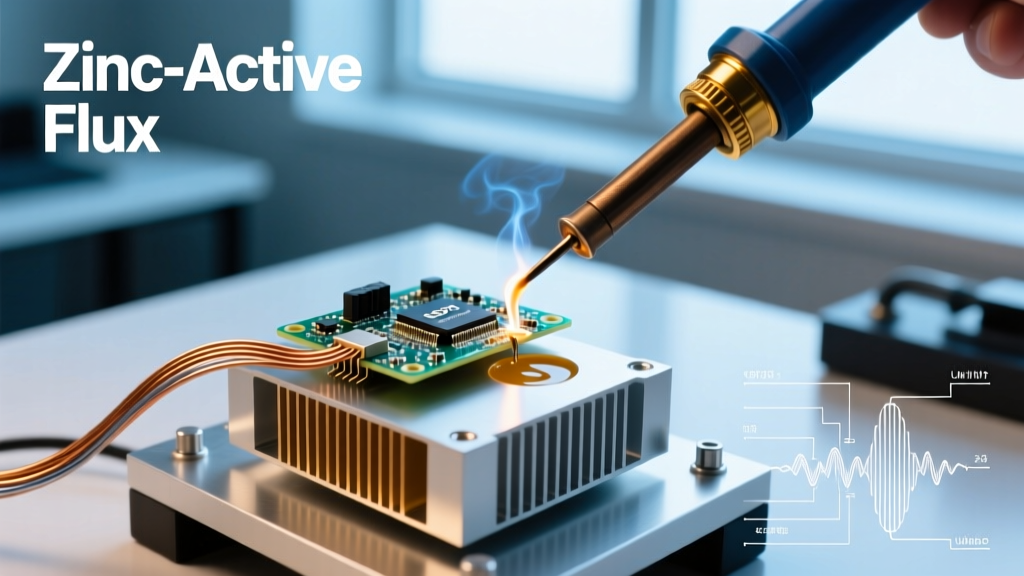
If you want to avoid the hazardous fumes and post-solder cleanup of fluoride fluxes, ultrasonic soldering is the premier alternative. Ultrasonic soldering irons feature a piezoelectric transducer in the tip that vibrates at high frequencies (typically 40kHz to 60kHz).
When the molten solder pool contacts the aluminum, the high-frequency acoustic waves induce acoustic cavitation. Microscopic bubbles form and violently collapse in the liquid solder, generating localized shockwaves that physically shatter the aluminum oxide layer. This allows the solder to bond directly to the pristine base metal without any chemical flux.
- Equipment Cost: A reliable 60W ultrasonic soldering iron (such as those from Sunbonder or generic industrial suppliers) ranges from $150 to $350 in 2026.
- Operating Temp: Typically set between 250°C and 300°C for standard Sn-Ag or Sn-Zn wires.
- Limitation: The ultrasonic vibration can sometimes make it difficult to precisely place solder on ultra-fine SMD pads, making it better suited for wires, tabs, and heat sinks.
Step-by-Step: Chemically Soldering an Aluminum Heat Sink
If you are using the chemical flux method, precision and safety are paramount. Follow this exact procedure to ensure a strong joint and prevent long-term corrosion.
- Mechanical Prep: Scuff the aluminum joint area with 220-grit sandpaper or a fiberglass scratch pen to remove heavy surface oxidation and dirt. Wipe with isopropyl alcohol (99%).
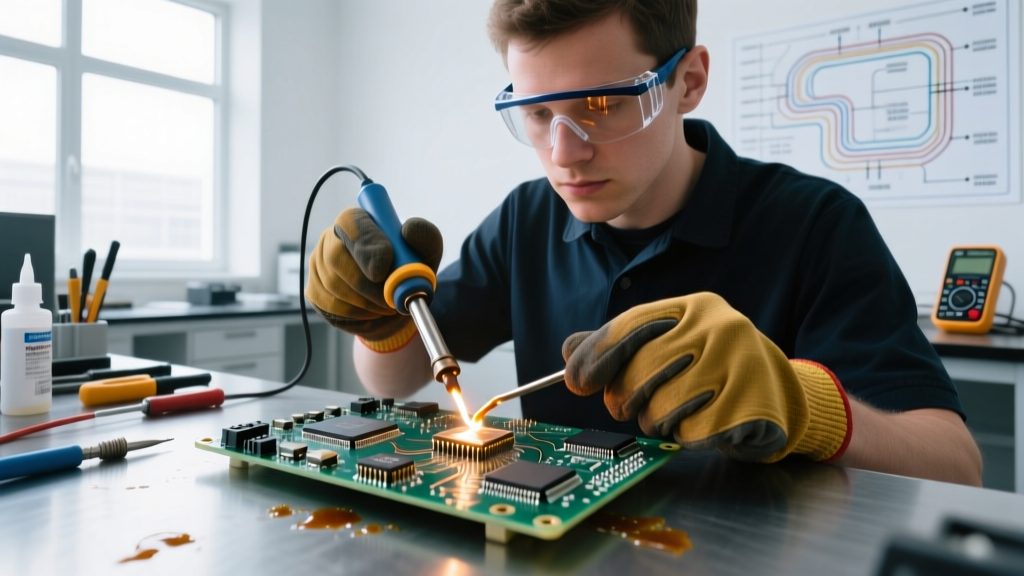
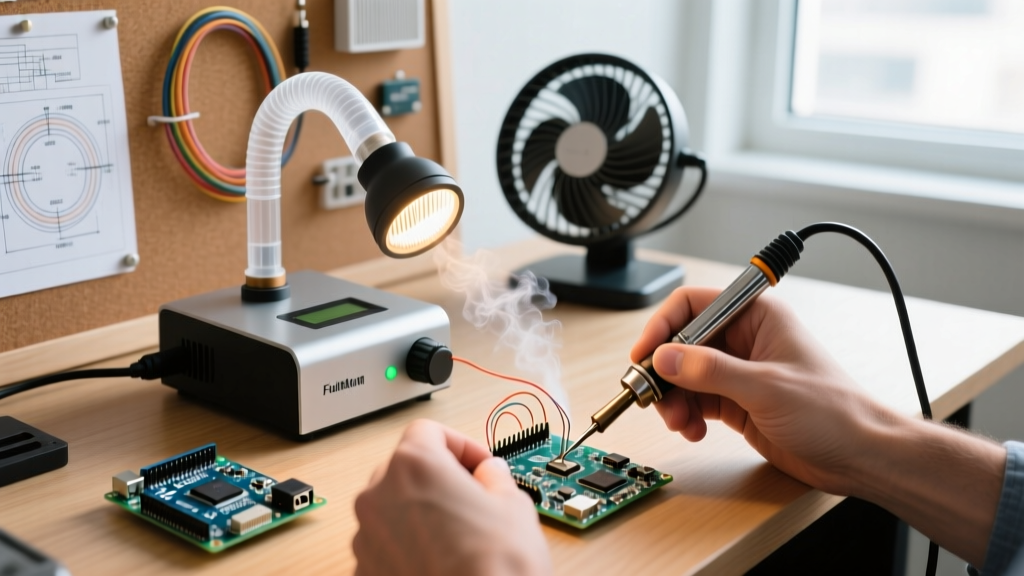
- Apply Flux: Apply a thin layer of an aggressive aluminum flux (e.g., Superior Flux #52140) to the joint. Safety Note: Wear nitrile gloves and work in a fume-extracted area; fluoride fluxes are toxic and can cause severe skin burns.
- Heat Application: Use a high-wattage soldering station (minimum 65W) with a chisel tip set to 350°C. Apply the tip to the aluminum to heat the base metal, not just the flux.
- Feed the Alloy: Introduce your specialized filler wire (like Indalloy 158) to the edge of the flux pool. Once the flux etches the oxide, the solder will suddenly "flash" and wet the aluminum surface.
- Neutralization (Critical): Once the joint cools, you must neutralize the flux residue. Prepare a 5% baking soda (sodium bicarbonate) and warm water solution. Scrub the joint with a nylon brush and this solution for 60 seconds, then rinse with distilled water and dry thoroughly.
The Hidden Danger: Galvanic Corrosion
Expert Warning: Soldering tin-based alloys directly to aluminum creates a massive galvanic cell. If exposed to ambient humidity, the aluminum will act as a sacrificial anode and rapidly corrode, leading to catastrophic joint failure within months.
The electrochemical potential difference between Tin (-0.14V) and Aluminum (-1.66V) is roughly 1.52V. This is a massive driver for galvanic corrosion. According to guidelines referenced by the American Welding Society, dissimilar metal joints in corrosive environments must be isolated from electrolytes.
The Solution: Immediately after cleaning and drying your soldered aluminum joint, encapsulate it. For PCB-level joints, apply an acrylic conformal coating like MG Chemicals 419D. For heavy wire or busbar joints, use adhesive-lined dual-wall heat shrink tubing or a silicone potting compound to completely block moisture ingress.
Material Compatibility Matrix: Aluminum Series
Not all aluminum is created equal. The alloying elements in different series drastically affect solderability. Below is a compatibility matrix based on data from Indium Corporation and general metallurgical standards:
| Aluminum Series | Primary Alloy Element | Common Examples | Solderability Rating |
|---|---|---|---|
| 1000 Series | Pure Aluminum (99%+) | 1050, 1100 | Excellent (Wets easily with mild flux) |
| 3000 Series | Manganese | 3003 | Good (Standard aluminum flux works well) |
| 5000 Series | Magnesium | 5052, 5083 | Poor (Magnesium aggressively resists flux etching) |
| 6000 Series | Magnesium & Silicon | 6061, 6063 | Fair to Good (Requires aggressive fluoride flux or ultrasonic) |
| 7000 Series | Zinc | 7075 | Poor (High zinc content causes brittle intermetallic joints) |
Frequently Asked Questions
Can I use standard plumbing solder on aluminum?
No. Standard plumbing solder (like 95/5 tin-antimony) and standard plumbing flux (like tinning flux) are designed for copper. They will not etch aluminum oxide, and the resulting joint will have zero structural integrity.
Is soldering aluminum as strong as TIG welding?
No. Soldering and brazing rely on capillary action and surface wetting, not melting the base metal. A soldered aluminum joint will typically have a shear strength of 4,000 to 8,000 PSI depending on the filler metal, whereas a proper TIG weld will match the base metal's tensile strength (often 30,000+ PSI for 6061-T6). Soldering is strictly for electrical continuity, light mechanical anchoring, and thermal transfer.
Why does my solder joint look grey and crumbly?
This is a classic sign of a "cold joint" caused by insufficient base metal heating, or it indicates that the flux was exhausted before the solder could properly wet the surface. Aluminum acts as a massive heat sink. You must use a high-thermal-mass iron tip and allow the base metal to reach at least 200°C before the solder will flow correctly.