
The 2026 Soldering Machine Decision Framework
Selecting the right soldering machines for a professional electronics lab or advanced DIY workspace is no longer just about picking the highest wattage. In 2026, the market is dominated by intelligent thermal management systems, direct-drive cartridge technologies, and strict adherence to ESD (Electrostatic Discharge) safety protocols. Whether you are reworking dense multi-layer PCBs with heavy ground planes or assembling delicate 0201 SMD components, the thermal impedance of your equipment dictates your success rate.
This decision framework is engineered to help you navigate the technical specifications, total cost of ownership (TCO), and edge-case failure modes of modern soldering machines. We will evaluate the technology through the lens of industry benchmarks, including the IPC J-STD-001 requirements for soldered electrical and electronic assemblies.
Phase 1: Application Profiling and Thermal Mass
Before evaluating specific brands, you must define the thermal mass of your typical workloads. Soldering machines are not one-size-fits-all; a station optimized for micro-soldering will fail catastrophically when attempting to reflow a 14-layer motherboard ground plane.
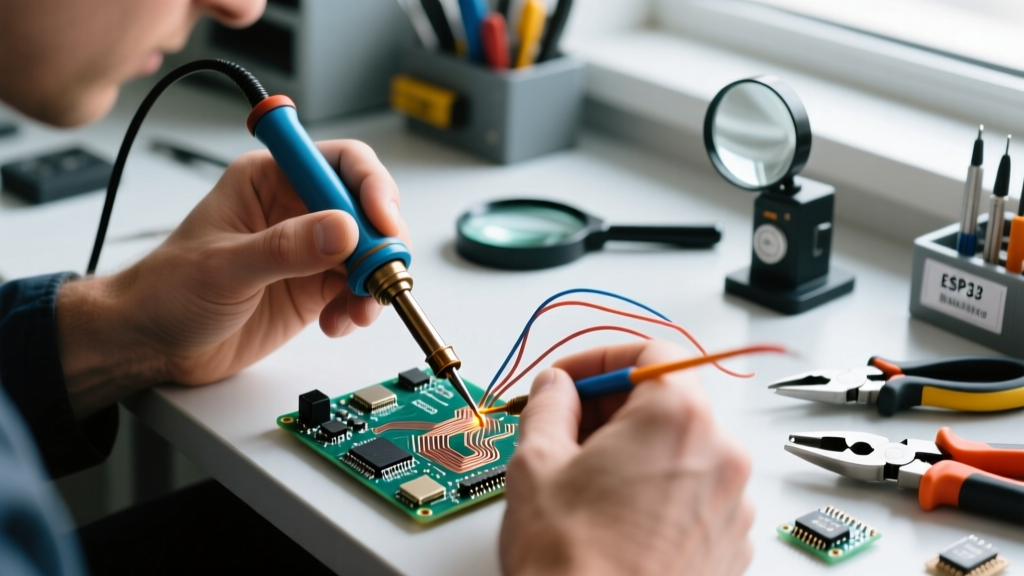
- Low Thermal Mass (SMD, 0402 to 0805, QFNs): Requires rapid heat transfer with minimal thermal overshoot. Machines utilizing direct-heating cartridge systems (where the heating element is integrated into the tip) excel here, offering sub-2-second recovery times.
- Medium Thermal Mass (Through-hole, standard connectors, 4-layer PCBs): Standard ceramic or induction-based stations with 70W to 90W output are sufficient. The focus here is on sustained thermal recovery rather than instantaneous spike delivery.
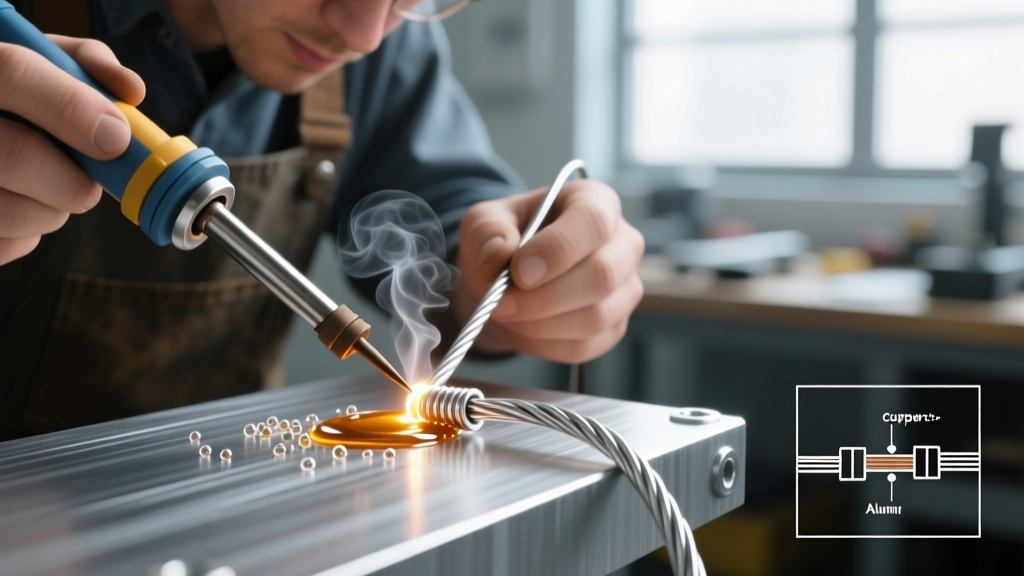
- High Thermal Mass (Heavy copper pours, RF shielding, automotive harnesses): Demands high-wattage (150W+) machines with heavy-duty thermal storage tips or specialized pre-heating integration to prevent cold joints and pad lifting.
Core Heating Technologies: Cartridge vs. Ceramic vs. Induction
The architecture of the heating core is the most critical variable in your purchasing decision. In 2026, three primary technologies dominate the professional tier:
1. Direct-Drive Cartridge Systems (e.g., JBC, Pace)
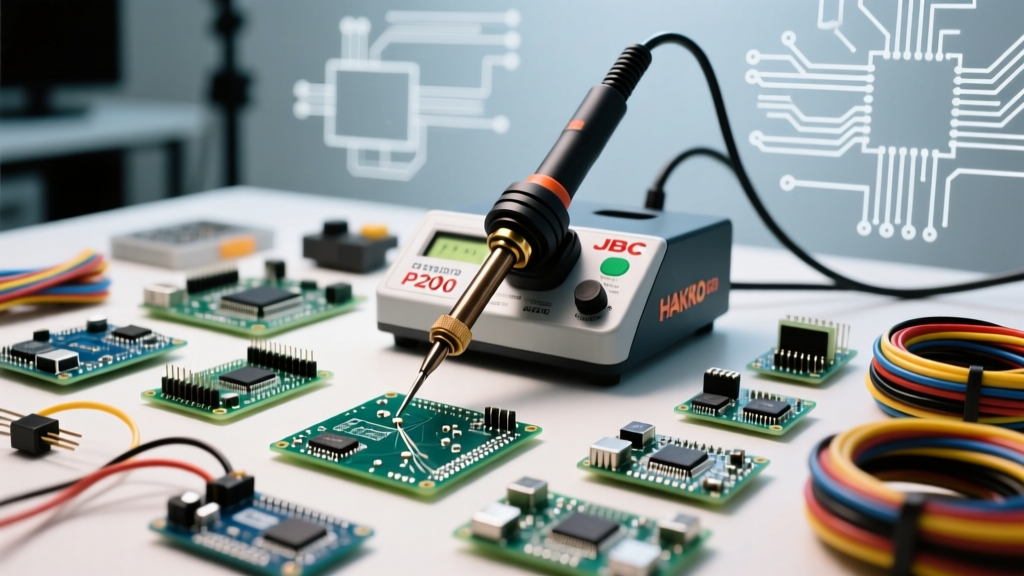
These systems integrate the heating element and thermocouple directly inside the consumable tip cartridge. This eliminates the air gap and mechanical interface found in traditional stations, reducing thermal resistance to near zero. The result is instantaneous thermal feedback. When a cold component touches the tip, the machine detects the temperature drop and delivers maximum current in milliseconds.
2. Advanced Ceramic Core (e.g., Hakko)
Modern ceramic heaters have evolved significantly. While they still suffer from a slight thermal lag compared to direct-drive cartridges due to the physical separation of the heater and the tip sleeve, high-end models use advanced PID (Proportional-Integral-Derivative) control algorithms to predict thermal drain and pre-emptively increase power output.
3. Induction / Curie Point Technology (e.g., Metcal, OKI)
Induction soldering machines use RF magnetic fields to heat the tip directly. The temperature is controlled by the metallurgical Curie point of the tip's outer layer. While incredibly stable and requiring zero calibration, the ecosystem is rigid, and changing temperature ranges requires physically swapping to a different metallurgical tip, which is less flexible for mixed-assembly environments.
2026 Flagship Soldering Machines Comparison Matrix
The following matrix compares the top-tier professional soldering machines available in 2026, focusing on real-world performance metrics and current market pricing.
| Model | Heating Tech | Max Wattage | Heat-Up Time (350°C) | Avg. Tip Cost | 2026 Street Price |
|---|---|---|---|---|---|
| JBC CD-2BQE | Direct Cartridge (C245) | 130W | < 2.0 Seconds | $45 - $55 | $680 - $750 |
| Hakko FX-951 | Ceramic / Composite | 70W | ~ 10.0 Seconds | $12 - $18 | $360 - $410 |
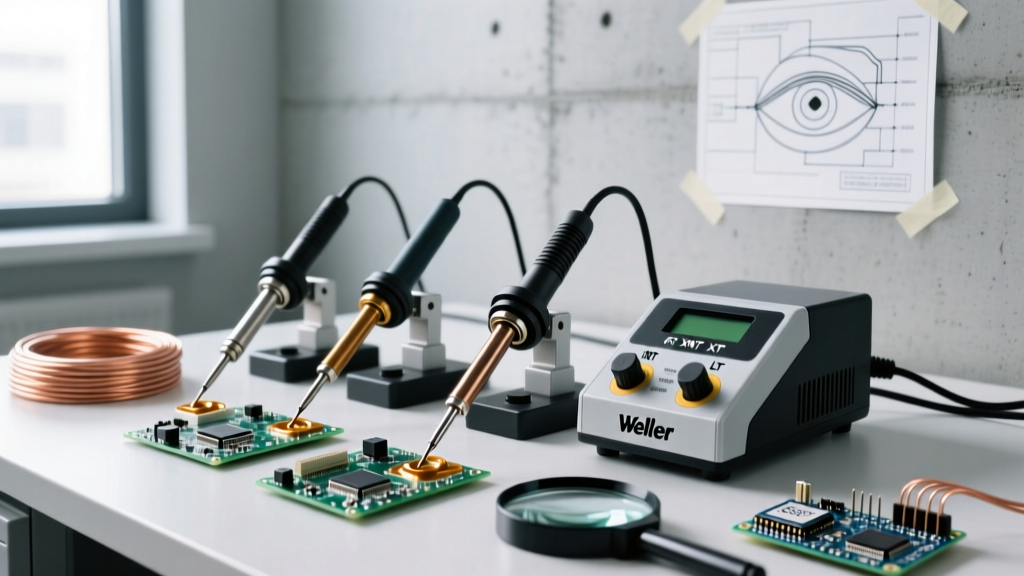
| Weller WX2021 | Smart Ceramic (XTCP) | 200W (Dual) | ~ 7.0 Seconds | $30 - $40 | $950 - $1,100 |
| Pace ADS200 | Direct Cartridge (TD200) | 120W | < 2.5 Seconds | $35 - $45 | $480 - $530 |
Expert Insight: While the Hakko FX-951 offers the lowest initial entry price and cheapest consumables, its 70W ceiling makes it struggle with modern lead-free SAC305 alloys on planes larger than 2 square inches. For heavy rework, the JBC or Weller systems are mandatory.
Total Cost of Ownership (TCO) and Consumable Reality
When budgeting for soldering machines, the initial capital expenditure is only a fraction of the lifecycle cost. The consumable ecosystem—specifically the tips and cartridges—will dictate your long-term operational expenses.
The Lead-Free Tip Degradation Factor
Transitioning to lead-free solders (like SnAgCu / SAC305) requires higher processing temperatures (typically 350°C to 380°C). At these elevated temperatures, the tin in the solder aggressively attacks the iron plating on standard copper-core tips, a phenomenon known as 'tip pitting' or 'leaching.'
Direct-cartridge systems (JBC, Pace) mitigate this by allowing you to use lower baseline temperatures (e.g., 320°C) because their thermal recovery is so aggressive that they don't need the 'thermal overhead' required by slower ceramic stations. This paradoxically extends the life of the more expensive cartridge tips, narrowing the TCO gap between premium and mid-tier machines over a 3-year period.
Edge Cases: ESD Safety and Grounding Verification
A frequently overlooked aspect of selecting soldering machines is ESD safety. Modern microcontrollers and RF modules are highly susceptible to Electrostatic Discharge. According to the ANSI/ESD S20.20 standard, all soldering equipment must maintain a strict grounding path to prevent static accumulation on the chassis or the tip.
Failure Mode: The Floating Ground
Cheap, unregulated soldering stations often use ungrounded transformers or switch-mode power supplies that leak AC voltage onto the tip. Even a 50mV AC ripple on the tip can destroy the gate oxide of a sensitive MOSFET during soldering.
Verification Protocol: Upon procuring any professional soldering machine, you must verify the tip-to-ground resistance. Using a calibrated megohmmeter, measure the resistance between the extreme point of the soldering tip and the earth ground pin of the power cord. The acceptable range is typically between 1 ohm and 10 ohms. Furthermore, verify that the AC millivolt leakage on the tip is strictly less than 2mV RMS. Premium machines from Weller and JBC include dedicated ESD grounding ports on the rear chassis to integrate directly with your workstation's ESD mat and wrist strap monitoring system, a feature entirely absent in budget models.
Calibration and Metrology Requirements
For labs operating under strict aerospace or medical device manufacturing guidelines (such as those outlined in NASA Technical Standards for workmanship), soldering machines must be regularly calibrated.
- Ceramic Stations: Often require opening the chassis to adjust physical potentiometers or using proprietary software cables to map the thermocouple curve. This introduces downtime.
- Smart Cartridge Stations: Because the thermocouple is embedded in the consumable cartridge, the calibration is effectively 'baked in' at the factory. If a tip reads out of spec, you discard the cartridge, not the machine. This drastically reduces annual metrology costs for high-volume labs.
The Final Decision Tree
Use this actionable logic flow to finalize your purchasing decision based on your specific operational profile:
- Are you soldering primarily 0402/0201 SMDs and fine-pitch QFPs?
- Yes: Prioritize direct-cartridge systems (JBC CD-2BQE or Pace ADS200) for their low thermal mass tips and sub-2-second recovery, preventing adjacent pad lifting.
- Is your budget strictly under $400, and do you work mostly on standard through-hole or light SMD?
- Yes: The Hakko FX-951 remains the undisputed king of this bracket. Its T18 tip ecosystem is vast, cheap, and globally available.
- Do you require simultaneous dual-channel operation (e.g., one channel for SMD, one for heavy desoldering/rework)?
- Yes: Invest in the Weller WX2021 or JBC RMVE. The ability to run a micro-pencil and a high-mass desoldering iron from a single intelligent power base saves bench space and optimizes power draw.
- Are you operating in a strictly audited ISO/ESD environment?
- Yes: Ensure the selected model features lockable temperature profiles (PIN code protected) and verifiable tip-to-ground resistance logging capabilities to satisfy IPC and ESDA auditors.
Summary
The landscape of soldering machines in 2026 rewards precision and thermal intelligence over raw, unmanaged wattage. By mapping your specific thermal mass requirements against the TCO of the consumable ecosystems, and rigorously verifying ESD compliance, you can select a station that not only improves your first-pass yield but also protects your most sensitive components from latent thermal and electrostatic damage.