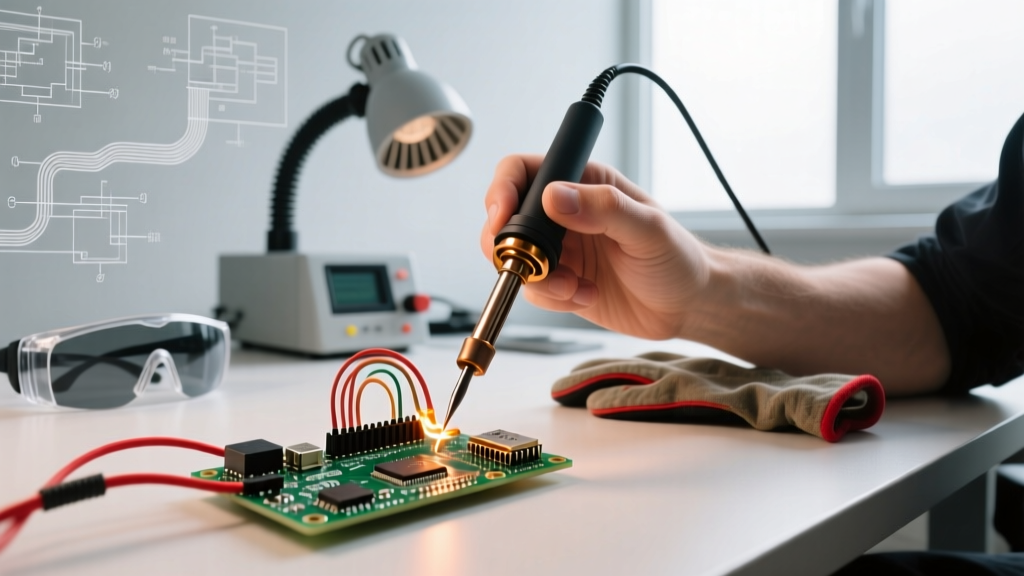

The True Cost of Learning to Solder in 2026
With the global Right to Repair movement accelerating and the maker economy thriving, the ability to reliably join electronic components is more valuable than ever. But for beginners and intermediate technicians alike, a persistent question remains: Is it worth paying for a professional soldering class, or is the DIY route sufficient?
At ElectricalFlux, we have analyzed the current landscape of electronics education. The cost of a soldering class in 2026 ranges from a $45 community makerspace introduction to a $1,800 aerospace-grade certification. This guide breaks down the exact pricing, hidden equipment fees, and return on investment (ROI) to help you decide where to allocate your training budget.
Professional Soldering Class Tiers: 2026 Pricing Matrix
Not all training is created equal. The price you pay depends entirely on your end goal—whether you want to build custom macro keyboards, repair consumer electronics, or secure a job in an Electronics Manufacturing Services (EMS) facility.
| Class Tier | Format & Duration | Average 2026 Cost | Curriculum Focus | Target Audience |
|---|---|---|---|---|
| Tier 1: Makerspace Intro | In-person, 3-4 Hours | $45 - $85 | Basic through-hole (THT), safety, iron maintenance | Hobbyists, Arduino beginners |
| Tier 2: Community College CE | In-person, 12-16 Hours | $150 - $350 | THT, basic SMD (0805/SOIC), desoldering, flux chemistry | Repair technicians, serious makers |
| Tier 3: IPC J-STD-001 CIS | In-person, 40 Hours (5 Days) | $1,200 - $1,800 | Advanced SMD, BGA, wire termination, IPC inspection criteria | EMS professionals, aerospace/medical techs |
Understanding the IPC Premium
The massive price jump to Tier 3 is driven by the IPC (Association Connecting Electronics Industries) certification standards. An IPC J-STD-001 Certified IPC Specialist (CIS) course requires licensed instructors, standardized testing materials, and specialized inspection microscopes. If you are seeking employment at a defense contractor or medical device manufacturer, this certification is rarely optional; it is a strict hiring prerequisite.
Hidden Costs: What the Tuition Doesn't Cover
When budgeting for a soldering class, the sticker price of tuition is only the beginning. Both professional and self-taught routes carry hidden equipment and consumable costs that catch many beginners off guard.
- Consumable Depreciation: In a Tier 1 or Tier 2 class, you will burn through practice boards and solder. Leaded 63/37 Sn/Pb solder is cheap ($25/lb), but if your class focuses on RoHS-compliant lead-free SAC305 (Sn96.5/Ag3.0/Cu0.5), expect material costs to triple.
- Tip Oxidation and Replacement: Beginners notoriously leave their irons idling at 400°C, destroying the iron plating on the tips. A single replacement tip for a standard Hakko FX-888D costs around $9, while high-end JBC cartridge tips used in advanced classes cost $55 each.
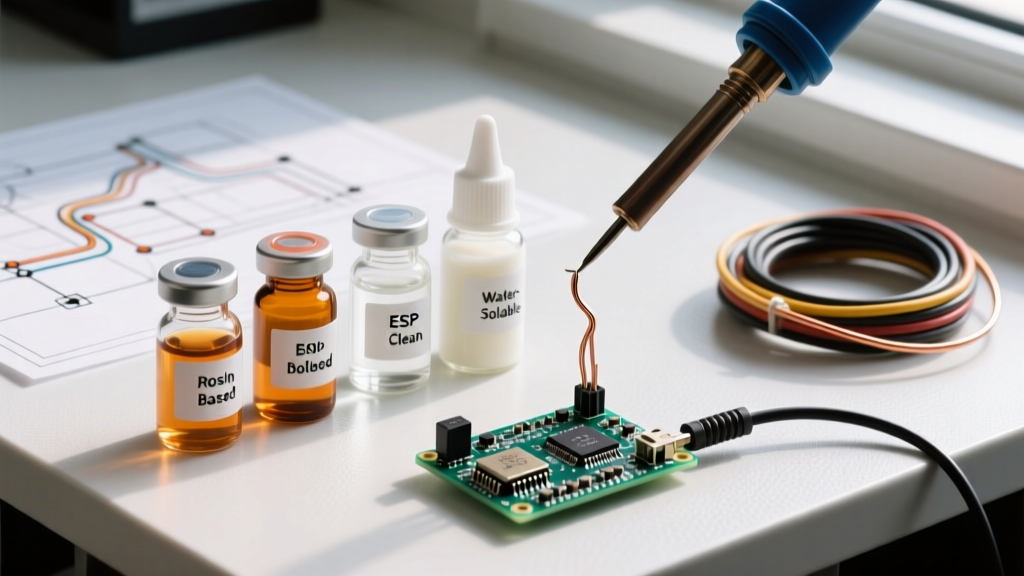
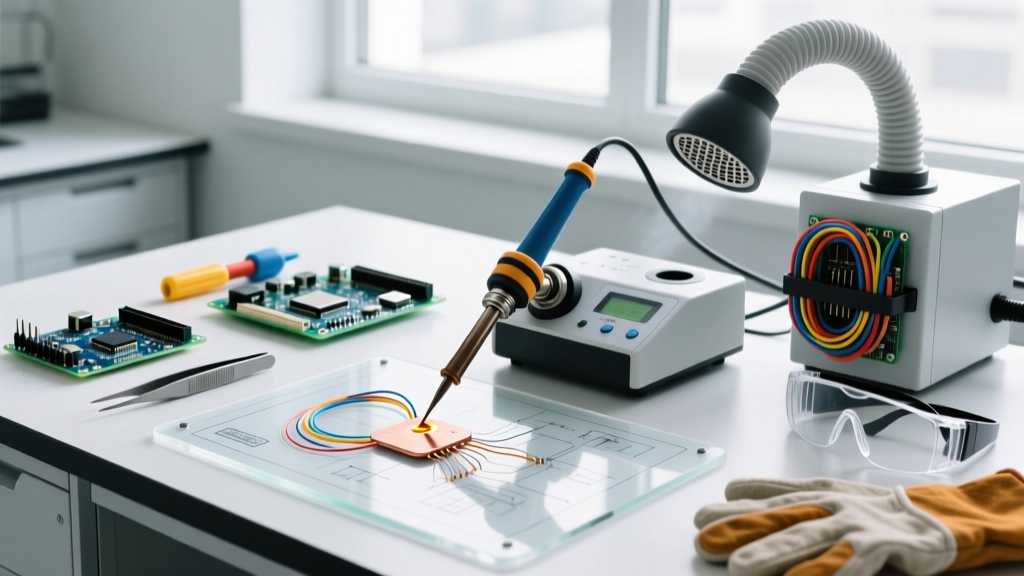
- Fume Extraction and Safety: Rosin-based flux fumes (colophony) are a known respiratory sensitizer. Professional classes adhere to the OSHA Hazard Communication Standard, utilizing localized HEPA/carbon fume extractors (like the BOFA AD Orbis, costing ~$1,200). If you transition to a home setup, you must budget at least $60 for a basic activated carbon fan extractor to protect your lungs.
- Tooling Fees: Some community colleges charge a $30-$50 "lab fee" to cover the use of their desoldering stations, brass wool, and Kapton tape. Always ask the registrar if materials are included in the tuition.
The DIY Alternative: Self-Taught Cost Analysis
If your goal is hobbyist PCB assembly, drone repair, or audio cable building, a formal soldering class may be overkill. The self-taught route relies on digital resources and iterative practice. Here is the realistic cost of building a DIY learning lab in 2026:
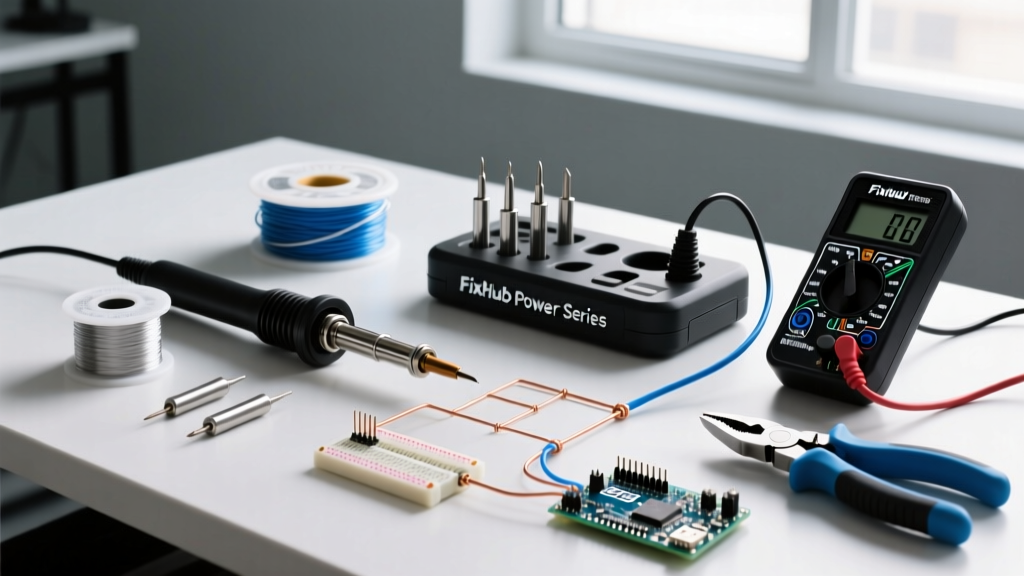
- The Iron ($26 - $110): You no longer need to spend $200 to get temperature control. The Pinecil V2 ($26) offers rapid heating and USB-C PD power delivery, making it the undisputed king of budget learning. For a traditional bench station, the Hakko FX-888D ($110) remains the gold standard for durability.
- Practice Kits ($15 - $40): Instead of paying a lab fee, you can buy bulk "learn to solder" kits. Adafruit's soldering tools category and various Amazon sellers offer blinking LED badges and through-hole clock kits for under $15 each. Buying a 10-pack of practice PCBs yields roughly 400 individual solder joints for about $30.
- Curriculum ($0): YouTube channels like EEVblog, NorthridgeFix, and Phil's Lab provide hundreds of hours of free, high-definition macro footage of SMD and BGA soldering techniques that rival paid video courses.
Expert Insight: The primary advantage of a physical class over YouTube is tactile feedback. A video cannot teach you the exact moment a solder joint reaches eutectic flow, nor can it correct your hand angle when wicking solder off a 0.5mm pitch QFP chip. You are paying for the instructor's real-time correction of your muscle memory.
Failure Modes: What DIYers Miss Without an Instructor
Self-taught solderers often develop bad habits that pass visual inspection but fail under thermal or mechanical stress. A quality soldering class uses cross-section microscopy to teach students how to identify internal failure modes:
- Cold Joints & Disturbed Joints: Moving a component while the SAC305 alloy is in its plastic (semi-solid) state creates a grainy, fractured internal structure. DIYers often mistake the dull finish of a disturbed joint for a "bad" joint, not realizing the structural integrity is compromised.
- Pad Lifting: Applying 400°C heat for more than 3 seconds to a standard FR-4 PCB can delaminate the copper pad from the fiberglass substrate. Instructors enforce the "3-second rule" and teach heat-sinking techniques using aluminum tape and tweezers.
- Flux Entrapment: Failing to clean no-clean flux residues in high-impedance analog circuits can lead to parasitic capacitance and dendritic growth over time. Pro classes teach the proper use of isopropyl alcohol (IPA) and specialized brushes.
ROI Calculation: When Does the Class Pay Off?
To determine if a soldering class is a sound financial decision, you must calculate your expected Return on Investment based on your use case.
Scenario A: The Micro-Soldering Repair Business
If you plan to open a shop repairing smartphones, laptops, or gaming consoles, a Tier 2 Community College class ($250) combined with specialized micro-soldering mentorships is essential. Replacing a single HDMI port on a motherboard or swapping an iPhone NAND chip can net you $150 to $300 in profit. ROI Timeline: The class pays for itself after your first 2 successful board-level repairs.
Scenario B: The Audio / Custom Cable Builder
If you build custom guitar pedals or XLR cables, the physics of soldering are relatively forgiving. The joints are large, and mechanical strain relief handles the stress. A $45 Makerspace intro class to learn basic safety and iron tinning is sufficient. ROI Timeline: Immediate, via saved materials and avoided frustration.
Scenario C: The Aspiring EMS Technician
If you want to work for a company building avionics or medical pacemakers, you cannot rely on a makerspace certificate. You need the IPC J-STD-001 CIS. While the $1,500 tuition is steep, entry-level IPC-certified technicians in 2026 command starting salaries between $55,000 and $72,000, significantly higher than non-certified assemblers. ROI Timeline: 3 to 6 months of employment.
Final Verdict: Which Path Should You Choose?
Your decision should be dictated by the consequence of failure in your projects. If a failed solder joint means your DIY LED matrix doesn't light up, save your money, buy a Pinecil V2, and learn via trial and error using online guides. However, if a failed solder joint means a drone falls out of the sky, a medical device malfunctions, or you fail a job interview at an aerospace firm, the structured, corrective environment of a professional soldering class is not just an expense—it is a critical investment in your technical foundation.