
The Hard Truth About Switch Lite Modding
If you are researching how to mod Switch Lite without soldering, you have likely encountered a maze of conflicting forums, misleading YouTube tutorials, and eBay listings promising "plug-and-play" hardware hacks. As electrical engineers and console repair technicians, we must establish a foundational hardware reality right away: there is no true, permanent, 100% solderless hardware modchip installation for the Nintendo Switch Lite.
To understand why, we have to look at the silicon. The original 2017 Nintendo Switch (V1) utilized the Tegra X1 "Erista" SoC, which contained a fatal, unpatchable hardware vulnerability in its USB-C recovery mode (RCM). This allowed users to inject custom payloads using a simple $8 plastic jig and a paperclip. However, the Switch Lite (released in 2019) uses the revised Tegra X1+ "Mariko" SoC. As documented in the iFixit Nintendo Switch Lite Teardown, Nintendo and Nvidia patched the Fusée Gelée vulnerability at the silicon level. The USB-C RCM exploit is dead on the Lite. Therefore, software-only or "jig-based" solderless mods are physically impossible.
Debunking the 'Solderless' Flex Cable Scams
⚠️ Buyer Beware: Any marketplace listing advertising a "Solderless Switch Lite Modchip Flex Cable" is either mislabeled (intended for the original V1 Erista Switch) or an outright scam. The Switch Lite motherboard lacks the necessary unpopulated ribbon headers that early Erista flex-cable adapters utilized to tap into the eMMC data lines.
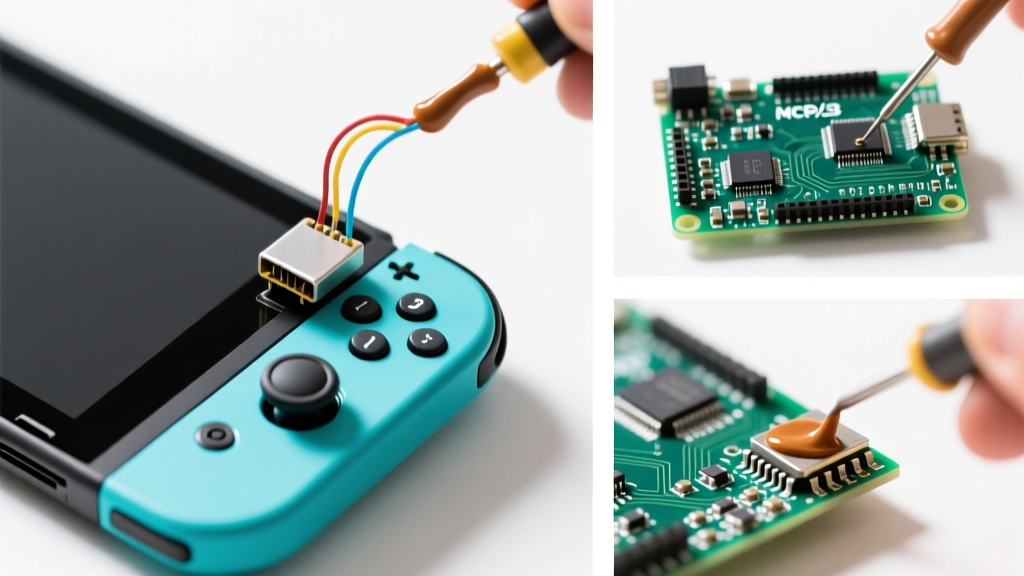
On the original Switch, technicians could sometimes use specialized flex cables that clipped onto existing ribbon connectors to bypass micro-soldering. The Switch Lite's internal layout is entirely different. To install a modchip (like a Picofly or HWFLY), you must tap directly into microscopic test points on the motherboard: specifically the CMD, CLK, DAT0, 3V3, and GND pads surrounding the Mariko CPU and eMMC storage. These pads are fractions of a millimeter wide and require a direct electrical bridge.
The Only 'No-Solder' Alternative: Conductive Silver Epoxy
While traditional soldering (using flux, 0.1mm enameled copper wire, and a precision hot-air station) is the gold standard, there is one chemical alternative that technically qualifies as "solderless": Conductive Silver Epoxy. Products like MG Chemicals 8331 Carbon Conductive Grease or specialized silver-filled epoxies allow technicians to create an electrical bond without melting metal.
However, this is not a beginner-friendly "hack." It is a delicate chemical bonding process with distinct limitations. Below is a technical comparison of traditional micro-soldering versus the conductive epoxy method for Mariko test points.
| Installation Metric | Micro-Soldering (0.1mm Wire) | Conductive Silver Epoxy |
|---|---|---|
| Electrical Resistance | Near Zero (<0.1 Ω) | Low, but variable (1 Ω - 5 Ω) |
| Thermal Stability | Excellent (Withstands SoC heat) | Poor (Prone to thermal expansion cracking) |
| Mechanical Strength | High (Withstands drops/impacts) | Brittle (Shatters upon physical shock) |
| Material Cost | $15 (Flux + Wire + Solder Paste) | $60 - $90 (Precision Silver Epoxy Syringe) |
| Reversibility | Moderate (Requires desoldering wick) | Nearly Impossible (Risks tearing pads) |
Modchip Ecosystem for Mariko Consoles
If you are committed to modding your Switch Lite, you must choose a modchip capable of glitching the Mariko SoC. According to the comprehensive hardware documentation on the nh-server Switch Guide, the community has standardized around a few key silicon solutions. Here is what you are actually installing, whether you use solder or silver paste:
- Picofly: Based on the Raspberry Pi RP2040 microcontroller. It is currently the most popular, cost-effective Mariko glitcher. Raw chips cost between $12 and $20 on electronics marketplaces. It requires precise timing wire lengths to successfully glitch the Mariko bootrom.
- HWFLY (and clones): The original high-end Mariko glitcher. While official HWFLY units are largely discontinued or heavily counterfeited, its architecture paved the way for modern Mariko modding. Expect to pay $35 to $55 for reliable clone boards.
- Instinct-NX (Mariko Edition): A premium, highly integrated board designed specifically for the tight tolerances of the Switch Lite and OLED motherboards. Priced around $60 to $80, it features onboard flex adapters that slightly reduce wire routing complexity, though the motherboard tap points still require bonding.
Step-by-Step: The Conductive Paste Application Method
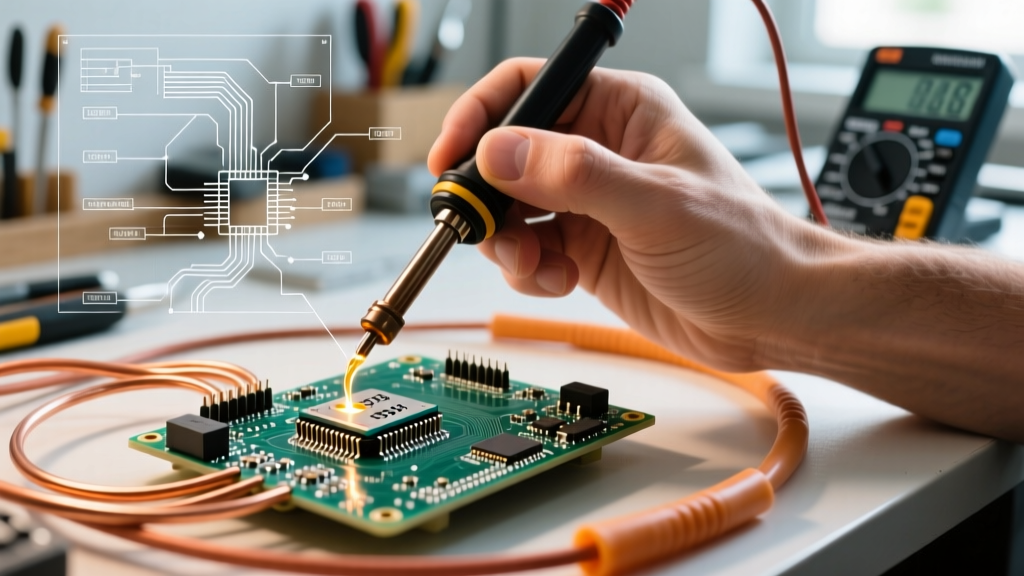
If you lack a micro-soldering station but possess a steady hand, a multimeter, and an understanding of surface-mount electronics, here is how the conductive epoxy method is executed in a professional repair environment.
1. Motherboard Preparation and Masking
Disassemble the Switch Lite using a Tri-wing Y00 and Phillips #00 screwdriver. Remove the motherboard and isolate the eMMC/CPU quadrant. Clean the target test points with 99% Isopropyl Alcohol (IPA) and a fiberglass scratch pen to remove factory oxidation. Apply high-temperature Kapton tape around the CMD, CLK, and DAT0 pads, leaving only the microscopic copper targets exposed. This prevents the silver paste from spreading and causing a catastrophic short circuit.
2. Precision Paste Dispensing
Using a 0.1mm precision needle tip attached to a syringe of silver conductive epoxy, apply a micro-dot to each test point. You are aiming for a bead no larger than a grain of sand. Immediately lay your pre-tinned 0.1mm enameled copper wire into the wet paste.
3. Curing and Thermal Setting
Unlike solder, which sets in seconds, silver epoxy requires curing. While some air-dry in 24 hours, professional technicians use a localized heat gun or a specialized PCB pre-heater set to 80°C (176°F) for 15 minutes to accelerate the chemical cross-linking process without damaging surrounding BGA underfill.
4. Multimeter Verification
Before reassembly, you must verify the bonds. Set your multimeter to continuity/resistance mode.
Critical Check: Measure the resistance between your newly bonded DAT0/CMD wires and the surrounding ground planes. If the silver paste has bled under the Kapton tape and bridged to ground, your console will short-circuit upon boot. You must see an open loop (OL) on data lines, and a near-zero resistance only on your dedicated GND wire.
Failure Modes: Why Technicians Avoid 'Solderless' Paste
As detailed in extensive hardware hacking communities like the GBATemp Picofly development threads, the primary enemy of the Switch Lite is thermal expansion. The Mariko SoC generates significant heat during docked play (or intensive handheld sessions). The silicon die, the fiberglass PCB, and the silver epoxy all expand at different rates (Coefficient of Thermal Expansion mismatch). Over weeks of heating and cooling cycles, brittle silver epoxy bonds routinely micro-fracture. When the DAT0 line fractures, the modchip fails to read the eMMC, resulting in a "No SD Card" or bootloop error, requiring a complete teardown and messy chemical cleanup to repair.
Frequently Asked Questions (FAQ)
Can I use an RCM Jig and a payload injector on the Switch Lite?
No. The RCM jig relies on the Tegra X1 USB-C hardware exploit. The Switch Lite uses the patched Mariko chip. Inserting a jig and sending a payload will result in the console simply ignoring the data or displaying a standard USB error. It will not boot into custom firmware.
Will Nintendo release a firmware update that breaks modchips?
Hardware modchips like the Picofly operate at the bootrom level, executing custom payloads before Nintendo's Horizon OS even begins to load. While Nintendo can patch specific custom firmware (CFW) software bugs, they cannot issue an over-the-air update to patch a physical silicon glitching modchip.
Is it cheaper to buy a pre-modded Switch Lite?
In 2026, a used, unmodded Switch Lite costs approximately $130 to $160. Professional micro-soldering modding services typically charge $100 to $150 for labor and parts. Attempting a DIY silver-epoxy "solderless" mod carries a high risk of permanently destroying the $150 motherboard by tearing off microscopic BGA pads. For most users lacking micro-soldering expertise, purchasing a professionally pre-modded unit from a reputable tech shop (usually priced between $250 and $300) is the most financially sound and reliable path.
Final Verdict
Learning how to mod Switch Lite without soldering ultimately leads to a crossroads of compromise. You can either risk the long-term reliability of your console using conductive silver epoxy, or you can invest in the proper micro-soldering equipment—such as a Pine64 Pinecil V2 or a Quick 861DW hot air station—to do the job permanently. There are no shortcuts in Mariko hardware hacking; respect the silicon, measure twice, and bond once.