
The Fundamental Difference Between Soldering and Welding
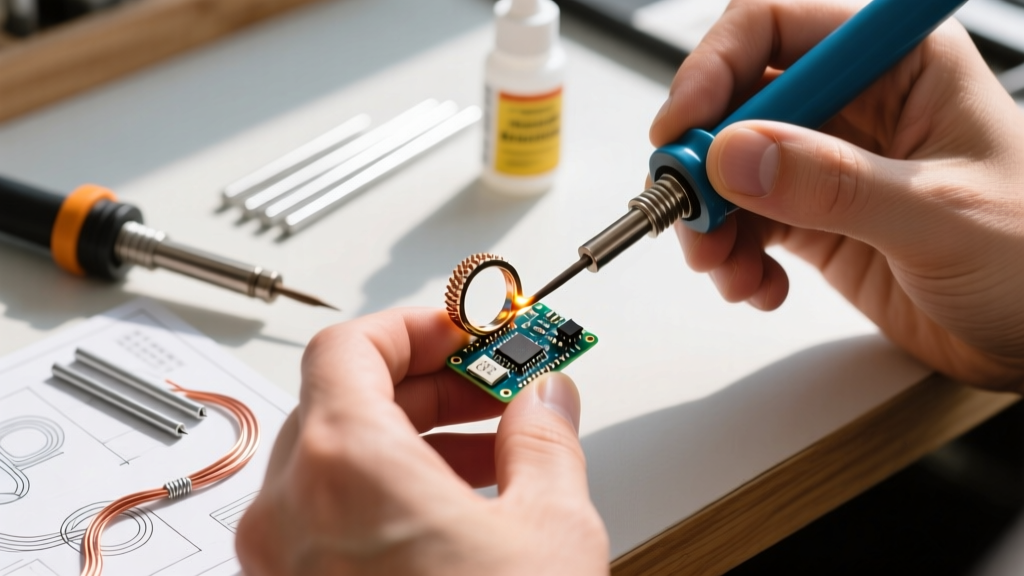
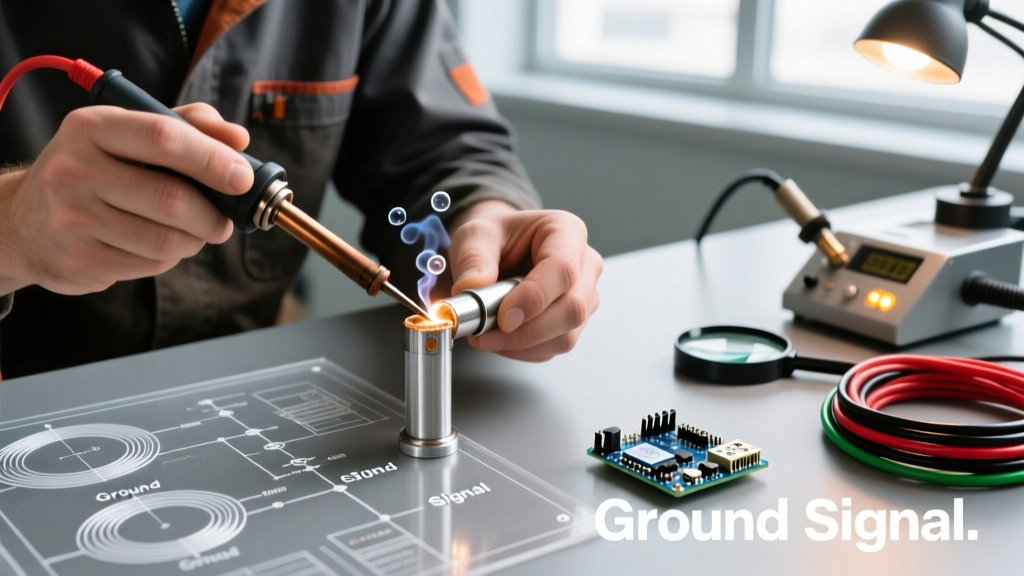
When joining metals in either electronics fabrication or structural engineering, confusing soldering with welding is a critical error that leads to catastrophic joint failure. The core difference between soldering and welding lies in the thermal dynamics and the state of the base metal during the joining process. According to the American Welding Society (AWS A3.0 standard), welding requires the fusion of the base metals—meaning the workpieces themselves must melt and coalesce, often with the addition of a molten filler metal. Soldering, conversely, relies entirely on capillary action and a filler metal (solder) that melts below 840°F (450°C), while the base metal remains completely solid.
Expert Insight: In soldering, the joint's mechanical and electrical integrity depends on the metallurgical bond between the liquid solder and the solid base metal surface. In welding, the joint's strength is derived from the interlocking crystalline grain structure formed as the molten base metals cool and solidify together.
Comparative Matrix: Soldering vs. Welding Specifications
To truly understand the operational boundaries of both techniques, we must look at the hard data. The table below contrasts the physical and economic realities of both processes as of 2026.
| Specification | Soldering (Electronics/Plumbing) | Welding (MIG/TIG/Stick) |
|---|---|---|
| Operating Temperature | 180°C – 400°C (356°F – 752°F) | 1,500°C – 3,500°C+ (2,732°F – 6,332°F+) |
| Base Metal State | Solid (No melting) | Molten (Fused into a weld pool) |
| Typical Equipment Cost | $100 – $300 (e.g., Hakko FX-888D or Weller WE1010NA) | $800 – $2,500 (e.g., Lincoln Electric Power MIG 210 MP) |
| Joint Tensile/Shear Strength | 30 – 60 MPa (e.g., SAC305 shear strength) | 400 – 700+ MPa (Matches or exceeds base metal) |
| Primary Filler Materials | SAC305, Sn63/Pb37, Copper-Phosphorus | ER70S-6 Mild Steel, 4043 Aluminum, Stainless rods |
| Thermal Distortion Risk | Low (Localized to component leads) | High (Causes warping, residual stress, and HAZ) |
Metallurgical Realities: IMC Layers vs. Heat Affected Zones
The difference between soldering and welding extends deep into the microscopic grain structure of the metals involved.
Soldering: The Intermetallic Compound (IMC) Layer
When liquid SAC305 (Tin/Silver/Copper) solder contacts a hot copper pad, a metallurgical reaction occurs, forming an Intermetallic Compound (IMC) layer—typically Cu6Sn5. A healthy IMC layer is 1 to 2 microns thick and provides excellent electrical conductivity and mechanical adhesion. However, if the soldering iron is left on the joint too long (exceeding 5 seconds at 380°C), the IMC layer grows beyond 5 microns, becoming thick, brittle, and prone to micro-fracturing under thermal cycling.
Welding: The Heat Affected Zone (HAZ)
Welding introduces massive thermal energy, creating a Heat Affected Zone (HAZ) in the base metal adjacent to the weld pool. In high-carbon steels, the rapid heating and cooling of the HAZ can form martensite—a hard but extremely brittle crystalline structure. This is why post-weld heat treatment (PWHT) or pre-heating the base metal to 250°F is often mandatory in structural welding to prevent hydrogen cracking, a variable that simply does not exist in low-temperature soldering.
Troubleshooting Common Joint Failures
Because the physics of the processes differ, their failure modes require entirely different troubleshooting protocols.
Soldering Troubleshooting: Cold Joints and Dewetting
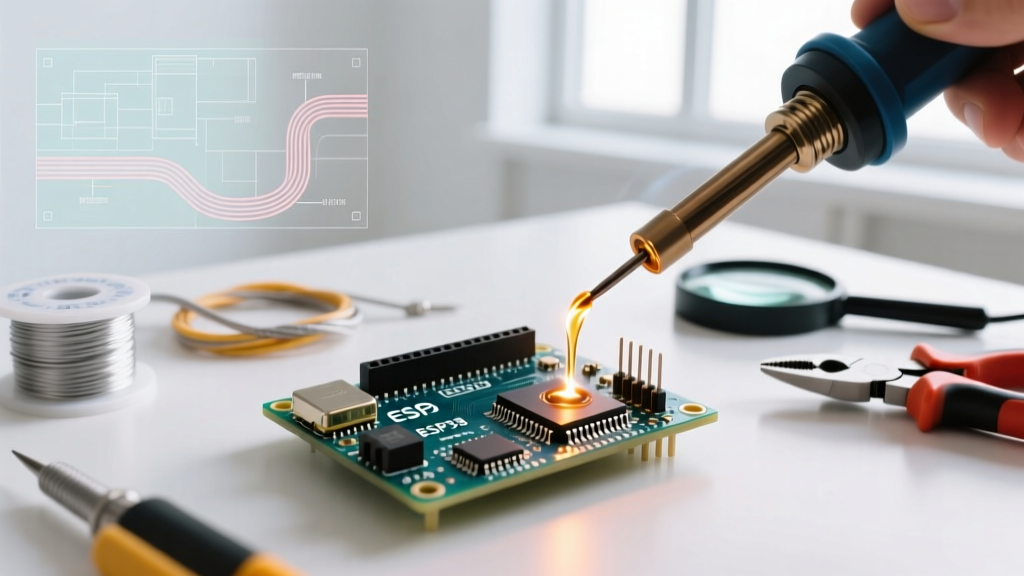
- Cold Joints: Characterized by a dull, grainy, or lumpy appearance. Cause: Insufficient thermal mass transfer. The flux activated and burned off before the base metal reached the solder's liquidus temperature. Fix: Increase your station temperature to 350°C for lead-free SAC305. Apply the iron tip to both the pad and the lead simultaneously for 2 seconds before feeding the solder. Use a high-quality Rosin Mildly Activated (RMA) flux like Kester 186 to strip surface oxides.
- Dewetting: Solder balls up and refuses to spread, exposing the base metal. Cause: Severe oxidation or contamination on the base metal. Fix: Mechanically clean the surface with 400-grit sandpaper or fiberglass scratch brush, wipe with 99% isopropyl alcohol, and apply a generous layer of no-clean flux (e.g., Amtech NC-559) before reattempting.
Welding Troubleshooting: Porosity and Lack of Fusion
- Porosity: The weld bead looks like Swiss cheese, riddled with tiny holes. Cause: Atmospheric gases (nitrogen/oxygen) are being trapped in the freezing weld pool due to inadequate shielding. Fix: For MIG welding mild steel with C25 gas (75% Argon / 25% CO2), verify your flowmeter is set precisely to 20-25 Cubic Feet per Hour (CFH). Check for drafts in your workspace that could blow the shielding gas away, and ensure your contact tip is not spattered, which disrupts gas flow.
- Lack of Fusion (Cold Lap): The filler metal sits on top of the base metal like a cold rope, failing to melt into the joint. Cause: Travel speed is too fast, or voltage/amperage is too low. Fix: Increase your wire feed speed (which increases amperage) by 10-15%, and slow your travel speed until you can clearly see the leading edge of the weld pool tying into the toes of the joint.
FAQ: Answering Your Most Pressing Metal Joining Questions
Can I solder structural steel or automotive chassis components?
Absolutely not. The maximum shear strength of even the strongest hard solders and silver brazing alloys rarely exceeds 150 MPa. An automotive chassis or structural beam requires the 400+ MPa tensile strength provided by fusion welding. Attempting to solder load-bearing steel violates all structural engineering codes and will result in catastrophic mechanical failure under dynamic loads.
Is brazing the missing link between soldering and welding?
Yes. As detailed by The Welding Institute (TWI), brazing operates on the same capillary-action principle as soldering (the base metal does not melt), but it uses filler metals that melt above 840°F (450°C), such as BCuP (Copper-Phosphorus) or BAg (Silver) alloys. Brazing is heavily used in HVAC refrigeration lines and bicycle frames, bridging the gap between delicate electronics soldering and heavy structural welding.
Which method is better for electrical conductivity?
Soldering is the undisputed king of electrical termination. A properly formed SAC305 solder joint provides near-zero electrical resistance and prevents galvanic corrosion between copper traces and component leads. Welding generates intense heat and electromagnetic arcs that would instantly vaporize delicate PCB traces, destroy semiconductor junctions, and melt wire insulation.
How do I join dissimilar metals like copper to aluminum?
Welding copper to aluminum is notoriously difficult due to their vastly different melting points (1,981°F vs 1,221°F) and the formation of brittle intermetallic phases. Soldering or brazing is preferred here, but you must use specialized fluxes (like zinc-chloride based fluxes) and specific alloys to break down the tenacious aluminum oxide layer, which reforms in milliseconds when exposed to air.
2026 Buyer's Decision Framework
When outfitting your workshop, let the intended application dictate your capital expenditure. Consult Lincoln Electric's process theory guides for deep-dives into welding setups, but use this quick framework for immediate decisions:
- Choose Soldering If: You are assembling printed circuit boards (PCBs), terminating wire harnesses, repairing stained glass, or joining copper plumbing lines under 150 PSI. Invest $150 in a digitally controlled benchtop station (like the Hakko FX-951) and high-purity flux-core wire.
- Choose Brazing If: You are building custom HVAC manifold gauges, joining carbide tips to steel tool holders, or fabricating thin-walled chromoly bicycle frames where fusion welding would cause excessive warping.
- Choose Welding If: You are fabricating structural steel racks, repairing automotive exhaust systems, building heavy-duty trailers, or working with thick plate aluminum. Budget at least $1,200 for a reliable 2026-era multi-process inverter machine and an additional $400 for an auto-darkening helmet, gas cylinders, and PPE.
Understanding the exact difference between soldering and welding ensures you select the correct thermal process, guaranteeing both the longevity of your equipment and the structural integrity of your final build.