
The Metallurgical Fork: Soft Solder vs. Hard Silver Solder
Creating durable, aesthetically pleasing soldered charms requires navigating a fundamental metallurgical decision: do you use low-temperature soft solder (often lead-free tin-silver alloys) or high-temperature hard silver solder? This choice dictates your entire toolchain, flux chemistry, and workflow. For jewelry makers and wearable-tech crafters in 2026, understanding the mechanical limits of your base metals is the first step in our decision framework.
| Alloy Type | Standard Composition | Melting Range | Tensile Strength | Ideal Charm Application |
|---|---|---|---|---|
| Lead-Free Soft Solder | Sn96.5 / Ag3.0 / Cu0.5 | 217°C - 220°C | ~4,500 PSI | Costume jewelry, enameled charms, mixed-media crafts |
| Easy Silver Solder | Ag65 / Cu20 / Zn15 | 680°C - 705°C | ~55,000 PSI | Fine sterling silver charms, high-stress jump rings |
| Medium Silver Solder | Ag77 / Cu / Zn | 730°C - 755°C | ~60,000 PSI | Multi-step soldering (first joints before adding findings) |
According to The Silver Institute's standards, sterling silver requires careful thermal management to avoid reticulation or melting the base metal during hard soldering. If your charms incorporate heat-sensitive elements like resin, certain gemstones, or pre-applied enamel, you must default to the Sn/Ag/Cu soft solder route. If structural integrity for fine jewelry is paramount, hard silver solder is non-negotiable.
Heat Source Decision Tree: Micro-Torch vs. Precision Iron
Once your alloy is selected, the heat delivery system must match the thermal mass of your charm. A 14-gauge copper pendant requires vastly different BTU output than a 24-gauge silver filigree link.
Path A: The Micro-Torch Route (Hard Soldering & Heavy Soft Soldering)
For hard silver soldering, an open flame is mandatory to achieve the 700°C+ threshold and properly activate borax-based fluxes. The industry standard for small-scale charm work is the Smith Acetylene Little Torch (approx. $285 in 2026). Its interchangeable tips (sizes 00 to 5) allow pinpoint flame control, crucial for heating a 3mm jump ring without melting the adjacent 0.5mm sheet metal.
For budget-conscious studios or those strictly doing high-temp soft soldering, the Blazer Big Shot GT-8000 ($75) is a butane alternative. However, its broader flame cone increases the risk of thermal shock to nearby gemstones and requires a larger heat sink (like a charcoal block) to reflect heat back into the charm.
Path B: The Precision Iron Route (Soft Soldering Only)
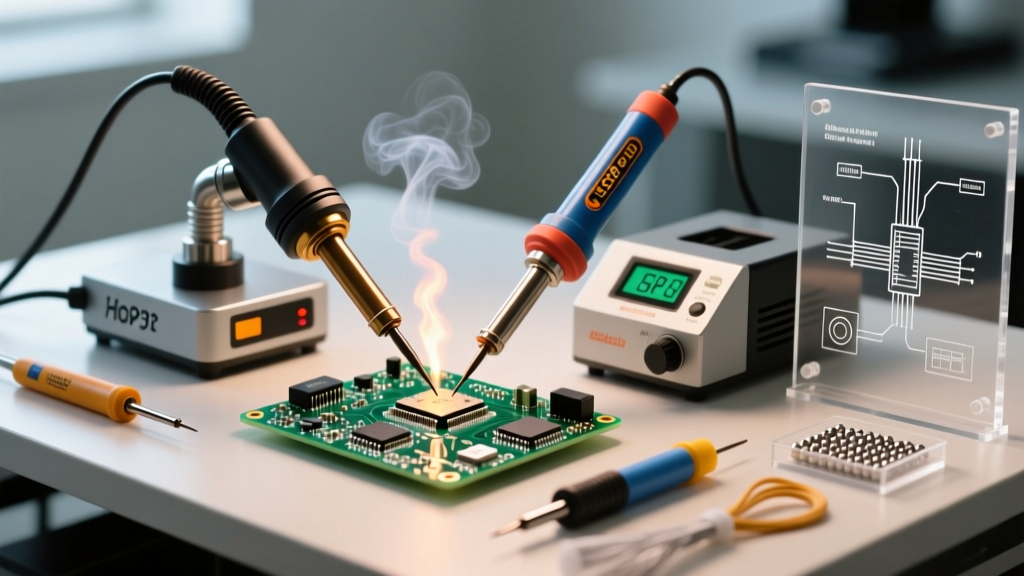
If your decision framework points to Sn/Ag/Cu alloys, a high-wattage precision soldering iron offers superior control and eliminates open-flame fire hazards. Do not use standard 40W electronics irons; they lack the thermal recovery needed for jewelry-scale metals. Instead, opt for the Hakko FX-601 ($75) or the Weller WT1H ($135). As noted in Hakko's official temperature profiles, the FX-601's ceramic heating element maintains a stable 220°C tip temperature even when touching high-thermal-conductivity metals like copper or silver, preventing the dreaded 'cold joint' caused by rapid heat dissipation.
Flux Chemistry: Matching the Metal and the Heat
Flux is not a one-size-fits-all consumable. The wrong flux will result in oxidized, brittle joints that fail under the mechanical stress of daily wear.
- For Hard Silver Solder: Use Stay-Silv Black Flux or traditional Prip's Flux. These are borax/boric acid-based and only become active above 550°C, perfectly aligning with the melting point of silver solders. They also coat the charm to prevent fire scale (cupric oxide formation).
- For Soft Soldering: Use a no-clean or mildly activated rosin flux (RMA). Avoid acid-core plumbing solders at all costs. Furthermore, adhere strictly to OSHA guidelines on lead safety and ventilation; while modern jewelry solders are lead-free, rosin fumes require localized extraction to prevent occupational asthma.
Real-World Failure Modes and Edge Cases
Even with the right tools, charm soldering presents unique edge cases that generic tutorials ignore. Here is how to troubleshoot the three most common failure modes:
- Capillary Starvation in Jump Rings: When soldering a charm to a jump ring, amateurs often apply solder to the outside of the seam. The solder balls up due to surface tension. Solution: Apply flux inside the seam, place a microscopic pall of solder on the outside, and heat the inside of the ring. The solder will wick through the seam via capillary action.
- Thermal Shock in Stone-Set Charms: Soldering a bail onto a charm set with a tourmaline or opal will fracture the stone. Solution: Use a thermal barrier paste (like Rio Grande's Heat Shield) or submerge the stone portion of the charm in a water-filled cross-locking tweeper while soldering the dry bail.
- Fire Scale Pitting: If you anneal or solder sterling silver charms in an oxygen-rich environment without adequate flux, copper in the alloy oxidizes beneath the surface, causing pitting during polishing. Solution: Always use a reducing flame (slightly yellow/orange for acetylene) and pickle the charm in warm sodium bisulfate (Sparex #2) immediately after quenching.
'The difference between an amateur charm and a professional heirloom isn't the precious metal—it's the invisible geometry of the solder joint. Capillary flow should be your only metric for success.' — Master Jeweler's Guild Workshop Notes, 2025.
2026 Studio Budget & ROI Matrix
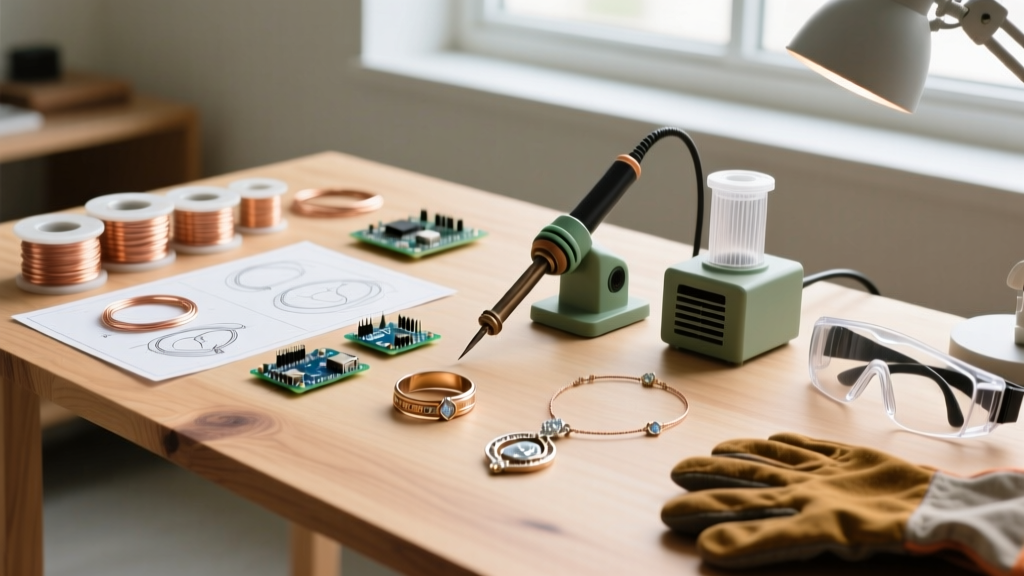
Whether you are launching an Etsy storefront or upgrading a home studio, aligning your capital expenditure with your production volume is critical. Below is a decision matrix for outfitting a charm-soldering station.
| Setup Tier | Core Equipment | Estimated Cost (2026) | Target Audience |
|---|---|---|---|
| Entry-Level Soft Solder | Hakko FX-601, Sn/Ag/Cu wire, RMA Flux, Brass brush | $110 - $130 | Hobbyists, mixed-media crafters, low-volume Etsy sellers |
| Pro Studio Hard Solder | Smith Little Torch, Oxy-Acetylene tanks, Prip's Flux, Charcoal block, Pickle pot | $450 - $600 | Fine jewelry designers, high-volume production, repair specialists |
| Hybrid Versatility Rig | Blazer GT-8000 (soft), Weller WT1H (precision), dual flux station, third-hand tweezers | $250 - $300 | Wearable tech makers, multi-material prototypers |
Final Verdict: Executing Your Decision
If your soldered charms are purely decorative, utilize mixed metals (like copper and brass), or incorporate heat-sensitive enamels, invest in the Entry-Level Soft Solder setup centered around the Hakko FX-601. It offers the highest ROI for low-temperature applications. However, if you are fabricating fine sterling silver or gold-filled charms intended for lifelong daily wear, the Pro Studio Hard Solder rig is a mandatory investment. The structural integrity of a 77% silver alloy joint simply cannot be replicated by tin-based alternatives, ensuring your charms withstand decades of mechanical stress without failure.