
The Hardware Gap: Why Native Control Falls Short
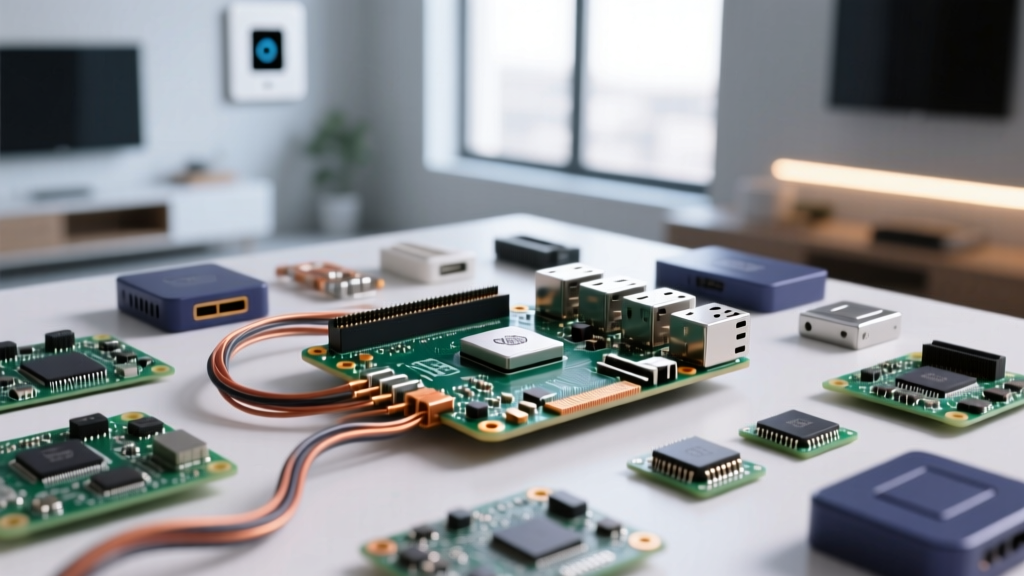
Unlike many proprietary Android TV boxes or legacy single-board computers, modern iterations of the Raspberry Pi (from the Pi 3B+ through the Pi 5) lack an integrated Infrared (IR) receiver. While this design choice keeps the base board cost down and reduces footprint, it creates an immediate hurdle for makers building media centers, retro-gaming consoles, or headless server racks. Finding the right raspberry pi remote control accessory is not just about buying a plastic clicker; it is about matching the communication protocol to your specific operating system, latency tolerance, and hardware environment.
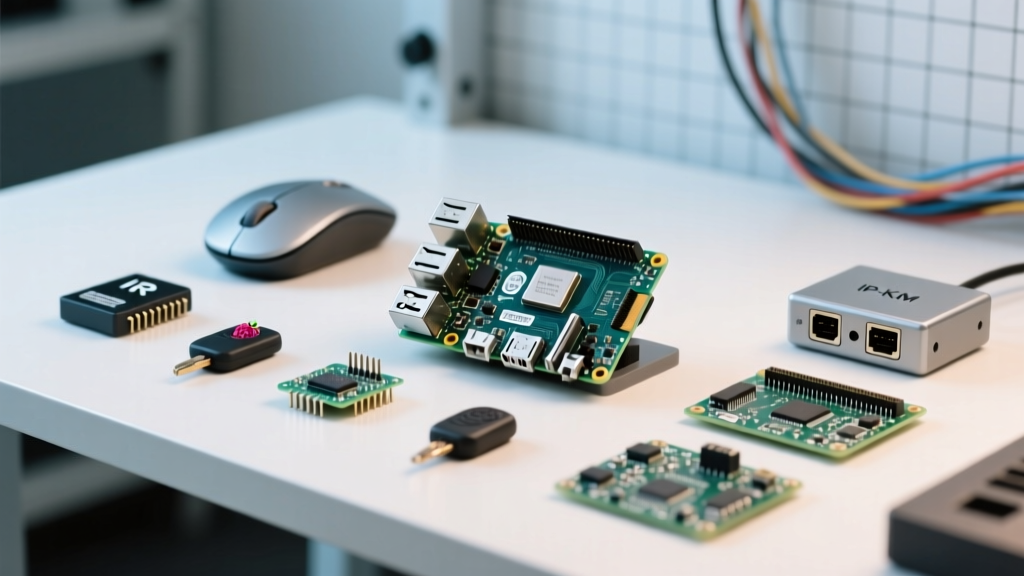
In this comprehensive accessory review, we bypass generic software tutorials and dive deep into the hardware realities of controlling a Pi from across the room—or across the globe. We evaluate IR dongles, integrated case diodes, 2.4GHz/Bluetooth air mice, and enterprise-grade IP-KVMs, highlighting exact failure modes and configuration overlays.
Category 1: Infrared (IR) Receivers & Integrated Cases
IR remains the gold standard for line-of-sight media center control due to its zero-interference footprint and instant wake capabilities. However, the implementation varies wildly between accessories.
FLIRC USB Gen 2 vs. Argon ONE Integrated IR
The FLIRC USB Receiver is a legendary accessory in the Pi community. Unlike standard IR dongles that require the bulky lirc daemon running in the background, the FLIRC Gen 2 contains an internal EEPROM. You map your remote's IR signals to standard HID keyboard keystrokes using a PC or Mac. Once flashed, the Pi simply sees a standard USB keyboard. This makes it flawlessly compatible with RetroPie, Recalbox, and OSMC out of the box, with zero OS-level configuration required.
Conversely, the Argon ONE case features a built-in IR diode hardwired to BCM GPIO 23. While it eliminates USB dongle clutter, it requires software intervention. On modern Raspberry Pi OS (Bookworm and later), you must edit the boot configuration to enable the hardware overlay. Adding dtoverlay=gpio-ir,gpio_pin=23 to your /boot/firmware/config.txt file allows the kernel's native RC subsystem to decode the signals, which is far more efficient than legacy user-space polling.
| Accessory | Protocol / Interface | Daemon Required? | Wake-from-Suspend | Approx. Price |
|---|---|---|---|---|
| FLIRC USB Gen 2 | USB HID (Internal EEPROM) | No | Limited (USB bus dependent) | $22.00 |
| Argon ONE Case IR | GPIO 23 (Hardware Overlay) | Yes (argon1-ir or evtest) | Yes (via Argon power board) | $45.00 (Case included) |
| Generic VS1838B Diode | Direct GPIO Breadboard | Yes (lirc / ir-keytable) | Yes (with custom circuit) | $2.00 |
Category 2: Bluetooth & 2.4GHz Air Mice
For Kodi (LibreELEC) or desktop environments where web browsing and text entry are required, an IR remote is insufficient. Air mice with gyroscopic pointing and QWERTY keyboards are the preferred raspberry pi remote control solution for these hybrid setups.
The USB 3.0 Interference Problem
When reviewing popular air mice like the Rii i8+ or the WeChip G20 Pro, we must address a critical hardware flaw specific to the Pi 4 and Pi 5. These models feature USB 3.0 ports. According to Intel's RF interference whitepapers, unshielded USB 3.0 data transfer generates broadband noise that peaks exactly in the 2.4GHz spectrum. If you plug a 2.4GHz wireless mouse dongle directly into the Pi's USB port, the cursor will stutter, drop packets, and exhibit massive latency.
Expert Fix: Never plug a 2.4GHz dongle directly into a Raspberry Pi 4 or 5. Use a short USB 2.0 extension cable to move the dongle away from the USB 3.0 controller's RF noise envelope, or switch to a native Bluetooth LE connection to bypass the 2.4GHz dongle entirely.
Bluetooth LE Pairing Failures on Headless Builds
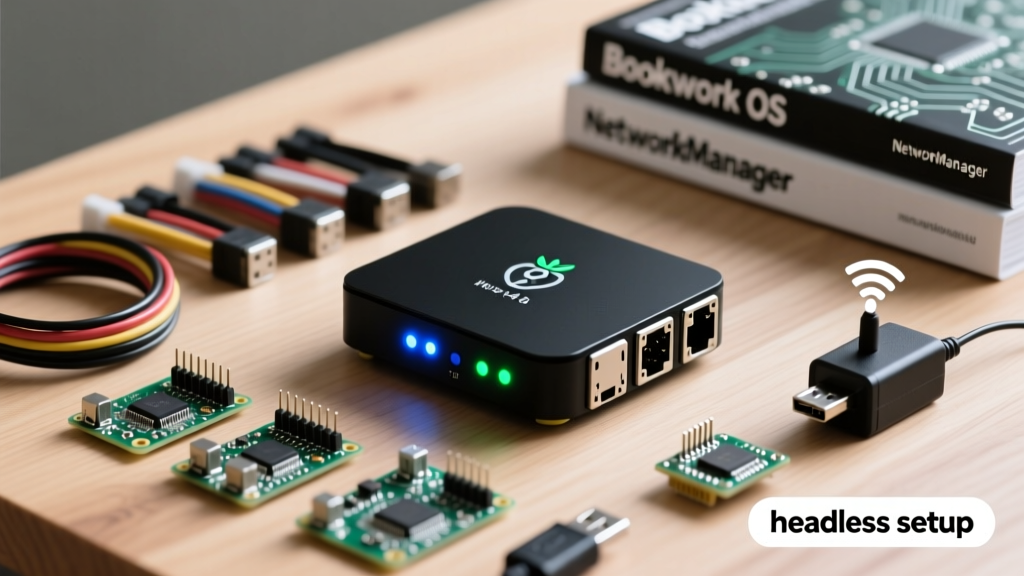
If you opt for a Bluetooth remote to avoid the USB 3.0 interference issue, be prepared for initial pairing hurdles. Headless Pi builds do not have a desktop environment to handle Bluetooth pairing prompts. You must use bluetoothctl via SSH. A common failure mode occurs when the remote uses a non-standard HID proxy profile; the Pi will pair, but the keystrokes will not register in evtest. Always verify that your chosen Bluetooth remote supports standard HID over GATT (HOGP) to ensure seamless X11/Wayland integration.
Category 3: IP-KVMs for True Headless Server Control
If your Pi is acting as a headless router (via Pi-hole), a NAS (via OpenMediaVault), or a cluster node, media remotes are useless. You need BIOS-level, pre-boot access. This is where IP-based KVM (Keyboard, Video, Mouse) accessories enter the chat.
PiKVM v4 Plus Review
The PiKVM Project offers an open-source, hardware-backed remote control solution that turns a Raspberry Pi into an enterprise-grade IP-KVM. The PiKVM v4 Plus HAT connects to the target machine's HDMI output and uses an internal capture IC (like the MS2109) to stream the video feed over your local network via WebRTC. Simultaneously, an onboard ATMega32U4 microcontroller emulates a USB keyboard and mouse, injecting keystrokes directly into the target's USB bus.
While primarily designed to control other PCs, many advanced makers use a PiKVM setup to manage a rack of Raspberry Pi servers. The ability to remotely trigger ATX power relays, mount virtual ISOs via the Pi's USB OTG port, and access the terminal even if the network stack crashes makes it the ultimate remote control accessory for severe troubleshooting scenarios.
Decision Matrix: Which Remote Accessory Fits Your Build?
Selecting the correct hardware depends entirely on your OS and physical environment. Use this framework to make your purchasing decision:
- The Retro-Gamer (RetroPie/Batocera): Buy the FLIRC USB Gen 2. The EEPROM mapping guarantees that your custom arcade remote or universal TV remote will survive OS updates without requiring you to recompile drivers or fix broken
lircdependencies. - The Media Center Builder (Kodi/OSMC): Invest in a Bluetooth Air Mouse (like the WeChip G20) and pair it via
bluetoothctl. This avoids USB 3.0 interference and provides the gyroscopic mouse needed for web browsing on a TV screen. - The Clean-Desk Minimalist: Use the Argon ONE case with its integrated IR diode. It provides a sleek, all-in-one aluminum chassis with built-in remote support and programmable power states.
- The Sysadmin / Cluster Manager: Deploy PiKVM. Software-based VNC and SSH will fail if the Pi's networking stack hangs; an IP-KVM accessory gives you bare-metal recovery capabilities.
Advanced Configuration: Overriding Keymaps in Wayland
As the Raspberry Pi Documentation notes, the shift from X11 to Wayland in recent OS releases has changed how input devices are handled. If your IR remote or Air Mouse is sending the wrong keycodes (e.g., the 'Play/Pause' button acting as 'Enter'), you can no longer rely on .Xmodmap. Instead, you must use hwdb (Hardware Database) rules via systemd to remap scancodes at the kernel level before they reach the Wayland compositor. Creating a custom .hwdb file in /etc/udev/hwdb.d/ ensures your raspberry pi remote control mappings persist across all graphical environments and user sessions.