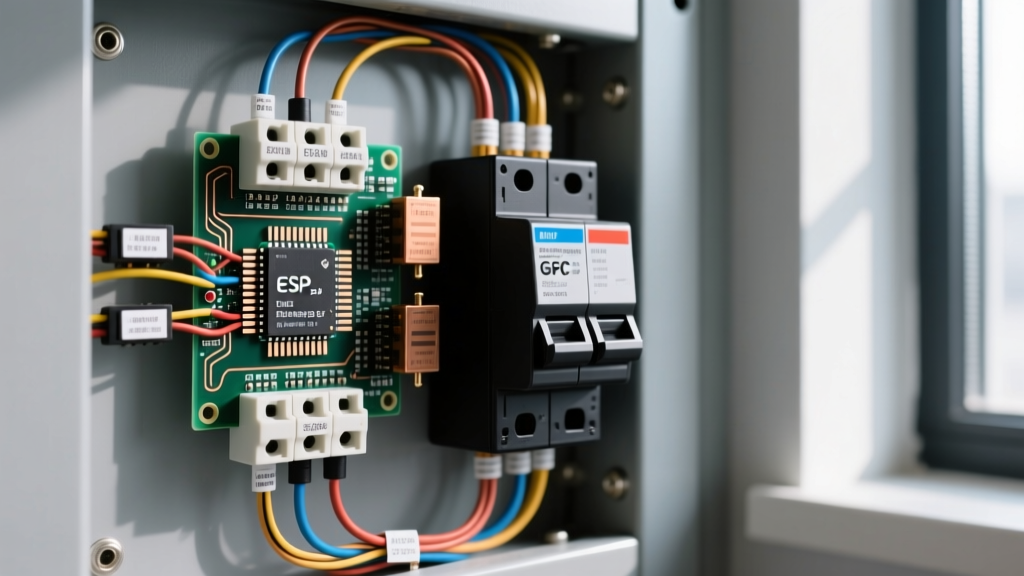
Setting up a Raspberry Pi as remote desktop node is the most cost-effective way to build a headless thin client, an always-on remote workstation, or a localized dashboard server. However, out-of-the-box configurations often fail due to the default Wayland display server in Pi OS Bookworm, which breaks standard VNC and xrdp sessions. Furthermore, headless Pi deployments are notorious for hanging silently when network stacks or display managers crash.
This guide provides a rock-solid architecture using the Raspberry Pi 5 (8GB). We will force the X11 backend for xrdp compatibility, install a hardware watchdog with a GPIO status LED to automatically recover from freezes, and provide the exact debugging steps for the most common connection failures.
Project Spec Sheet & Parts List
| Component | Exact Model / Variant | Estimated Cost |
|---|---|---|
| Microcontroller/SBC | Raspberry Pi 5 (8GB RAM) | $80.00 |
| Power Supply | Official Raspberry Pi 27W USB-C PD PSU | $12.00 |
| Thermal Management | Official Active Cooler (PWM controlled) | $5.00 |
| Storage | 512GB M.2 NVMe SSD (e.g., WD Blue SN580) | $45.00 |
| Enclosure | Argon ONE V3 M.2 NVMe Case for Pi 5 | $35.00 |
| Watchdog Components | 5mm Green LED, 330Ω Resistor, Tactile Switch | $1.00 |
Wiring the Hardware Watchdog & Status LED
When running headless, you need physical feedback to know if the board is alive or if the remote desktop service has hung. We will wire a heartbeat LED and a hard-reset button directly to the Pi 5's GPIO header. This allows you to trigger a clean reboot via the button if the RDP session locks up, without pulling the power and risking SSD corruption.
| GPIO Pin (Physical) | BCM GPIO Number | Component | Wiring Notes |
|---|---|---|---|
| Pin 11 | GPIO 17 | Status LED (Anode) | Connect via 330Ω current-limiting resistor. |
| Pin 9 | GND | Status LED (Cathode) | Direct to Ground. |
| Pin 13 | GPIO 27 | Reset Tactile Switch | Switch connects GPIO 27 to GND (Pin 14). Uses internal pull-up. |
Bench Tip: Never wire an LED directly from 3.3V to GPIO without a resistor. The Pi 5 GPIO pins can source up to 16mA per pin, but a standard 5mm LED at 2V forward voltage will draw excessive current and degrade the pin's silicon over time. The 330Ω resistor limits current to a safe ~4mA.
Software Setup: xrdp and the Watchdog Script
Before writing code, we must fix the display server. Pi OS Bookworm defaults to Wayland, which does not support the virtual framebuffers required by xrdp.
Step 1: Force X11 and Install xrdp
- Open a terminal (or SSH into the Pi) and run:
sudo raspi-config - Navigate to Advanced Options > Wayland > Select X11.
- Reboot the Pi:
sudo reboot - Install the xrdp package:
sudo apt update && sudo apt install xrdp xorgxrdp -y - Add the xrdp user to the ssl-cert group:
sudo adduser xrdp ssl-cert - Enable and start the service:
sudo systemctl enable xrdp && sudo systemctl start xrdp
Step 2: The Python Watchdog Code
This script targets the Raspberry Pi 5 running Bookworm. It uses the gpiozero library to monitor the xrdp service status. If xrdp crashes, the LED blinks rapidly and the script attempts a service restart. If the physical button is held for 3 seconds, it triggers a clean system reboot.
#!/usr/bin/env python3
"""
Pi 5 Remote Desktop Hardware Watchdog & Status LED
Target: Raspberry Pi 5 (8GB) running Pi OS Bookworm
Dependencies: gpiozero (pre-installed on Pi OS), systemd
"""
import time
import subprocess
import sys
from gpiozero import LED, Button

# --- PIN DEFINITIONS ---
STATUS_LED_PIN = 17  # Physical Pin 11
RESET_BTN_PIN = 27   # Physical Pin 13

# Initialize GPIO hardware
led = LED(STATUS_LED_PIN)
reset_btn = Button(RESET_BTN_PIN, hold_time=3, bounce_time=0.05)

def check_xrdp_service():
    """Checks if the xrdp systemd service is currently active."""
    try:
        result = subprocess.run(
            ['systemctl', 'is-active', 'xrdp'],
            stdout=subprocess.PIPE,
            stderr=subprocess.PIPE,
            text=True,
            check=False
        )
        return result.stdout.strip() == 'active'
    except Exception as e:
        print(f"[ERROR] Systemctl poll failed: {e}")
        return False

def reboot_pi():
    """Executes a clean system reboot when the hardware button is held."""
    print("[WATCHDOG] Button held for 3s. Initiating clean reboot...")
    # Rapid blink to indicate reboot sequence
    for _ in range(10):
        led.toggle()
        time.sleep(0.1)
    subprocess.run(['sudo', 'systemctl', 'reboot'])

def main_loop():
    """Main heartbeat loop monitoring xrdp health."""
    print("[WATCHDOG] Monitoring xrdp service...")
    try:
        while True:
            if check_xrdp_service():
                # Slow heartbeat: toggles every 5 seconds (10s full cycle)
                led.toggle()
                time.sleep(5)
            else:
                print("[WARNING] xrdp is down. Attempting restart...")
                # Fast blink to indicate fault
                for _ in range(5):
                    led.toggle()
                    time.sleep(0.2)

                # Attempt service recovery
                subprocess.run(['sudo', 'systemctl', 'restart', 'xrdp'])
                time.sleep(5) # Wait for service to spin up
    except KeyboardInterrupt:
        print("[WATCHDOG] Exiting gracefully.")
        led.off()
        sys.exit(0)

if __name__ == "__main__":
    # Bind the hardware button hold event
    reset_btn.when_held = reboot_pi
    main_loop()
Source reference for xrdp configuration: xrdp Official GitHub Repository.
Debugging: First Three Things to Check When It Fails
When your Windows RDP client or macOS Microsoft Remote Desktop app fails to connect, don't start reinstalling packages. The failure almost always falls into one of three categories. Here is the exact decision path.
1. The 'Black Screen' or 'Display Startup Timeout'
Exact Error String: [ERROR] X server for display 10 startup timeout (Found in /var/log/xrdp-sesman.log) or the client simply shows a black screen with a green background.
- Most Likely Cause: Wayland is still active, or the user is already logged into a local desktop session. xrdp cannot attach to an existing local X11/Wayland session; it must spawn a new virtual one.
- The Fix: Ensure you selected X11 in
raspi-config. Next, log out of the physical Pi (if a monitor is attached) or disable auto-login viaraspi-config> System Options > Boot / Auto Login > Desktop (Require Login).
2. The 'Connection Refused' Error
Exact Error String: Remote Desktop can't connect to the remote computer (Windows Client) or Error connecting to sesman ip 127.0.0.1 port 3350 (xrdp client log).
- Most Likely Cause: The xrdp service has crashed, failed to start on boot, or the local UFW firewall is blocking port 3389.
- The Fix: SSH into the Pi. Run
sudo systemctl status xrdp. If it is dead, runsudo systemctl restart xrdp. If it is active, check your firewall:sudo ufw allow 3389/tcp.
3. The 'Authentication Failure' Loop
Exact Error String: login failed for display 0 or the RDP client repeatedly prompts for credentials despite the correct password.
- Most Likely Cause: The
xrdpuser lacks permissions to read the SSL certificates required for the encrypted handshake, or the Pi user account does not have a password set (common on fresh headless setups). - The Fix: Run
sudo adduser xrdp ssl-certand restart the service. Ensure your Pi user account has a defined password via thepasswdcommand.
For deeper display server troubleshooting, refer to the Raspberry Pi Official Configuration Documentation.
Extending or Simplifying the Build
Depending on your deployment environment, you may need to scale this build up for heavy workloads or down for low-power edge nodes.
- Simplify (Low Power/Edge): Swap the Pi 5 for a Raspberry Pi Zero 2 W ($15). Remove the NVMe SSD and boot from a high-endurance A2-rated microSD card (e.g., SanDisk High Endurance). The Python watchdog code remains 100% identical, but you must lower your expectations to basic web browsing and terminal work, as the Zero 2 W's 512MB RAM will bottleneck the XFCE desktop environment.
- Extend (Heavy Workstation): If you are compiling code or running Docker containers via the remote desktop, add a Geekworm X1001 M.2 HAT and boot from an NVMe SSD. MicroSD cards will corrupt within months under the constant swap-file writes of a remote desktop environment. Additionally, install
zram-toolsto compress RAM swapping, significantly improving desktop responsiveness on the 8GB Pi 5.
Frequently Asked Questions
Can I use a Raspberry Pi as a remote desktop for gaming or video editing?
No. While the Pi 5's VideoCore VII GPU is capable of 4K60 output locally, the xrdp protocol does not support hardware-accelerated GPU encoding for the remote stream. Video playback and 3D rendering over RDP will be software-rendered via the CPU, resulting in severe lag and screen tearing. For hardware-accelerated remote streaming (like gaming), you should use Sunshine/Moonlight or Parsec instead of xrdp, though these require a host monitor or an HDMI dummy plug to trick the GPU into rendering.
How do I access my Raspberry Pi as a remote desktop over the internet safely?
Never expose port 3389 (RDP) directly to the public internet; it will be targeted by brute-force bots within hours. The safest, zero-configuration method is to install Tailscale or ZeroTier on both the Pi and your client machine. This creates a secure, encrypted mesh VPN, allowing you to connect to the Pi's local IP address from anywhere in the world without opening router ports. If you must use port forwarding, restrict access via firewall rules to a specific static IP and enforce fail2ban.
Why is my Raspberry Pi remote desktop lagging on basic web browsing?
Web browsers like Chromium are heavily multi-threaded and RAM-hungry. If you are using a Pi 4 (4GB) or Pi Zero 2 W, the system is likely thrashing the swap file on the SD card. First, verify you are using the Pi 5 (8GB) variant. Second, ensure you are using an NVMe SSD or an A2-rated SD card. Finally, open the Chromium settings on the remote desktop and disable 'Hardware Acceleration' if the virtual X11 display is failing to map the GPU memory correctly, forcing it back to stable software rendering.