
The 'Arduino Uno Q' Misnomer: What Are You Actually Looking For?
If you have been searching for the Arduino Uno Q, you have likely encountered a confusing mix of forum rumors, third-party clone listings, and outdated blog posts. As of 2026, Arduino S.r.l. has never released an official first-party board bearing the 'Uno Q' moniker. The official lineage remains the legendary UNO R3 and the modern, Renesas-powered Arduino UNO R4 Minima and WiFi.
However, the term 'Uno Q' is heavily used in the maker and embedded engineering communities to describe two very specific hardware variations of the Uno form factor:
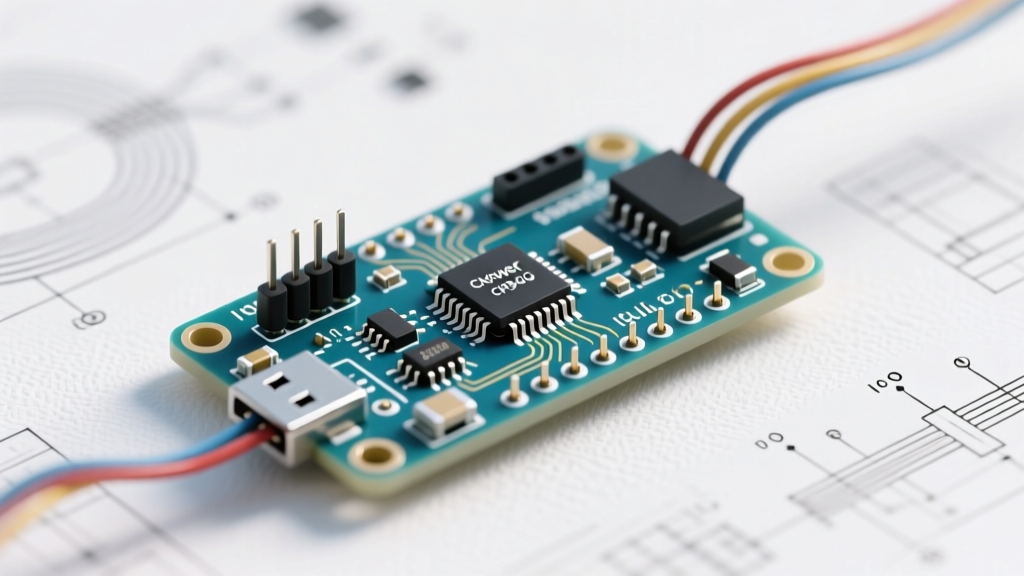
- Qwiic-Enabled Uno Variants: Third-party boards (and custom shields) that integrate the SparkFun Qwiic I2C ecosystem directly into the Uno footprint.
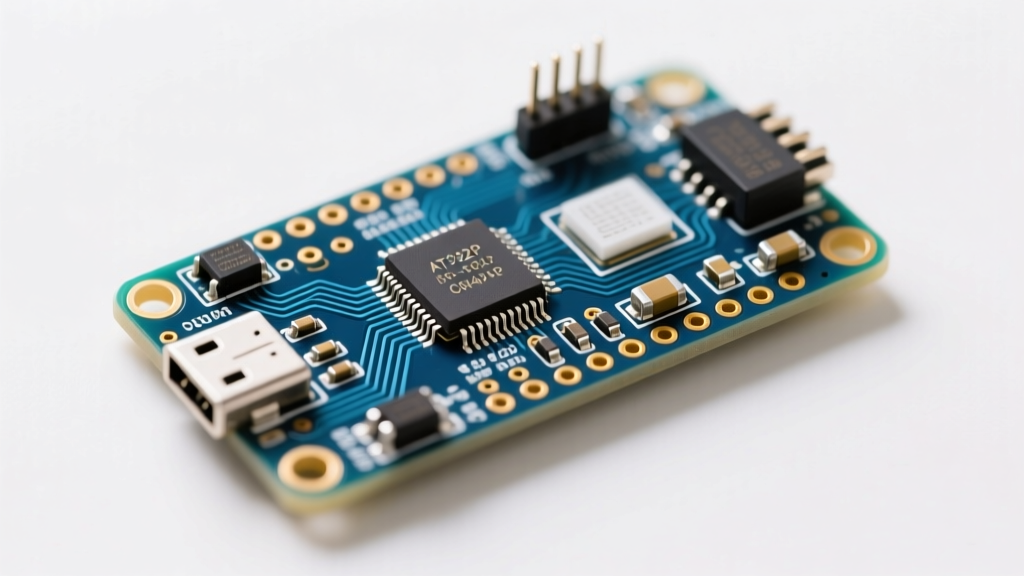
- QFN-Packaged Clones: Ultra-compact or budget Uno clones that utilize the QFN-32 (Quad Flat No-leads) package of the ATmega328P microcontroller instead of the standard TQFP-32 chip found on the official R3.
In this feature deep dive, we will dissect the engineering realities, failure modes, and practical applications of both 'Q' interpretations, helping you decide if these variants are right for your next embedded project.
Expert Note: When sourcing boards labeled 'Uno Q' from overseas marketplaces like AliExpress or Banggood, you are almost always buying a QFN-packaged ATmega328P clone with a CH340 USB-UART bridge. Always verify the silkscreen and chip packaging before designing custom shields.The 'Q' Factor: Qwiic I2C Ecosystem on Uno Form Factors
The most practical interpretation of the Arduino Uno Q is a board equipped with SparkFun's Qwiic connect system. Qwiic uses a standardized 4-pin JST-SH connector (1mm pitch) to carry VCC (3.3V), GND, SDA, and SCL. This eliminates the need for breadboards and jumper wires when daisy-chaining I2C sensors like the BME280, VL53L1X, or MPU6050.
The 5V vs 3.3V Logic Level Bottleneck
The standard ATmega328P operates at 5V. The Qwiic ecosystem strictly operates at 3.3V. Connecting a 5V I2C master directly to a 3.3V Qwiic sensor will degrade the sensor's internal ESD protection diodes over time, leading to silent failures and corrupted data buses.
A true 'Uno Q' variant solves this by integrating a bidirectional logic level shifter on the board. High-quality variants use BSS138 N-channel MOSFETs paired with 10kΩ pull-up resistors to safely translate the 5V SDA/SCL lines down to 3.3V. Cheaper variants may use simple resistor voltage dividers, which degrade the I2C signal rise times and cause bus lockups at 400kHz (Fast-mode).
- Recommended Shifters: BSS138, PCA9306, or TXB0108.
- Avoid: Resistor-only dividers for I2C capacitance exceeding 100pF.
- Power Delivery: Ensure the board's onboard 3.3V LDO can source at least 150mA to support multiple Qwiic peripherals without browning out the ATmega328P.
QFN vs. TQFP: The Silicon Heart of 'Uno Q' Clones
The second meaning of 'Uno Q' refers to the physical packaging of the microcontroller. The official Arduino UNO R3 uses the Microchip ATmega328P in a TQFP-32 package (Thin Quad Flat Package). This chip has visible, protruding pins that are relatively easy to rework with a standard soldering iron.
Budget manufacturers and compact-clone designers frequently use the QFN-32 (Quad Flat No-leads) package. The QFN variant is physically smaller (typically 5x5mm compared to the TQFP's 7x7mm) and features a large exposed thermal pad on the bottom.
Engineering Implications of QFN Packaging
| Feature | TQFP-32 (Standard UNO R3) | QFN-32 ('Uno Q' Clones) |
|---|---|---|
| Physical Footprint | 7x7mm (Leads extend outward) | 5x5mm (Leads are hidden underneath) |
| Thermal Dissipation | Moderate (via pins) | Excellent (via exposed bottom thermal pad) |
| Parasitic Inductance | Higher (longer lead frames) | Lower (ideal for high-frequency noise immunity) |
| Rework / Repairability | Easy (Standard iron + flux) | Difficult (Requires hot air rework station) |
| Typical 2026 Clone Price | $6.00 - $9.00 | $3.50 - $5.50 |
From an electrical engineering standpoint, the QFN package is superior. The shorter internal bond wires reduce parasitic inductance, which slightly improves the chip's immunity to electromagnetic interference (EMI)—a common issue in automotive or heavy-machinery Arduino deployments. However, if you are a hobbyist who frequently swaps out fried microcontrollers, the QFN package is a nightmare to desolder without a proper hot-air station and stencil.
Troubleshooting I2C Bus Capacitance on Qwiic Chains
When utilizing a Qwiic-enabled Uno Q board, the most common failure mode is I2C bus lockup caused by excessive capacitance. Every Qwiic cable, connector, and sensor input pin adds parasitic capacitance to the SDA and SCL lines. The I2C specification limits Fast-mode (400kHz) bus capacitance to 400pF.
Step-by-Step Pull-Up Resistor Calculation
If you daisy-chain four or five Qwiic sensors, the combined capacitance will slow down the signal rise time, causing the ATmega328P to misinterpret bits. You must calculate the correct pull-up resistor value based on your bus capacitance.
- Estimate Capacitance: Assume 10pF per Qwiic cable, plus 15pF per sensor board. A chain of 4 sensors with 4 cables equals roughly 100pF.
- Calculate Minimum Resistance: R_min = (Vcc - Vol) / Iol. For 3.3V Qwiic, assuming a 3mA sink current, R_min = (3.3 - 0.4) / 0.003 = 966Ω.
- Calculate Maximum Resistance: R_max = tr / (0.8473 * Cb). For a 300ns rise time (tr) and 100pF capacitance (Cb), R_max = 300ns / (0.8473 * 100pF) ≈ 3.5kΩ.
- Select Resistor: A standard 2.2kΩ or 3.3kΩ pull-up resistor is the sweet spot for most moderate-length Qwiic chains. If your 'Uno Q' board has onboard 4.7kΩ pull-ups, and your sensors also have 4.7kΩ pull-ups, they are placed in parallel, naturally lowering the resistance and speeding up the rise time.
Pro-Tip: If your I2C bus fails when adding a 5th sensor, do not simply lower the pull-up resistor value below 1kΩ. You will exceed the current sink limit of the microcontroller's GPIO pins. Instead, use an active I2C bus accelerator like the PCA9515 or drop the clock speed to 100kHz (Standard-mode) in your Arduino IDE Wire library settings.
2026 Market Verdict: Should You Buy an 'Uno Q'?
The decision to purchase a board marketed as an 'Arduino Uno Q' depends entirely on your project requirements and repair capabilities.
If you are building a permanent, space-constrained IoT sensor node and need native Qwiic connectivity without the bulk of a shield, a high-quality third-party Qwiic-Uno variant (priced around $22-$28) is an excellent choice. It saves you from the headache of designing custom I2C level-shifting circuitry.
However, if you are looking for the ultimate modern development board, the official Arduino UNO R4 Minima (retailing at $27.50) renders most legacy ATmega328P clones obsolete. The R4 features a 32-bit Renesas RA4M1 Cortex-M4 processor running at 48MHz, a native 12-bit DAC, and an OP-amp, all while maintaining the exact same Uno mechanical footprint and 5V logic tolerance. For new designs in 2026, migrating to the R4 ecosystem provides vastly superior processing headroom for sensor fusion and PID control loops compared to the aging 8-bit ATmega architecture found in Uno Q clones.