
The Anatomy of a Voltage Reading: Why Your Meter Matters
Understanding exactly how to read voltage with a multimeter is the foundational skill of any electrical diagnostic workflow. Whether you are troubleshooting a flickering LED circuit on a breadboard, diagnosing a faulty 240V HVAC contactor, or testing a 12V automotive alternator, voltage is the primary indicator of electrical potential. However, the accuracy of your reading is entirely dependent on the tool in your hand. A $15 bargain-bin meter might tell you a wire is dead, while a high-impedance professional digital multimeter (DMM) reveals a dangerous 60V ghost voltage lurking in the same conductor.
In this guide, we move beyond basic tutorials. We will break down the precise methodology for measuring both Alternating Current (AC) and Direct Current (DC) voltage, while simultaneously reviewing the best multimeters on the market for specific voltage-testing scenarios. Choosing the right tool is just as critical as knowing how to use it.
Step-by-Step: How to Read Voltage With a Multimeter Safely
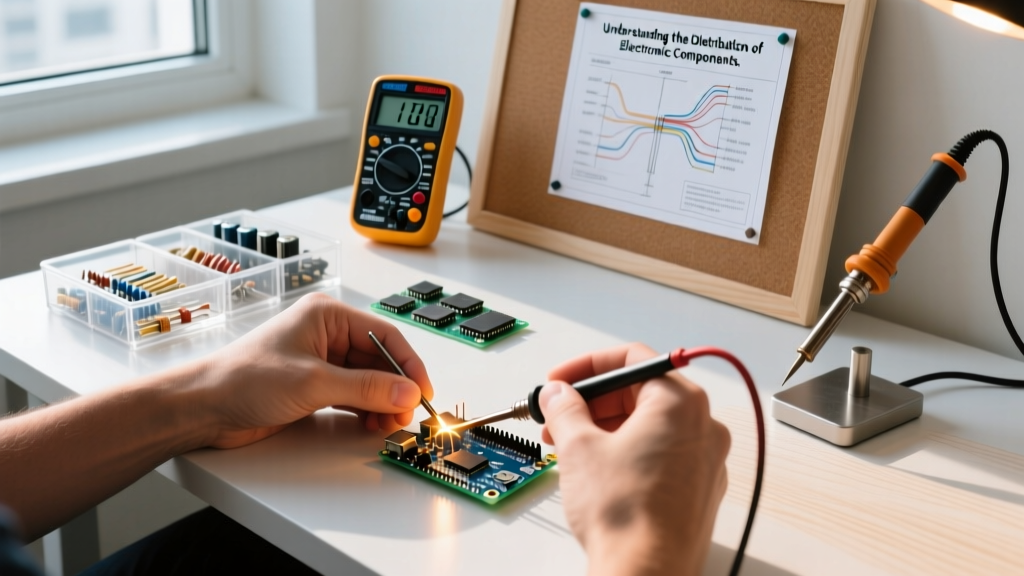
Before touching any live circuit, verify your meter's condition. Inspect the test leads for cracked insulation and ensure the probes are securely seated. Here is the professional workflow for capturing a reliable voltage reading:
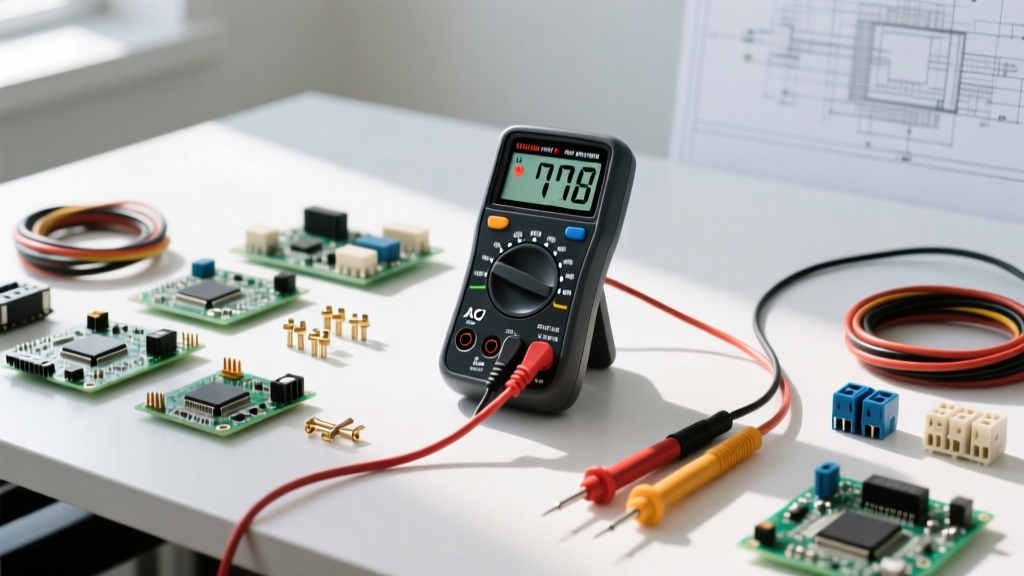
- Probe Placement: Insert the black test lead into the COM (Common) jack. Insert the red test lead into the VΩ (Volts/Ohms) jack. Warning: Never attempt to read voltage if your red lead is in the Amps (A or mA) jack, as this creates a dead short and will blow the meter's internal fuse or cause an arc flash.
- Select the Correct Mode: Turn the rotary dial to V~ (or VAC) for Alternating Current (mains power, HVAC, appliances) or V⎓ (or VDC) for Direct Current (batteries, solar panels, logic-level electronics).
- Range Selection: If using a manual-ranging meter, select a range higher than your expected voltage. For a standard 120V AC US outlet, choose the 200V or 600V range. If the display shows '1' or 'OL' (Overload), the voltage exceeds your selected range. Auto-ranging meters handle this automatically, though they may take a second to lock onto the value.
- Make the Connection: For AC voltage, polarity does not matter; touch one probe to each terminal. For DC voltage, touch the red probe to the positive terminal and the black probe to the negative terminal. If you reverse DC probes, a digital meter will simply display a negative sign (-) preceding the value.
- Read and Record: Allow the reading to stabilize. Note the decimal placement carefully—a reading of 12.4V DC is vastly different from 124V DC.
Always treat a circuit as live until proven dead. Use the SparkFun Multimeter Tutorial to familiarize yourself with the basic interface of a DMM before working on high-voltage systems.
2026 Multimeter Recommendations for Voltage Testing
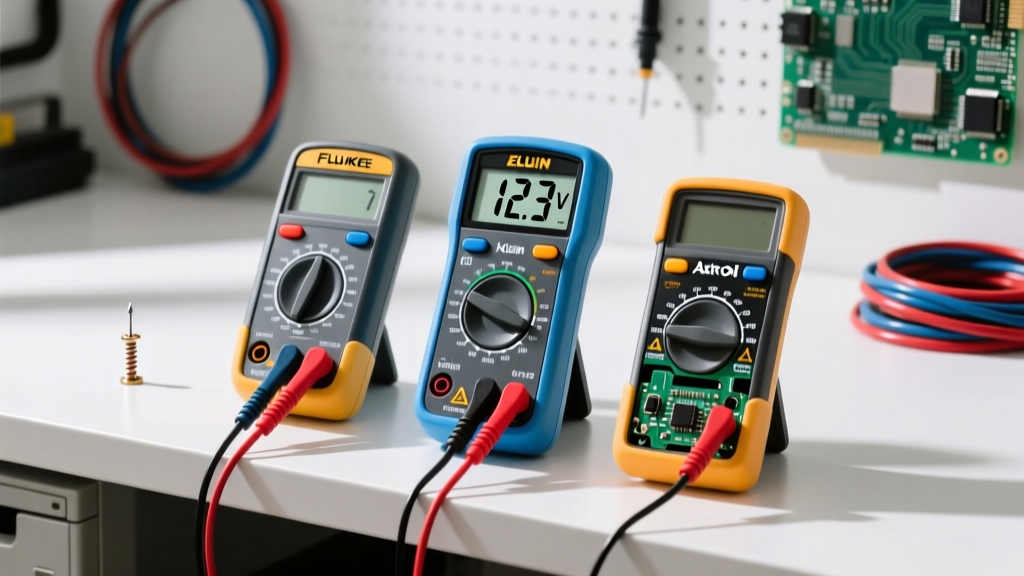
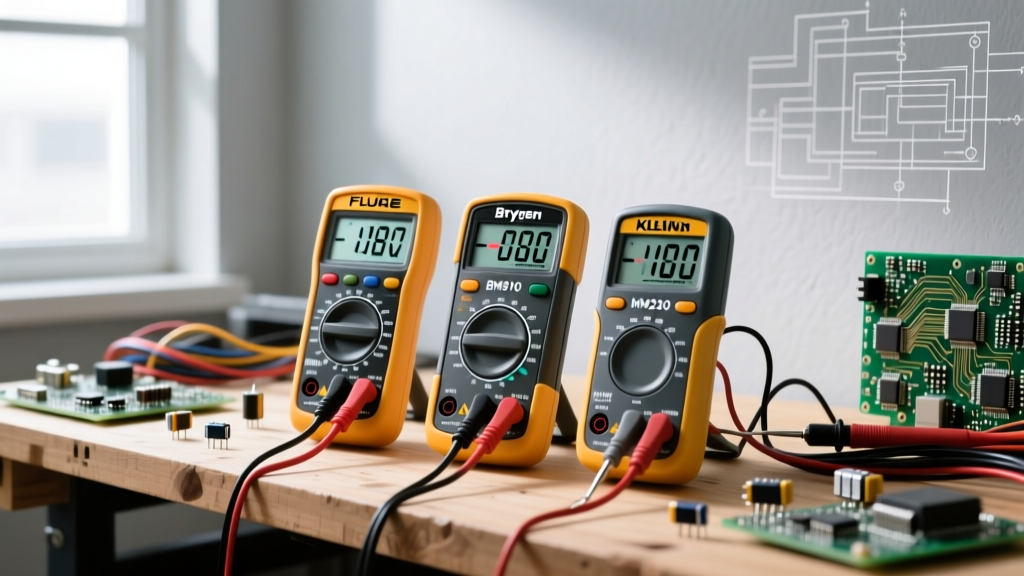
Not all voltage readings are created equal. Measuring millivolts on a thermocouple requires a completely different internal architecture than checking for 480V 3-phase power. Below is our expert comparison of the top DMMs for voltage measurement.
| Feature | Fluke 117 | Brymen BM235 | Klein Tools MM400 |
|---|---|---|---|
| Best For | Residential AC & HVAC | Electronics & Low-Voltage DC | Budget DIY & Automotive |
| Approx. Price | $210.00 | $105.00 | $45.00 |
| Counts | 6,000 | 6,000 | 4,000 |
| True RMS | Yes | Yes | No (Average Responding) |
| LoZ Mode | Yes (Crucial for AC) | No | No |
| Safety Rating | CAT III 600V | CAT III 600V | CAT III 600V |
Best for Residential AC & HVAC: Fluke 117
The Fluke 117 remains the undisputed king for electricians and HVAC technicians. Its standout feature for voltage reading is LoZ (Low Impedance) mode. Standard DMMs have a high input impedance (usually 10 Megohms), which makes them highly sensitive. While great for electronics, this high sensitivity causes them to read "ghost voltages"—capacitively coupled AC voltages induced in unconnected wires running parallel to live wires. The LoZ mode drops the impedance to roughly 3 kilohms, bleeding off the ghost voltage and revealing the true state of the wire. Furthermore, the VoltAlert non-contact voltage detector built into the tip provides an essential secondary safety check before you even touch bare copper.
Best for Electronics & Low-Voltage DC: Brymen BM235
If your focus is on microcontrollers, PCB repair, or automotive sensor diagnostics, the Brymen BM235 is a masterpiece of engineering. It offers exceptional DC millivolt (mV) resolution and a lightning-fast continuity beep. When learning how to read voltage with a multimeter on a 3.3V logic bus, you need a meter that doesn't round up or fluctuate wildly. The BM235's stable 10MΩ input impedance and high-precision ADC (Analog-to-Digital Converter) provide rock-solid readings on sensitive DC circuits where the Fluke 117's LoZ mode would inappropriately load the circuit down.
Best Budget Option for DIYers: Klein Tools MM400
For homeowners checking batteries, testing doorbell transformers, or verifying 120V receptacles, the Klein MM400 is a rugged, cost-effective choice. It is a manual-ranging, average-responding meter. While it will struggle to accurately read the voltage of non-linear loads (like variable frequency drives or dimmer switches) due to the lack of True RMS, it is perfectly adequate for standard sine-wave AC and basic DC voltage checks. Just be aware of its limitations in professional environments.
Critical Voltage Measurement Pitfalls (And How to Avoid Them)
Even experienced technicians fall into traps when measuring voltage. Avoid these common failure modes:
- The Ghost Voltage Trap: As mentioned, phantom voltage can trick you into thinking a disconnected wire is live, or worse, that a live wire is dead because the voltage reads lower than expected due to high resistance. Always cross-reference with a LoZ meter or a solenoid voltage tester (Wiggy) if readings seem illogical. For a deeper dive, read Fluke's technical breakdown on ghost voltage.
- Ignoring True RMS Requirements: If you measure the voltage output of a solar inverter or a modern LED driver with an average-responding meter (like the Klein MM400), your reading could be off by 30% or more. You must use a True RMS meter (like the Fluke 117 or Brymen BM235) to accurately calculate the heating effect of distorted AC waveforms.
- Floating Grounds in DC Systems: When measuring DC voltage in automotive or marine environments, a poor ground connection on your black probe will yield erratic readings. Always verify your ground by testing a known-good 12V source (like the battery terminals) before probing deep into a wiring harness.
Decoding Multimeter Specs: Input Impedance and CAT Ratings
To truly master how to read voltage with a multimeter, you must understand the specifications printed on the back of the device.
Input Impedance: This is the internal resistance of the meter when set to voltage. A standard 10MΩ (10,000,000 ohms) impedance ensures the meter draws virtually zero current from the circuit, preventing the meter itself from altering the voltage it is trying to measure. However, in high-impedance industrial control circuits, even 10MΩ can load the circuit. In these rare cases, a meter with selectable impedance is required.
Overvoltage Categories (CAT Ratings): Safety ratings are not just about the maximum voltage; they are about transient voltage spikes. A CAT III 600V meter is designed to withstand the energy of a short circuit on the load side of a distribution panel. A CAT IV 600V meter can survive a spike at the utility service drop. Never use a CAT II meter (designed only for appliances) to test outdoor wiring or main service panels. For comprehensive safety standards, refer to the Fluke guide on CAT ratings.
Final Verdict: Matching the Meter to the Mission
Knowing how to read voltage with a multimeter is a universal skill, but the tool you choose should be dictated by your specific environment. If you are pulling wire in residential panels and troubleshooting HVAC control boards, invest in the Fluke 117; its LoZ mode and True RMS capabilities will save you hours of chasing phantom electrical gremlins. If you are bent over a workbench repairing motherboards or tuning automotive sensors, the Brymen BM235 offers the DC precision and fast response times you need at half the price of a Fluke. Finally, if you just need to verify that your DIY smart-home outlet is wired correctly, the Klein MM400 will get the job done safely and affordably.
Respect the voltage, verify your tool's rating, and always double-check your probe jacks before you make a connection.