
The State of the NEO-6M Market in the 2020s
The u-blox NEO-6M has been the undisputed king of hobbyist and prototyping GPS receivers for over a decade. Whether you are building an Arduino-based speedometer, a Raspberry Pi stratospheric balloon tracker, or a custom marine navigation display, the NEO-6M GPS module is likely the first component that comes up in your search. However, the market landscape for this specific chipset has shifted dramatically.
Following global silicon shortages and the natural lifecycle of the NEO-6 series (originally released around 2010), the open market is now flooded with clones, re-badged alternatives, and counterfeit breakout boards. As a buyer, you are rarely just buying a chip; you are buying a breakout board ecosystem. Understanding the difference between a genuine Swiss-engineered u-blox module and a $3 clone is the difference between a reliable cold-start in under 30 seconds and a frustrating afternoon of debugging phantom NMEA sentences.
Breakout Board Anatomy: What You Are Actually Buying
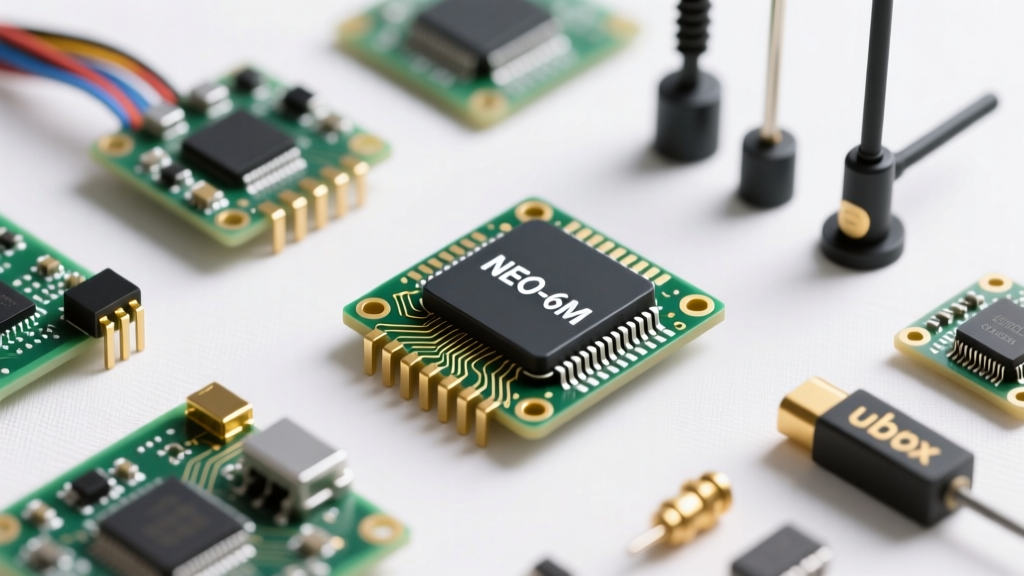
Very few hobbyists buy the bare NEO-6M surface-mount chip. Instead, we purchase breakout boards—most commonly the ubiquitous blue PCB with an 18x18mm or 25x25mm ceramic patch antenna. When evaluating a listing, you must look past the main chip and inspect the supporting circuitry.
The EEPROM and RTC Battery Factor
A genuine, high-quality NEO-6M breakout board includes two critical supporting components:
- AT24C32 I2C EEPROM: This 32Kbit chip stores your custom UBX configuration settings (like baud rate, update frequency, and NMEA sentence filtering). Without it, your module resets to factory defaults (9600 baud, 1Hz) every time you lose power, forcing your microcontroller to send reconfiguration commands on every boot.
- RTC Battery (CR1220 or ML1220): GPS modules require a Real-Time Clock to maintain almanac and ephemeris data. A working battery allows for a 'Hot Start' (locking onto satellites in ~1 second). If the board lacks a battery, or if the seller has shipped it with a dead or leaking CR1220, your module will default to a 'Cold Start' (taking 27 seconds to several minutes to acquire a fix).
Always inspect the battery holder on arrival. Cheap manufacturers often use low-grade CR1220 cells that leak and corrode the EEPROM traces, permanently destroying the board's ability to save settings.
Genuine u-blox vs. Silicon Clones: A Buyer's Forensic Guide
How do you know if the chip under the metal shield is actually a u-blox NEO-6M? The visual inspection is your first line of defense. Genuine u-blox chips feature crisp, laser-etched typography on the metal shield. Clones often have painted or stamped text that feels slightly raised or looks blurry under magnification.
However, the ultimate test is software-based. By connecting the module to your PC via a USB-to-Serial adapter and running the u-blox U-Center software, you can interrogate the silicon. Genuine modules will respond to proprietary UBX protocol commands. Many clones—which are actually re-badged ATGM336H or Quectel L80 chips—only speak standard NMEA 0183 and will fail to acknowledge UBX configuration queries.
Technical Specifications & Power Requirements
When integrating the NEO-6M GPS module into your schematic, you must respect its electrical boundaries. The most common point of failure for beginners is frying the logic pins by treating it as a 5V device.
| Specification | Genuine u-blox NEO-6M | Typical Market Clone (e.g., ATGM336H) |
|---|---|---|
| Constellations | GPS (L1 C/A code) | GPS + GLONASS + BeiDou (Multi-GNSS) |
| Tracking Sensitivity | -160 dBm | -165 dBm (Often better in urban canyons) |
| Default Baud Rate | 9600 bps (NMEA 0183) | 9600 bps or 115200 bps |
| Logic Level Voltage | 3.3V CMOS (Strict) | 3.3V CMOS |
| Input Voltage (VCC) | 2.7V to 3.6V (Chip level) | 3.3V to 5.0V (If LDO equipped) |
The 5V Arduino Wiring Trap
The NEO-6M chip itself operates strictly at 3.3V. Most breakout boards include an AMS1117-3.3 linear voltage regulator, meaning you can safely feed the VCC pin 5V. However, the TX and RX pins remain 3.3V logic. If you connect the TX pin of a 5V Arduino Uno directly to the RX pin of the NEO-6M, you are back-feeding 5V into a 3.3V CMOS input. While it might work for a few days, it will eventually degrade the silicon and cause permanent communication failure. Always use a simple 10k/20k resistor voltage divider or a bidirectional logic level shifter when interfacing with 5V microcontrollers.
Antenna Selection: Passive vs. Active Patch Antennas
The ceramic patch antenna is the most vital peripheral on the board. You will typically encounter two sizes: 18x18mm and 25x25mm.
- 18x18mm Passive Antennas: Found on ultra-cheap boards. They lack an integrated Low Noise Amplifier (LNA) and require a direct line-of-sight to the sky. They are practically useless for indoor prototyping.
- 25x25mm Active Antennas: The gold standard for hobbyist modules. These include a built-in LNA (usually a SAW filter and an amplifier IC) that draws about 15mA from the VCC line. They can acquire a satellite lock through a standard fiberglass roof or near a bright window.
If your project requires placing the GPS receiver inside a sealed enclosure, ensure you buy a module with a U.FL (IPEX) connector so you can route an external active antenna outside the chassis.
When to Skip the NEO-6M: Upgrading to M8N or M10Q
While the NEO-6M is a fantastic learning tool, its single-constellation (GPS-only) architecture shows its age in dense urban environments or heavy tree cover. If your project involves drone flight controllers, high-altitude ballooning, or urban asset tracking, you should bypass the NEO-6M and invest in a NEO-M8N or CAM-M10Q.
The M8N series supports concurrent reception of GPS, GLONASS, Galileo, and BeiDou. This multi-constellation approach effectively doubles the number of visible satellites, reducing the HDOP (Horizontal Dilution of Precision) and yielding a much tighter positional accuracy. The price premium has narrowed significantly; an M8N breakout board often costs only $4 to $6 more than a genuine NEO-6M, making the upgrade a no-branger for professional prototyping.
Parsing the Data: NMEA Sentences and Libraries
Once wired correctly, the module will output a continuous stream of NMEA 0183 sentences over the UART TX pin. The most critical sentences for microcontroller parsing are:
- $GPGGA: Global Positioning System Fix Data (Latitude, Longitude, Altitude, Fix Quality).
- $GPRMC: Recommended Minimum Navigation Information (Speed, Course, Date, Time).
Rather than writing your own string-parsing regex, rely on battle-tested libraries. For the Arduino ecosystem, the TinyGPS++ library by Mikal Hart remains the most robust, memory-efficient way to decode NMEA streams without blocking your main loop. For Raspberry Pi users running Linux, configuring gpsd to read the serial port and serve the data over a local TCP socket is the industry-standard approach.
Final Verdict and Sourcing Checklist
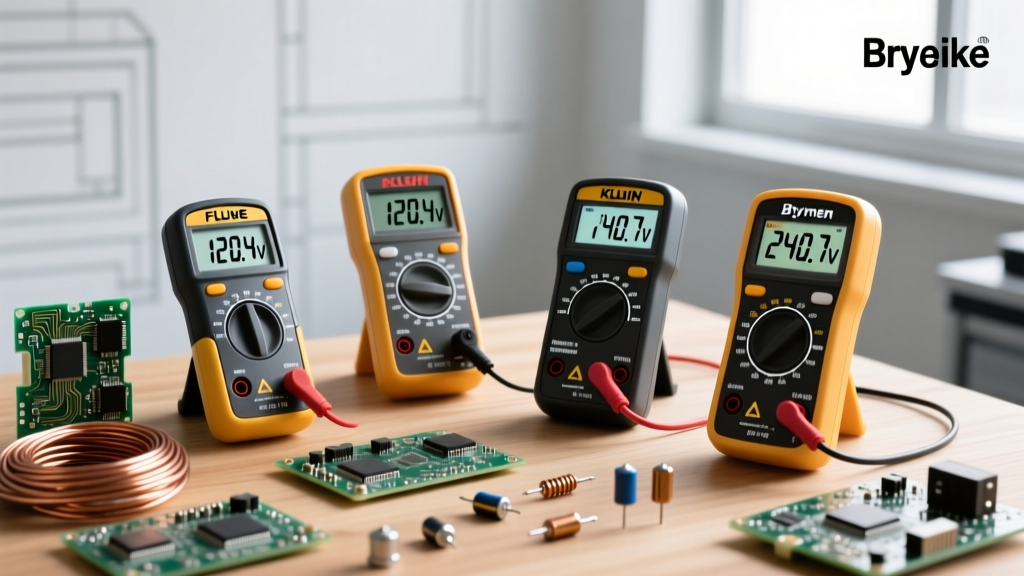
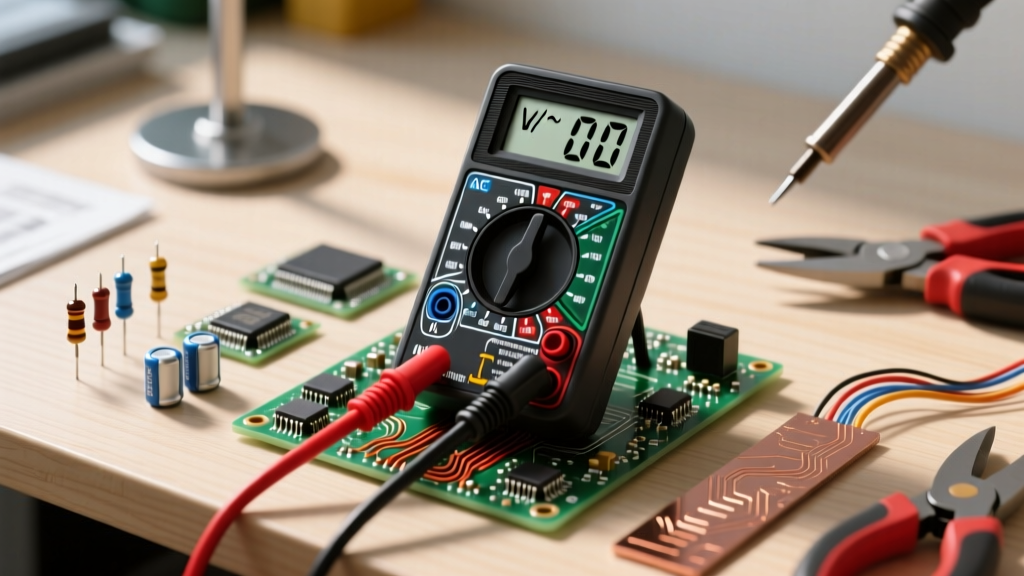
The NEO-6M GPS module remains a cornerstone of DIY electronics, provided you buy it with your eyes open. If you are purchasing for a classroom, a basic weather balloon, or a simple time-sync project, a well-reviewed breakout board is perfectly adequate. Just remember to verify the antenna size, check the battery voltage with a multimeter upon arrival, and respect the 3.3V logic limits.
Your Pre-Purchase Checklist:
- Does the listing explicitly mention the AT24C32 EEPROM and U.FL connector?
- Is the antenna 25x25mm (Active) rather than 18x18mm (Passive)?
- Are you prepared to use a logic level shifter if using a 5V Arduino?
- Have you considered if an M8N multi-GNSS module better suits your environmental constraints?
By treating your GPS module selection as a critical systems decision rather than an afterthought, you will save hours of debugging and ensure your next navigation project locks on fast and stays locked.