
The Hidden Dangers of Incorrect Multimeter Usage
When hobbyists and professionals search for a how to use a multimeter tutorial, the results overwhelmingly focus on the mechanics of measuring voltage, current, and resistance. While knowing how to read a display is essential, it is only half the equation. The other half—safety and best practices—is frequently glossed over, leading to catastrophic equipment failure, severe arc flash injuries, and even fatalities.
A digital multimeter (DMM) is not just a passive observer; it becomes an integral part of the circuit you are testing. If the tool is underrated for the environment, or if the operator uses incorrect testing procedures, the multimeter can instantly transform from a diagnostic instrument into an explosive hazard. This guide shifts the focus from basic operation to the critical safety protocols, hardware limitations, and best practices required to use a multimeter safely in real-world electrical environments.
Decoding CAT Ratings: Matching the Meter to the Mains
The most common point of failure in multimeter safety is using a meter in an environment that exceeds its Overvoltage Installation Category (CAT) rating. Governed by the IEC 61010-1 safety standard, CAT ratings define the meter's ability to withstand transient voltage spikes (impulses) that frequently occur on power grids.
- CAT II: Single-phase receptacle connected loads (appliances, portable tools). Transient protection is relatively low.
- CAT III: Three-phase distribution, including single-phase commercial lighting and fixed motors. This is where most industrial and heavy-residential troubleshooting occurs.
- CAT IV: Three-phase at utility connection, outdoor conductors, and the origin of installation (main service panels).
A common misconception is that a CAT III 1000V meter is simply "better" than a CAT IV 600V meter. In reality, a CAT IV 600V meter is tested to withstand an 8,000V impulse transient at the source of the installation, whereas a CAT III 1000V meter is only tested for a 6,000V impulse further down the line. Always choose a meter rated for the highest CAT environment you will enter. For comprehensive professional use, a meter like the Fluke 87V (rated CAT III 1000V / CAT IV 600V) remains the industry benchmark.
The Independent Testing Mandate
Never trust a CAT rating printed on the casing of a budget multimeter unless it is backed by an independent testing mark from UL, CSA, TÜV, or VDE. Uncertified clone meters often use substandard internal clearances and cheap varistors that will flash over during a transient spike, directing mains voltage straight into the user's hands.
Probe Anatomy: Where Most Safety Breaches Occur
Your multimeter probes are the physical bridge between a lethal voltage source and your body. According to OSHA electrical safety guidelines, damaged or inappropriate test leads are a leading cause of electrocution incidents during diagnostic work.
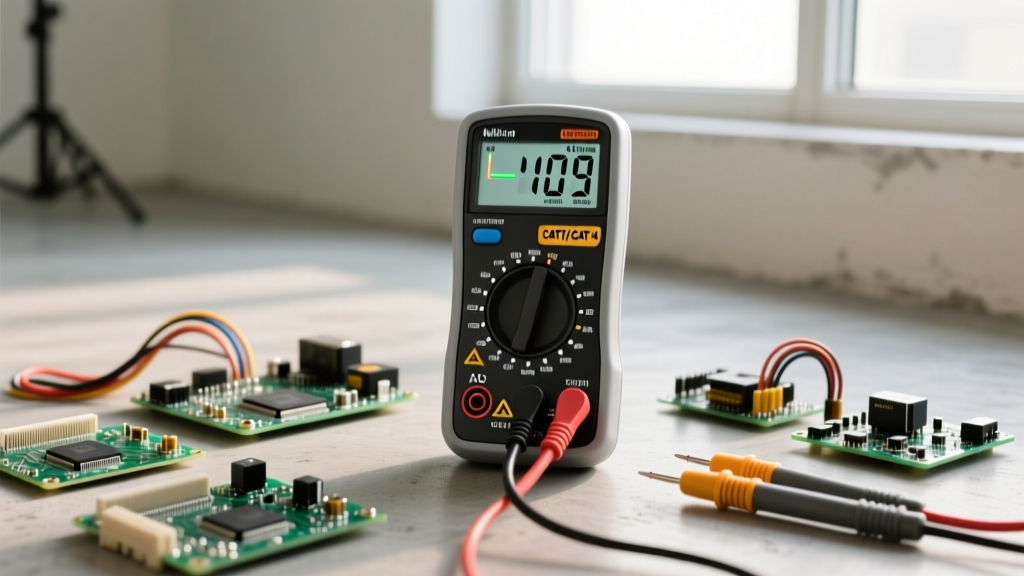
Standard test leads often feature 19mm (0.75-inch) exposed metal tips. While useful for probing deep terminal blocks, they are incredibly dangerous when working in live panels. A slight slip of the hand can cause the exposed tip to bridge two phases or touch a grounded enclosure, triggering an arc flash. Furthermore, long exposed tips increase the risk of the user's fingers sliding forward and touching the live conductor.
Best Practices for Probe Selection
- Use Shrouded Tips: When measuring standard mains voltage, swap to probes with 4mm shrouded tips or use silicone tip guards. This drastically reduces the surface area available for accidental cross-phase shorts.
- Inspect the Insulation: Before every use, run your fingers along the length of the probe wire. Look for micro-tears, dry rot, or burn marks. If the inner copper strand is visible, discard the leads immediately.
- Finger Guards: Ensure your probes have prominent, raised finger flanges to prevent your grip from slipping forward onto the metal shaft.
The "Current Jack" Trap: A Preventable Lethal Mistake
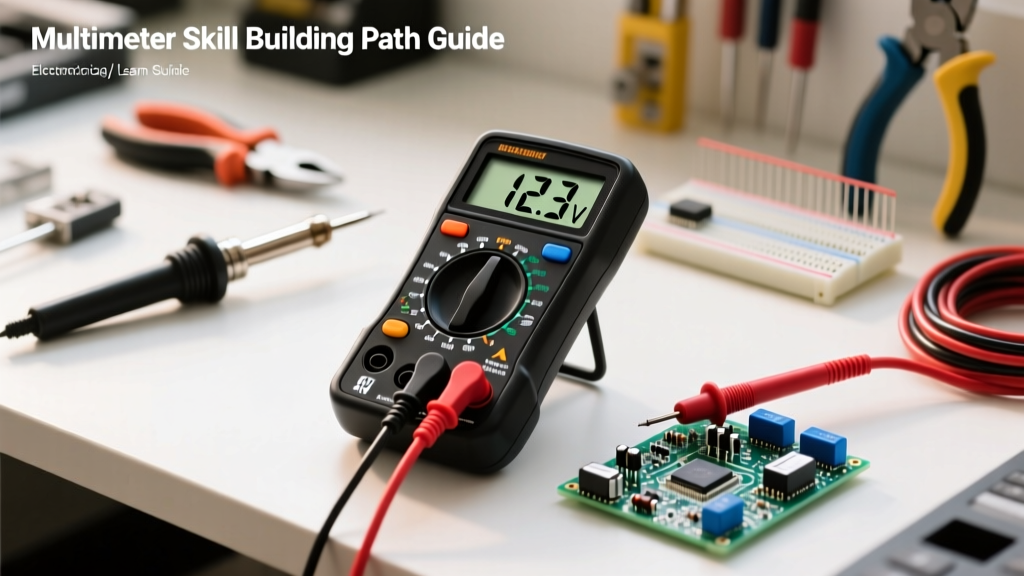
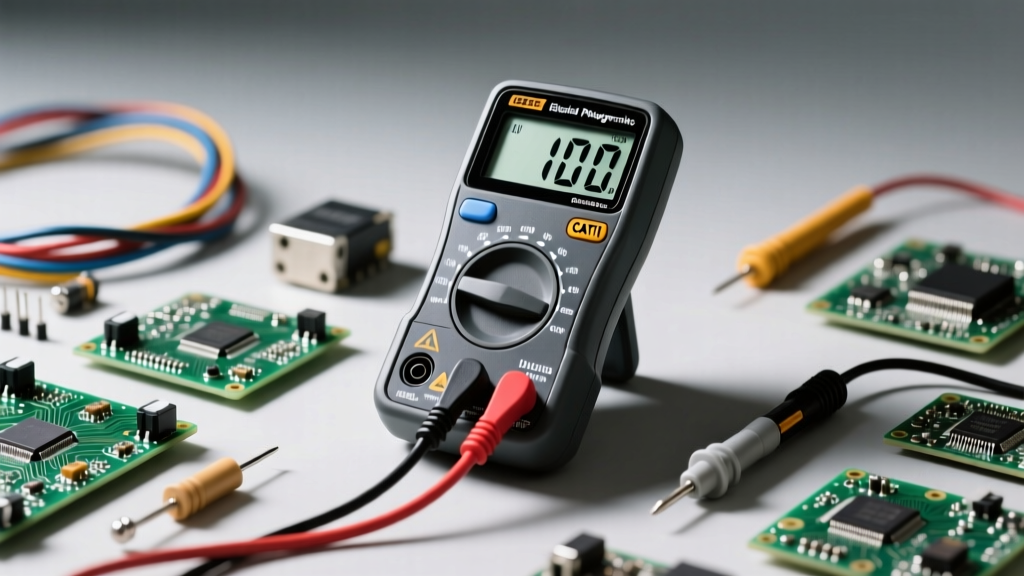
Perhaps the most dangerous mistake covered in any how to use a multimeter tutorial involves the amperage measurement jacks. To measure current, the multimeter must be placed in series with the load, meaning the current flows directly through the meter. To prevent the meter from disrupting the circuit, the internal shunt resistor in the Ampere jack has near-zero resistance (often around 0.01 ohms).
If an operator forgets to move the red probe from the "Amps" jack back to the "Voltage/Ohms" jack, and then places the probes in parallel across a live 120V or 240V circuit, the meter creates a dead short across the mains supply.
Warning: Measuring voltage with the leads in the current jacks will cause a massive, instantaneous surge of thousands of amps through the meter. If the meter's internal fuse fails to clear the fault in milliseconds, the multimeter will violently explode, sending shrapnel and superheated plasma into the operator's face and chest.
The Best Practice Rule: Develop a strict physical habit. Never leave the red probe in the Amps jack when you are done measuring current. Move it back to the Voltage/Ohms jack immediately. Some advanced meters feature built-in input alerts that beep and flash an error if the dial is set to Voltage but the lead is in the Amps jack—always invest in a meter with this safeguard if you are a beginner.
Pre-Measurement Safety Checklist
Before applying probes to any live circuit, run through this rapid mental and physical checklist to ensure your setup is safe and appropriate for the environment.
| Inspection Point | Action Required | Failure Consequence |
|---|---|---|
| CAT Rating Verification | Confirm meter CAT rating meets or exceeds the panel's origin category. | Internal arc flash due to transient overvoltage. |
| Probe Insulation | Visually and physically inspect leads for cuts, burns, or exposed wire. | Direct shock hazard or phase-to-phase short. |
| Jack Configuration | Ensure red lead is in the V/Ω jack (unless specifically measuring series current). | Dead short across mains; catastrophic meter explosion. |
| Dial Setting | Verify dial is set to AC or DC Voltage, not Resistance or Continuity. | Blown internal fuse; potential shock via continuity buzzer circuit. |
| Battery Level | Check for low battery icon. Replace if weak. | Erroneous readings leading to false "dead circuit" assumptions. |
Internal Protection: HRC Fuses vs. Glass Fuses
When a multimeter is subjected to an overcurrent event (like the "Current Jack" trap mentioned above), the internal fuse is the last line of defense between a minor inconvenience and a life-threatening explosion. This is where the distinction between High Rupture Capacity (HRC) fuses and standard glass fuses becomes critical.
Budget multimeters often utilize standard 5x20mm glass tube fuses. When subjected to a high-energy fault from a mains supply, the thin wire inside the glass fuse vaporizes. However, the vaporized metal can form a conductive plasma arc across the glass tube, allowing the current to continue flowing. The glass tube then shatters, feeding oxygen to the arc and resulting in an explosion inside the meter casing.
Conversely, professional-grade meters (such as those certified by Fluke's safety engineering standards) use HRC fuses. These fuses are encased in high-strength ceramic and filled with quartz sand. When the internal element vaporizes during a fault, the sand immediately absorbs the heat and quenches the plasma arc, safely containing the explosive energy within the ceramic body. Never replace an HRC fuse with a cheap glass substitute to save money; you are actively removing the blast shield from your tool.
Environmental and PPE Best Practices
Safety extends beyond the tool itself to the environment and the operator's personal protective equipment (PPE). Moisture, metallic dust, and confined spaces drastically alter the risk profile of electrical testing.
- Wear Arc-Rated Clothing: When testing live panels above 240V, NFPA 70E guidelines dictate the use of arc-flash-rated clothing, insulated gloves, and a face shield. A multimeter explosion generates temperatures exceeding 35,000°F (four times hotter than the surface of the sun).
- The "One-Hand" Rule: Whenever possible, keep one hand in your pocket or behind your back while probing. If you accidentally touch a live conductor with one hand while your other hand is grounded on a metal chassis, the current will travel across your chest cavity, risking ventricular fibrillation.
- Environmental Limits: Standard DMMs are not waterproof. Using a meter in high humidity, rain, or condensing environments can cause surface tracking across the circuit board, leading to internal shorts. If working outdoors or in wet industrial settings, ensure your meter carries an IP67 ingress protection rating.
Mastering how to use a multimeter is not just about reading the LCD screen; it is about cultivating a deep respect for the energy you are measuring. By adhering to CAT ratings, inspecting your probes, avoiding the current jack trap, and relying on HRC-protected equipment, you ensure that your diagnostic work remains both accurate and safe.