
Why Electronic Components Reliability Demands Rigorous Testing in 2026
As semiconductor geometries shrink and power densities in modern PCBs skyrocket, evaluating electronic components reliability is no longer a luxury reserved for aerospace contractors. In 2026, supply chain volatility and the persistent infiltration of counterfeit or sub-spec silicon into the open market mean that even hobbyists and mid-tier engineering firms must validate their bill of materials (BOM). A component that passes a basic continuity test might still suffer from Kirkendall voiding in its wire bonds or latent dielectric breakdown when subjected to thermal or electrical stress.
Whether you are designing an automotive IoT sensor that must survive under-hood temperature swings, or a high-frequency RF amplifier for satellite communications, understanding how your parts degrade over time is critical. This guide rounds up the most effective benchtop testing kits and lab equipment available in 2026 for assessing component reliability, bridging the gap between enterprise-level qualification labs and accessible prosumer setups.
The Core Pillars of Component Reliability Testing
Before investing in equipment, it is vital to understand the primary stress vectors that cause silicon, passives, and interconnects to fail. According to the NASA Electronic Parts and Packaging (NEPP) Program, the vast majority of field failures stem from three environmental and electrical stressors:
- Thermo-Mechanical Fatigue: Caused by the coefficient of thermal expansion (CTE) mismatch between the silicon die, the substrate, and the PCB. Repeated cycling leads to solder joint cracking and wire bond lift-off.
- Moisture and Ionic Contamination: Water vapor ingress can cause electrochemical migration (dendritic growth), leading to short circuits. This is accelerated in high-humidity, high-temperature environments.
- Electrical Overstress (EOS) and ESD: Transient voltage spikes that puncture gate oxides or melt metallization traces. While ESD is a fast, high-voltage event, EOS is typically lower voltage but longer duration, causing severe thermal damage.
2026 Equipment Roundup: Top Kits for Reliability Validation
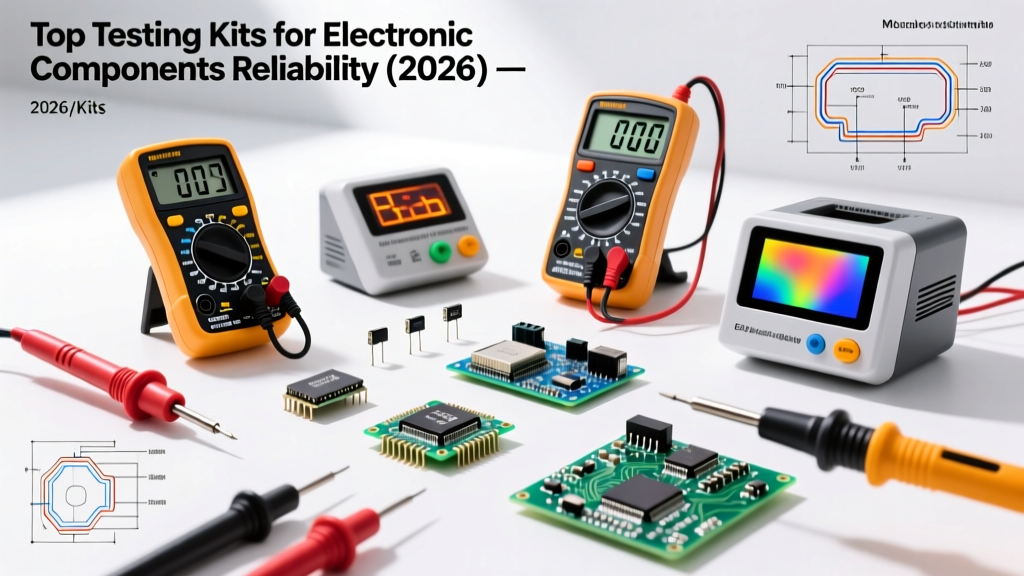
Below is a curated selection of testing equipment categorized by lab tier, ranging from enterprise environmental chambers to agile, budget-friendly diagnostic kits.
1. The Enterprise Standard: Espec SU-241 Benchtop Thermal Chamber
For serious thermal cycling and thermal shock testing, the Espec SU-241 remains the gold standard for mid-sized reliability labs in 2026. Priced at approximately $14,500, it offers a temperature range of -40°C to +150°C with an impressive ramp rate of 15°C per minute.
Expert Insight: When testing to MIL-STD-883 Method 1010 (Thermal Shock), the transition time between hot and cold zones must be under 1 minute. While the SU-241 is a single-chamber rapid-cycler, its 15°C/min ramp rate is ideal for JEDEC JESD22-A104 temperature cycling, but for strict MIL-STD shock compliance, you would need a dual-zone elevator chamber like the Espec TSD-100.Best For: Automotive tier-2 suppliers, university research labs, and medical device manufacturers validating AEC-Q100 or IPC-9701A compliance.
2. The ESD & Latch-Up Specialist: Barth Electronics Model 4016
Electrostatic discharge is a silent killer of CMOS components. The Barth Electronics Model 4016 ESD Simulator (approx. $5,200) is a highly precise, fully compliant Human Body Model (HBM) and Machine Model (MM) tester. Unlike cheap handheld ESD guns that merely zap a chassis, the 4016 allows for automated, socket-level pin-to-pin discharge testing.
- Compliance: Fully meets IEC 61000-4-2, ANSI/ESDA STM5.1, and ISO 10605.
- Key Feature: Integrated arc-detection circuitry. In modern sub-3nm nodes, an air-discharge arc can introduce unpredictable inductive ringing. The 4016's strict contact-discharge protocols ensure repeatable waveform delivery.
3. The Agile Startup Kit: Digilent Analog Discovery 3 + FLIR ONE Edge Pro
Not every team has $20,000 for a HAST (Highly Accelerated Stress Test) chamber. For hardware startups and advanced DIYers, correlating electrical degradation with thermal anomalies is a highly effective proxy for reliability testing. By combining the Digilent Analog Discovery 3 ($449) with the FLIR ONE Edge Pro thermal camera ($499), you can build a powerful transient thermal impedance ($Z_{th}$) profiling rig for under $1,000.
How it works: Use the AD3's programmable power supply and waveform generator to pulse a MOSFET or power IC with high-current square waves. Simultaneously, record the thermal response with the FLIR camera at 30Hz. By analyzing the heating and cooling curves, you can detect die-attach delamination or degraded thermal interface materials (TIMs) long before the component catastrophically fails.
Comparison Matrix: Choosing the Right Setup
| Equipment / Kit | Primary Modality | Approx. 2026 Price | Target Standard | Lab Footprint |
|---|---|---|---|---|
| Espec SU-241 | Thermal Cycling | $14,500 | JEDEC JESD22-A104 | Large Benchtop |
| Barth 4016 | ESD / HBM / MM | $5,200 | IEC 61000-4-2, STM5.1 | Compact Benchtop |
| AD3 + FLIR Edge Pro | Transient Thermal / EOS | $948 | Internal R&D / Correlation | Portable / Handheld |
| Qualmark Typhoon | HALT / HASS (Vibration+Thermal) | $85,000+ | DO-160, MIL-STD-810 | Floor Standing |
Common Failure Modes These Kits Uncover
Understanding what you are looking for is just as important as the equipment you use. Here are three specific failure mechanisms that rigorous reliability testing exposes:
Kirkendall Voiding in Wire Bonds
When gold (Au) wire is bonded to an aluminum (Au) pad, the two metals diffuse into one another at different rates when exposed to heat. This creates microscopic voids (Kirkendall voids) that weaken the mechanical strength of the bond. Thermal aging tests (e.g., 150°C for 1,000 hours) in a chamber like the Espec SU-241 will accelerate this process, allowing you to catch poor metallization before deployment.
Tin Whisker Growth
The transition to RoHS-compliant, lead-free solders and matte-tin component finishes introduced the risk of tin whiskers—microscopic, crystalline structures that grow from the tin surface and cause short circuits. High-humidity, high-temperature testing (often called THB - Temperature Humidity Bias) is required to accelerate whisker growth. While true THB requires a pressurized HAST chamber, prolonged thermal cycling can also induce the compressive stresses that trigger whisker formation.
Time-Dependent Dielectric Breakdown (TDDB)
In advanced logic and memory ICs, the gate oxide is only a few nanometers thick. Prolonged exposure to electric fields, even slightly above nominal operating voltages, causes defects to accumulate in the oxide lattice, eventually leading to a hard short. The Digilent AD3 can be programmed to run continuous bias-stress tests, logging leakage current over hundreds of hours to plot the Weibull distribution of TDDB failures.
Navigating Industry Standards and Guidelines
Reliability testing is not a guessing game; it is governed by stringent international standards. The JEDEC Solid State Technology Association publishes the JESD22 series, which serves as the bible for commercial semiconductor qualification. For automotive applications, the AEC-Q100 standard dictates specific temperature grades (e.g., Grade 1: -40°C to +125°C) and mandates tests like latch-up and early life failure rate (ELFR).
"Testing electronic components reliability without a statistical framework is meaningless. A sample size of three components passing a thermal shock test tells you nothing about the lot's true failure distribution. Always design your test matrix around a Weibull analysis with a minimum of 30 to 50 samples per stress cell."
— Guidelines adapted from the IEEE Reliability Society best practices for accelerated life testing.
Final Recommendations for 2026
If you are outfitting a new reliability lab, prioritize your spending based on your product's end-use environment. For consumer electronics, ESD and electrical overstress testing (Barth 4016 or equivalent) should be your first capital expenditure, as field returns are most commonly tied to user-handling and power supply transients. For industrial, automotive, or aerospace applications, thermal cycling (Espec) and vibration testing are non-negotiable.
For the advanced maker, hardware hacker, or bootstrapped startup, do not underestimate the power of the AD3 + FLIR combination. By mastering transient thermal impedance profiling, you can screen out counterfeit components and identify marginal die-attach quality on a shoestring budget. Ultimately, ensuring electronic components reliability is about marrying the right stress-inducing equipment with rigorous, data-driven failure analysis.