
The Core Concept: What is Power Alternating Current?
When you plug a lamp into a wall outlet or wire a new subpanel in your garage, you are utilizing power alternating current (AC). Unlike Direct Current (DC), where electrons flow continuously in a single direction from the negative to the positive terminal, AC power periodically reverses its direction. In a standard North American household, this reversal happens 60 times per second, creating a 60 Hertz (Hz) frequency.
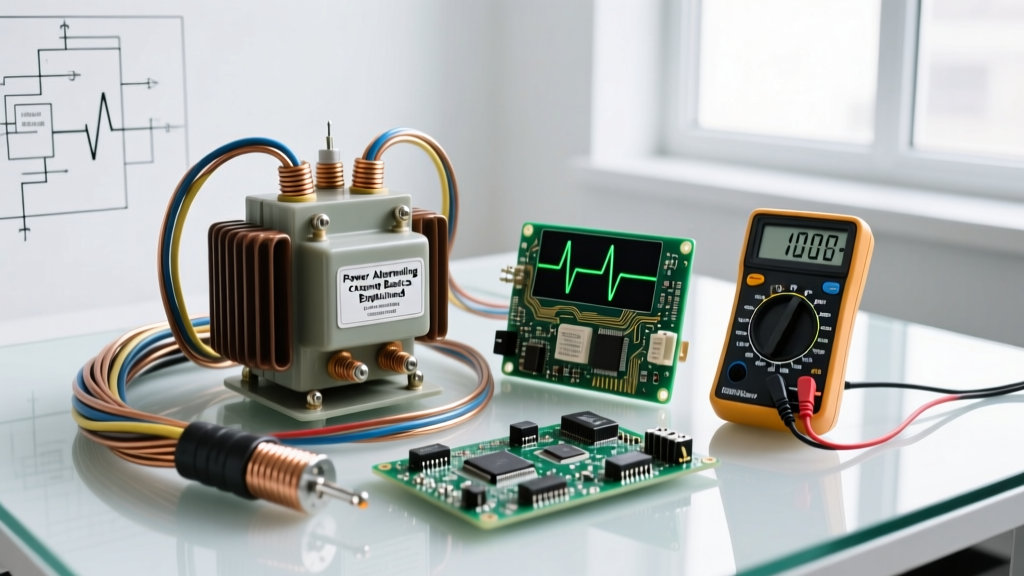
A common misconception among DIY beginners is that electrons travel all the way from the power plant to your home. In reality, the electrons in your household wiring merely oscillate back and forth in place, transferring energy through the electromagnetic field rather than through bulk physical transport. This oscillating behavior forms a smooth, continuous sine wave when graphed on an oscilloscope, which is the foundational signature of clean AC power.
Why AC Won the War of the Currents
In the late 19th century, Thomas Edison championed DC power, while Nikola Tesla and George Westinghouse backed AC. The defining factor that allowed power alternating current to dominate the global electrical grid was the invention of the transformer.
DC power at the time could not be easily stepped up to high voltages for long-distance transmission. Transmitting DC at low voltages resulted in massive energy losses due to the resistance of the copper wires (calculated via the I²R formula). AC power, however, can be stepped up to hundreds of thousands of volts for transmission, drastically reducing the current and minimizing resistive heat loss. Once the power reaches your neighborhood, a local transformer steps the voltage back down to a safe 120V/240V for residential use. The U.S. Energy Information Administration (EIA) notes that this step-up/step-down capability remains the backbone of modern grid distribution.
Decoding the Sine Wave: Peak vs. RMS Voltage
One of the most critical concepts for anyone sizing wire or selecting components for AC circuits is understanding Root Mean Square (RMS) voltage. When we say a standard US outlet provides 120V AC, we are referring to the RMS voltage, not the peak voltage.
Because the sine wave constantly fluctuates between zero and its maximum peak, RMS provides an 'equivalent heating value'—meaning a 120V RMS AC source will deliver the exact same power to a resistive load (like a heater) as a 120V DC source.
The Math Behind the Mains
- Peak Voltage: The absolute maximum voltage reached during the sine wave cycle.
- The Formula: V_peak = V_rms × √2 (approximately 1.414)
- Real-World Application: For a 120V RMS outlet, the peak voltage is actually 169.7 Volts.
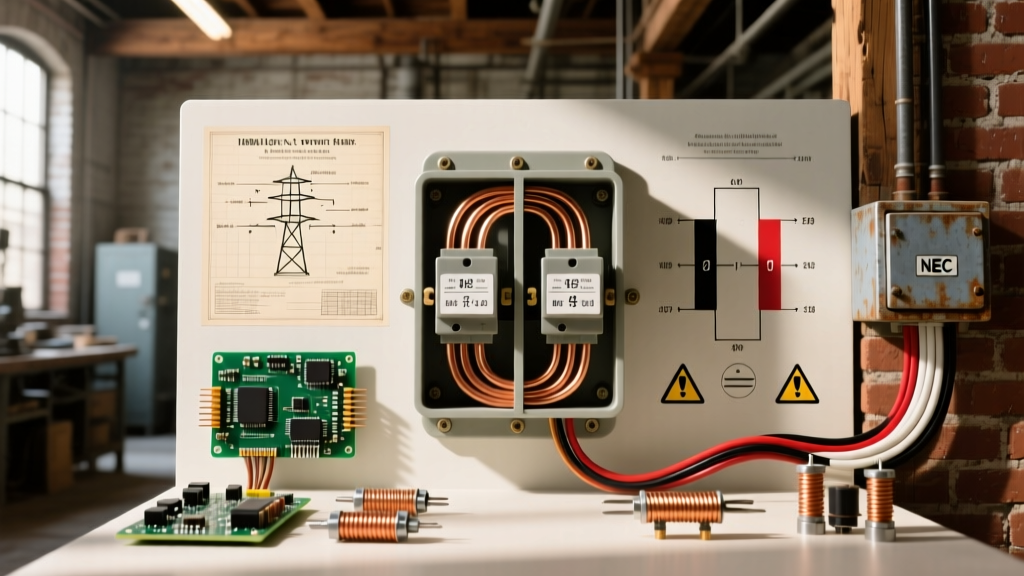
DIY Insight: This is why the insulation on standard 14 AWG or 12 AWG Romex wire is rated for 600V. If you are building a custom DIY solar inverter or selecting capacitors for an AC filtering circuit, you must ensure your components are rated for the peak voltage, not just the RMS voltage, to prevent catastrophic dielectric breakdown.
Global AC Power Standards
Depending on where you live or where you are sourcing your electrical components, the standard parameters for power alternating current will vary. Below is a comparison of the major global standards:
| Region | Standard Voltage (RMS) | Frequency | Common Plug Types |
|---|---|---|---|
| North America | 120V / 240V (Split-Phase) | 60 Hz | Type A, B, C (NEMA) |
| Europe / UK | 230V (Single-Phase) | 50 Hz | Type C, E, F, G |
| Australia / NZ | 230V (Single-Phase) | 50 Hz | Type I |
| Japan | 100V | 50 Hz (East) / 60 Hz (West) | Type A, B |
Note for DIYers: Importing a 50Hz European motor to run on a 60Hz North American supply will cause the motor to run 20% faster, potentially leading to overheating and mechanical failure. Always check the nameplate frequency rating.
How AC Impacts Wire Sizing: The Skin Effect
When sizing conductors for DC circuits, the current distributes itself evenly across the entire cross-sectional area of the wire. However, power alternating current introduces a phenomenon known as the Skin Effect.
As alternating current flows, it generates a changing magnetic field that induces eddy currents within the conductor itself. These eddy currents oppose the flow of electrons in the center of the wire, effectively forcing the majority of the current to travel along the outer 'skin' of the conductor.
Does Skin Effect Matter for Home Wiring?
At standard mains frequencies (50Hz or 60Hz), the skin depth in copper is approximately 8.5mm. Since a standard 12 AWG copper wire has a radius of only about 1mm, the skin effect is virtually negligible for typical residential branch circuits. You do not need to upsize your wire to compensate for skin effect at 60Hz.
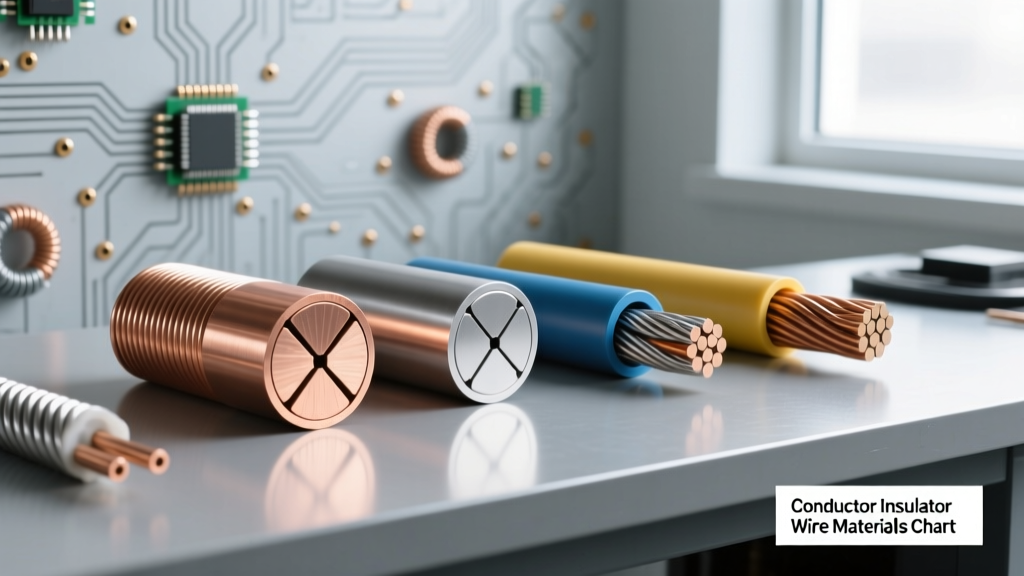
However, if you are working with high-frequency AC power—such as the output of a high-frequency solar inverter, variable frequency drives (VFDs), or aircraft wiring (400Hz)—the skin effect becomes highly relevant. In these scenarios, engineers use Litz wire (multiple individually insulated thin strands braided together) or hollow copper tubing to maximize surface area and minimize AC resistance.
Real-World Troubleshooting: Measuring AC Power
Measuring power alternating current requires understanding the limitations of your testing equipment. If you are troubleshooting a DIY off-grid solar setup or testing the output of a backup generator, the type of multimeter you use dictates the accuracy of your readings.
Average-Responding vs. True-RMS Multimeters
Cheap, entry-level multimeters are 'average-responding.' They measure the average absolute value of the AC waveform and multiply it by a fixed constant (1.11) to estimate the RMS voltage. This math only works if the sine wave is absolutely perfect.
If you measure the output of a modified sine wave (MSW) inverter or a circuit controlled by a TRIAC dimmer, the waveform is choppy and distorted. An average-responding meter will give you wildly inaccurate readings, potentially leading you to believe a circuit is safe when it is actually over-volted.
Safety Warning: Always use a True-RMS multimeter when working with non-linear loads, variable speed drives, or DIY inverter outputs. True-RMS meters sample the waveform thousands of times per second to calculate the actual heating value of the distorted wave. According to testing standards outlined by Fluke, True-RMS measurement is essential for accurate diagnostics in modern electrical environments filled with switching power supplies and LED drivers.
Summary for the DIY Electrician
Mastering the fundamentals of power alternating current bridges the gap between simply following a wiring diagram and truly understanding the physics of your project. Remember that AC voltage is rated in RMS but peaks much higher, that standard 60Hz power minimizes the skin effect in residential wire sizing, and that accurate troubleshooting requires True-RMS measurement tools. By respecting the unique characteristics of the AC sine wave, you ensure your DIY electrical builds are not only functional but fundamentally safe and efficient.